You got songs sitting in the vault. You got beats picked out. You got verses that could make people rewind the track. But the truth is, talent alone is not the full game anymore. The rapper who wins today is not always the rapper with the biggest budget. Sometimes it is the rapper with the clearest plan, the cleanest rollout, and the discipline to show up every day when nobody is clapping yet.
That is where this 30-day music marketing plan comes in.
This is not some corny “post three times and go viral” type of advice. This is a real-world plan for independent rappers who want to build attention, get more listeners, grow a fanbase, and start moving like a business without losing the soul of the music.
You do not need a major label to start creating momentum. You need a song worth pushing, a message people can feel, content that makes people care, and a system that keeps working even when one post flops. Because every artist has slow days. The difference is serious artists do not stop just because the internet acted funny for 24 hours.
This plan is built for independent rappers who want to release smarter, promote harder, and turn random listeners into real supporters.
Before Day 1: Pick One Song to Push
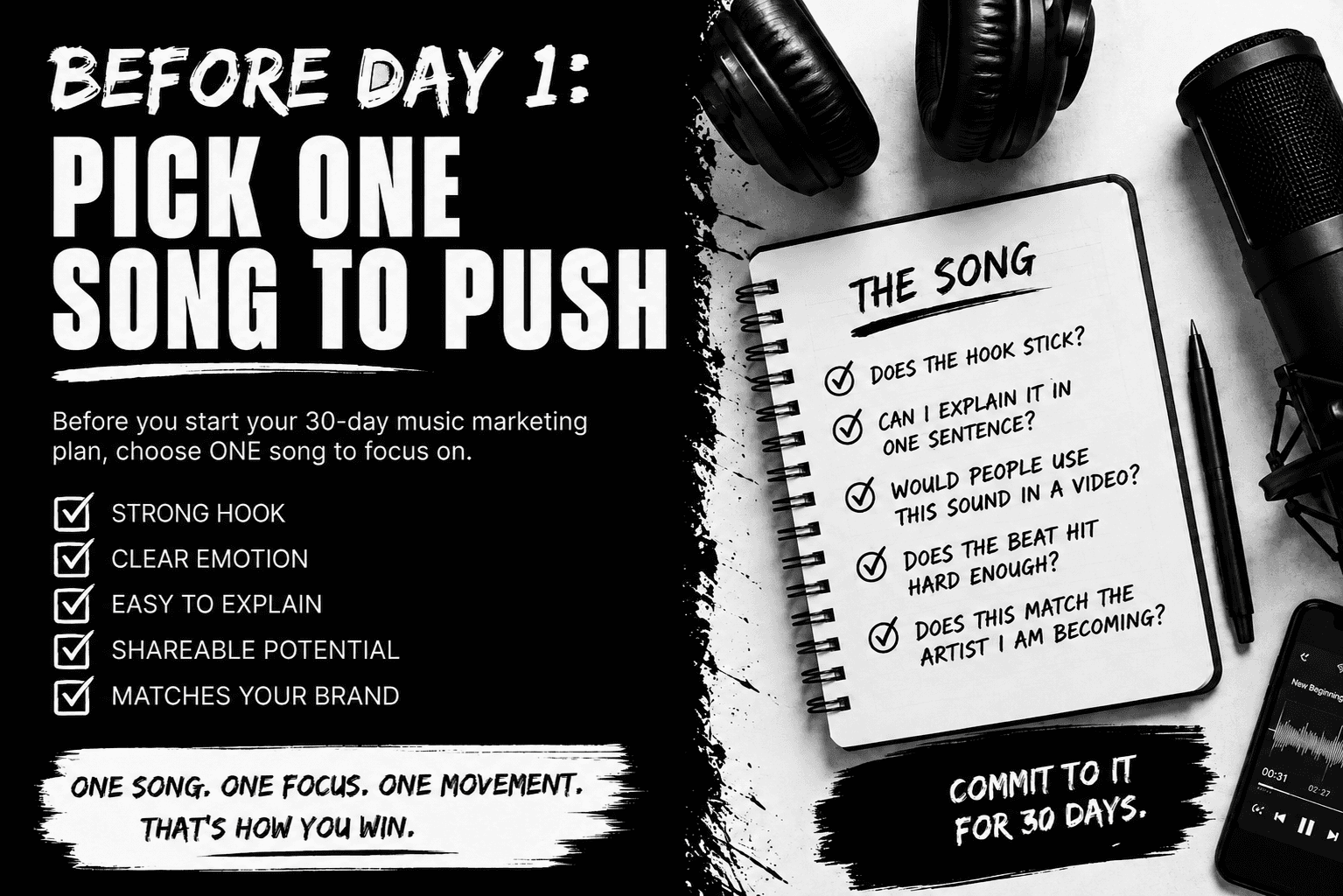
Before you start your 30-day music marketing plan, choose one song to focus on. Not five songs. Not the whole mixtape. One record.
A lot of independent rappers lose because they try to promote everything at once. One day they are pushing a pain song, the next day a club song, then a freestyle, then a random snippet from two years ago. That confuses people. Your audience needs repetition before they remember you.
Pick the song that has the strongest hook, the clearest emotion, and the best chance to connect fast. It does not always have to be your most lyrical song. It has to be the song people understand quickly.
Ask yourself:
Does the hook stick after one listen?
Can I explain the song in one sentence?
Would someone use this sound in a video?
Does the beat hit hard enough to catch attention?
Does the song match the artist I am becoming?
Once you pick the song, commit to it for 30 days. This is your campaign. Treat it like a single, not just another upload.
Days 1-3: Build the Story Around the Song
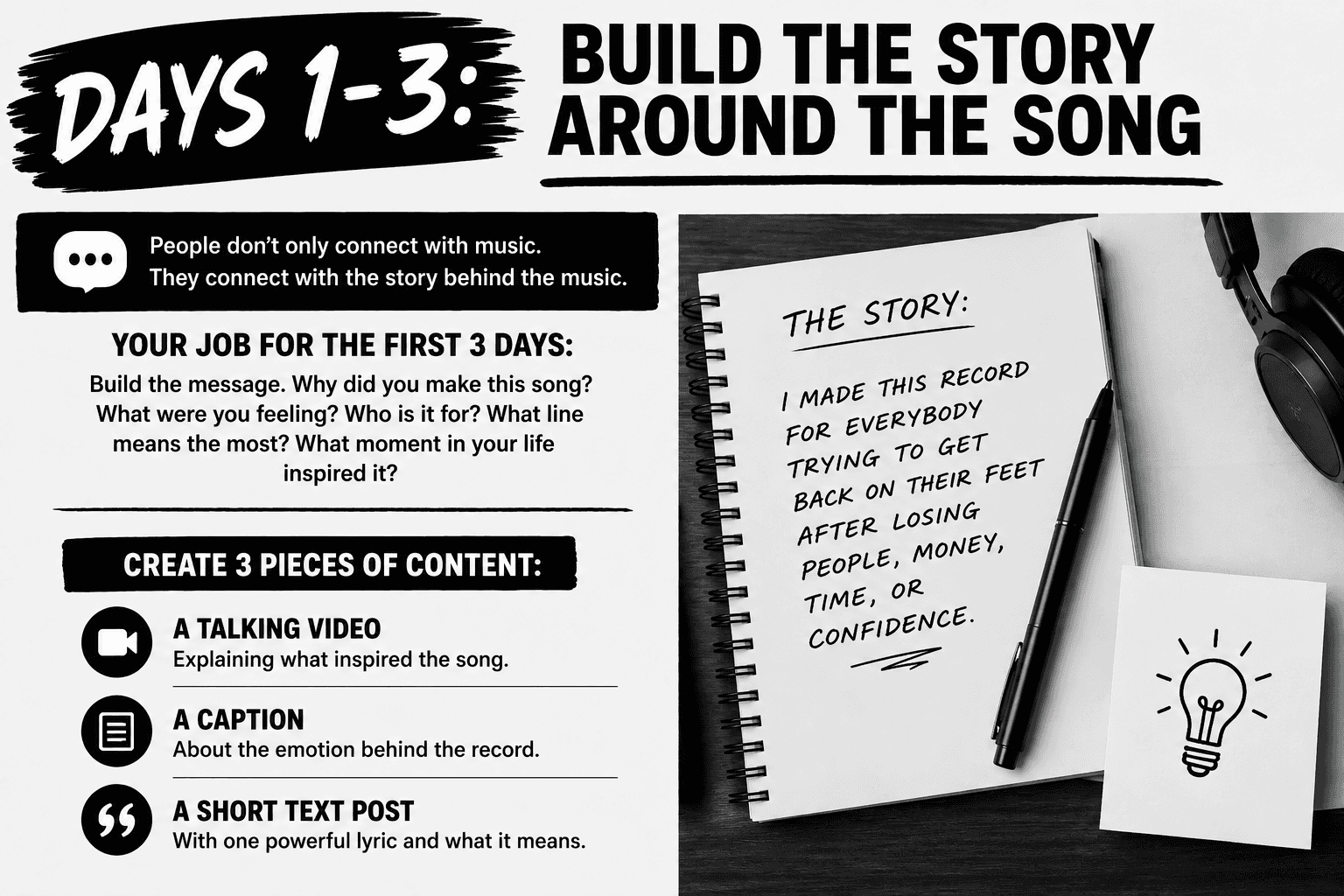
People do not only connect with music. They connect with the story behind the music.
For the first three days, your job is to build the message. Why did you make this song? What were you feeling? Who is it for? What line means the most? What moment in your life inspired it?
Write down the story in simple language.
Example:
“I made this record for everybody trying to get back on their feet after losing people, money, time, or confidence.”
That is stronger than saying, “New song out now.”
Nobody cares about “out now” until they care about why it matters.
Create three short pieces of content from the story:
A talking video explaining what inspired the song.
A caption about the emotion behind the record.
A short text post with one powerful lyric and what it means.
This gives your song a heartbeat before you even ask people to stream it.
Days 4-6: Clean Up Your Profiles
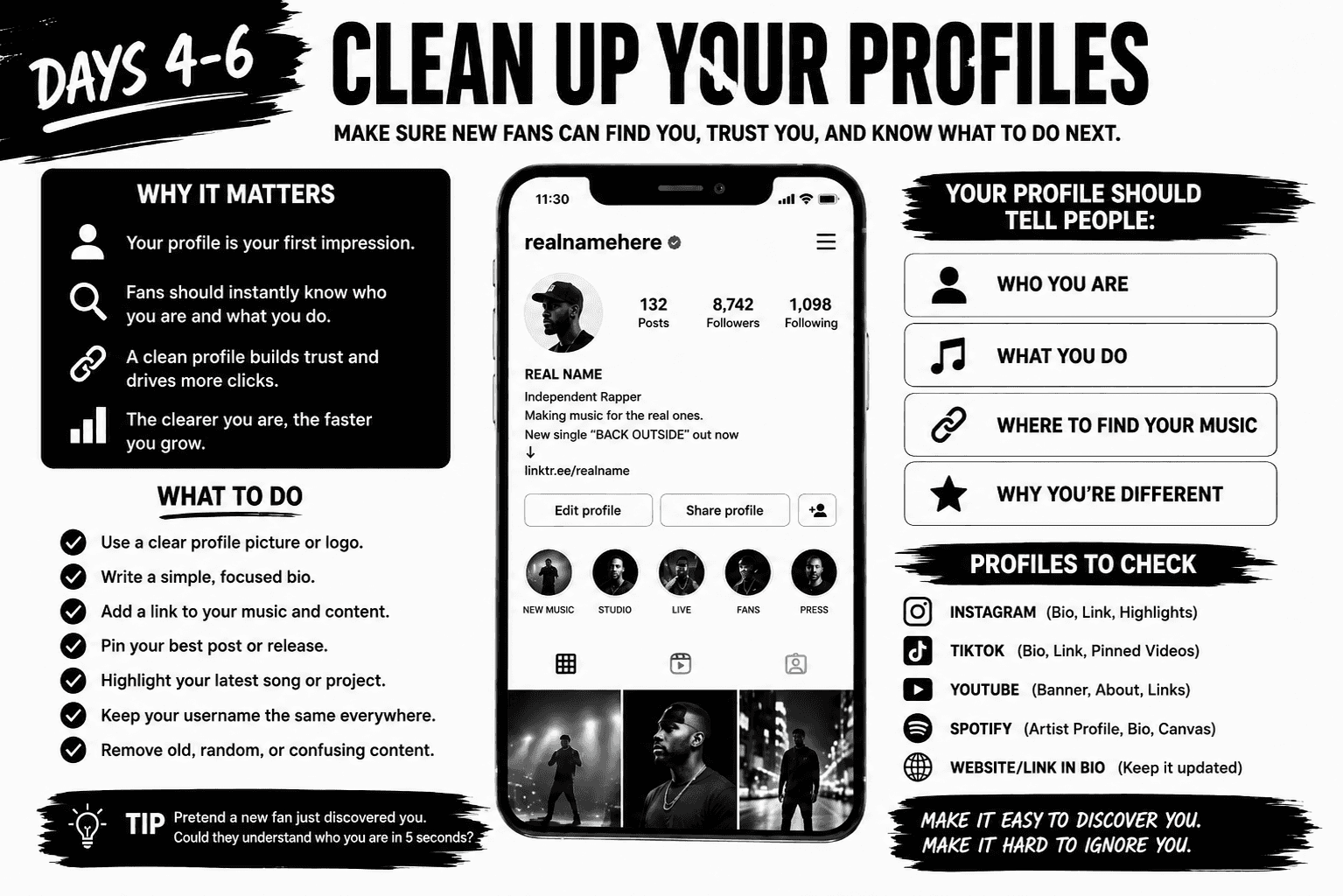
Before you send traffic anywhere, make sure your online presence does not look abandoned.
Your Instagram, TikTok, YouTube, Spotify, and website should all make it clear who you are and what you want people to do next. If somebody discovers you today, they should not have to play detective.
Update your bio with a simple artist statement.
Example:
“Independent rapper making pain music, motivation music, and street anthems for people chasing something bigger.”
Add your newest link. Pin your best content. Use a profile picture that looks clean. Make sure your artist name is consistent everywhere.
If your name is different on every platform, you are making it harder for people to find you. You want discovery to feel smooth. The fan should not need a search warrant to support you.
Days 7-9: Create 10 Short-Form Videos
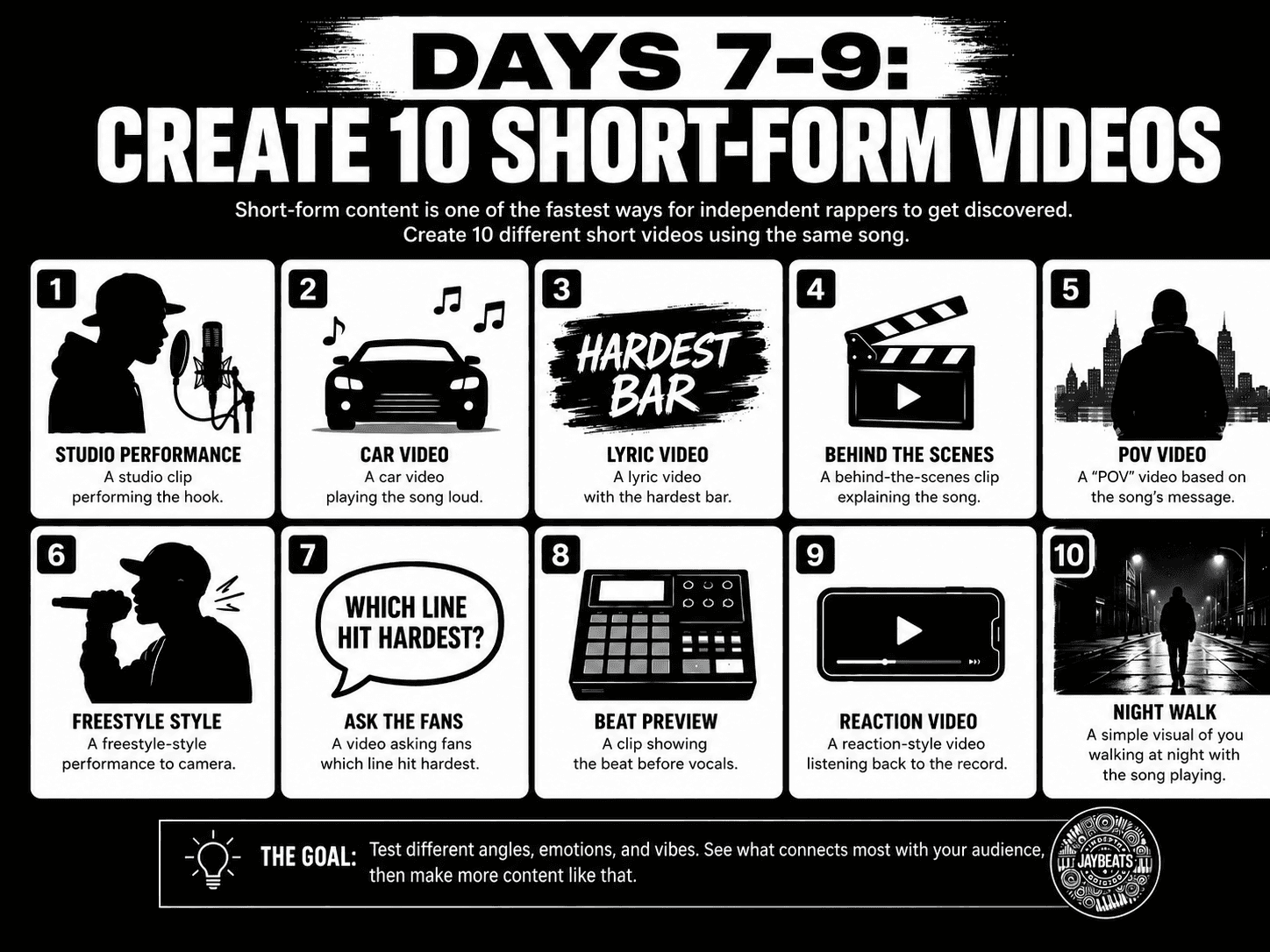
Short-form content is one of the fastest ways for independent rappers to get discovered. TikTok, Instagram Reels, and YouTube Shorts can put your music in front of new people without needing a huge following.
But do not just post the same cover art every day. That is lazy marketing with a filter on it.
Create 10 different short videos using the same song.
Here are ideas:
A studio clip performing the hook.
A car video playing the song loud.
A lyric video with the hardest bar.
A behind-the-scenes clip explaining the song.
A “POV” video based on the song’s message.
A freestyle-style performance to the camera.
A video asking fans which line hit hardest.
A clip showing the beat before the vocals.
A reaction-style video listening back to the record.
A simple visual of you walking at night with the song playing.
The goal is to test angles. Sometimes the emotional clip wins. Sometimes the performance clip wins. Sometimes the ugly phone video hits harder than the clean edited one. The internet is weird like that. Respect the weird.
Days 10-12: Start Conversations, Not Just Posts
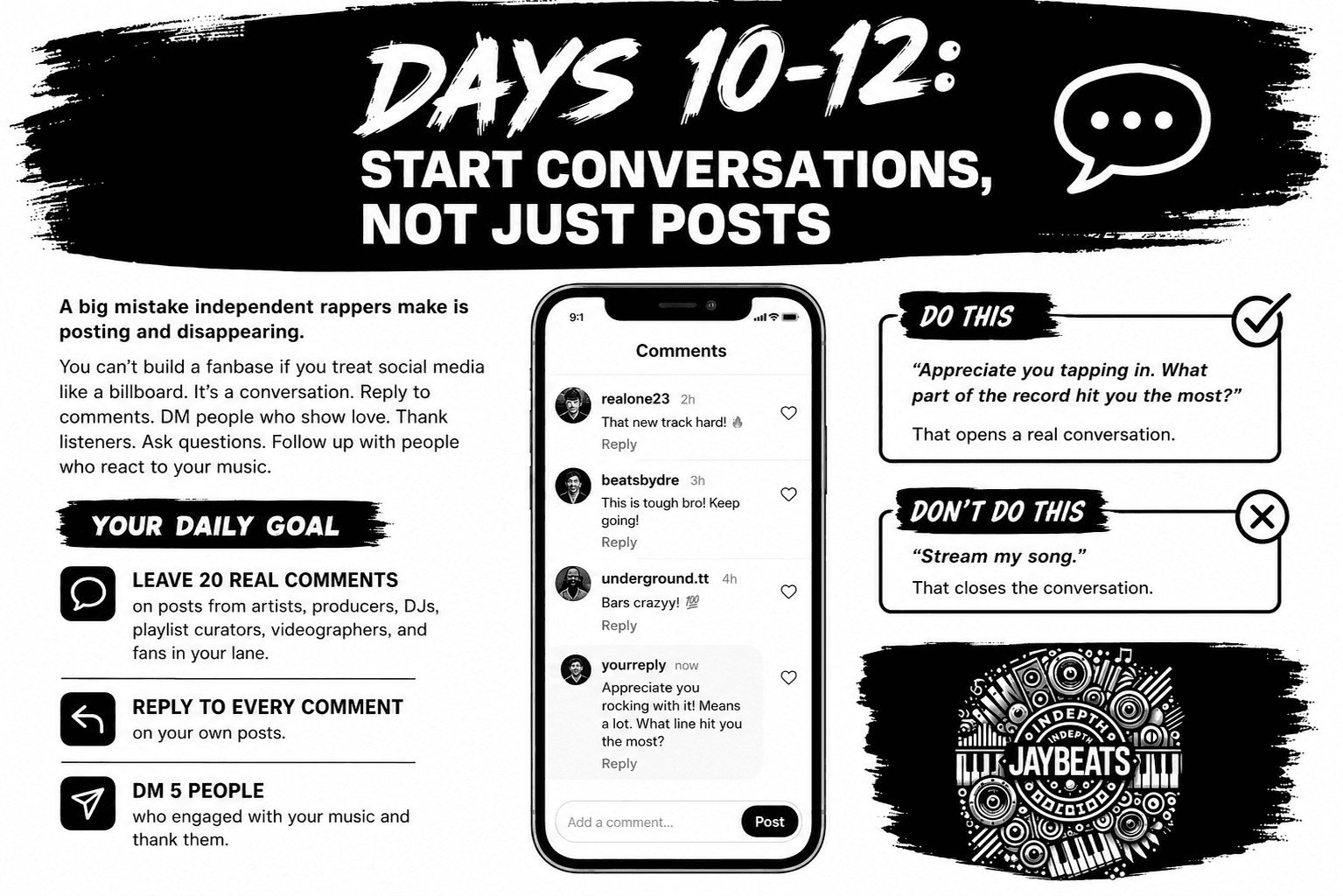
A big mistake independent rappers make is posting and disappearing.
You cannot build a fanbase if you treat social media like a billboard. It is a conversation. Reply to comments. DM people who show love. Thank listeners. Ask questions. Follow up with people who react to your music.
Your daily goal should be simple:
Leave 20 real comments on posts from artists, producers, DJs, playlist curators, videographers, and fans in your lane.
Reply to every comment on your own posts.
DM 5 people who engaged with your music and thank them.
Do not spam links. Build relationships.
Instead of saying, “Stream my song,” say:
“Appreciate you tapping in. What part of the record hit you the most?”
That opens a real conversation. Conversations create fans. Fans create streams. Streams without connection are just numbers floating in space.
Days 13-15: Make Your Song Easy to Share
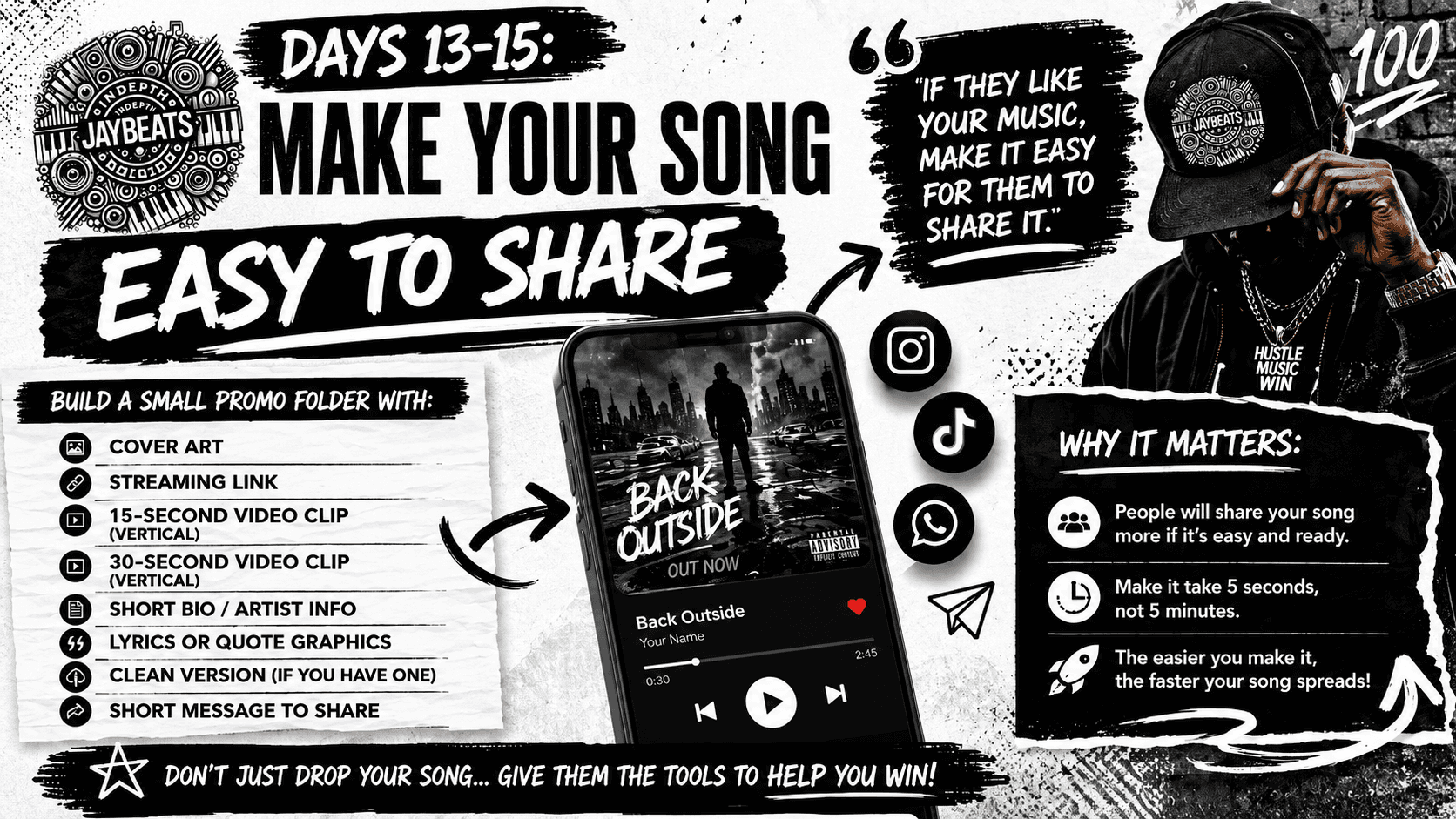
If you want people to promote your music, make it easy for them.
Create a small promo folder with:
Cover art
A short bio
Streaming link
Clean version if you have one
15-second video clip
30-second video clip
Lyrics or quote graphics
A short message people can copy and paste
Most people are busy. Even people who like your music may not share it if they have to do too much work. Make the process simple.
You can send something like:
“Yo, I just dropped a new record called ‘Back Outside.’ It is for anybody turning pain into pressure. If it connects with you, sharing this clip would mean a lot.”
That sounds human. Not desperate. Not robotic. Just direct.
Days 16-18: Reach Out to Playlists, Blogs, and DJs
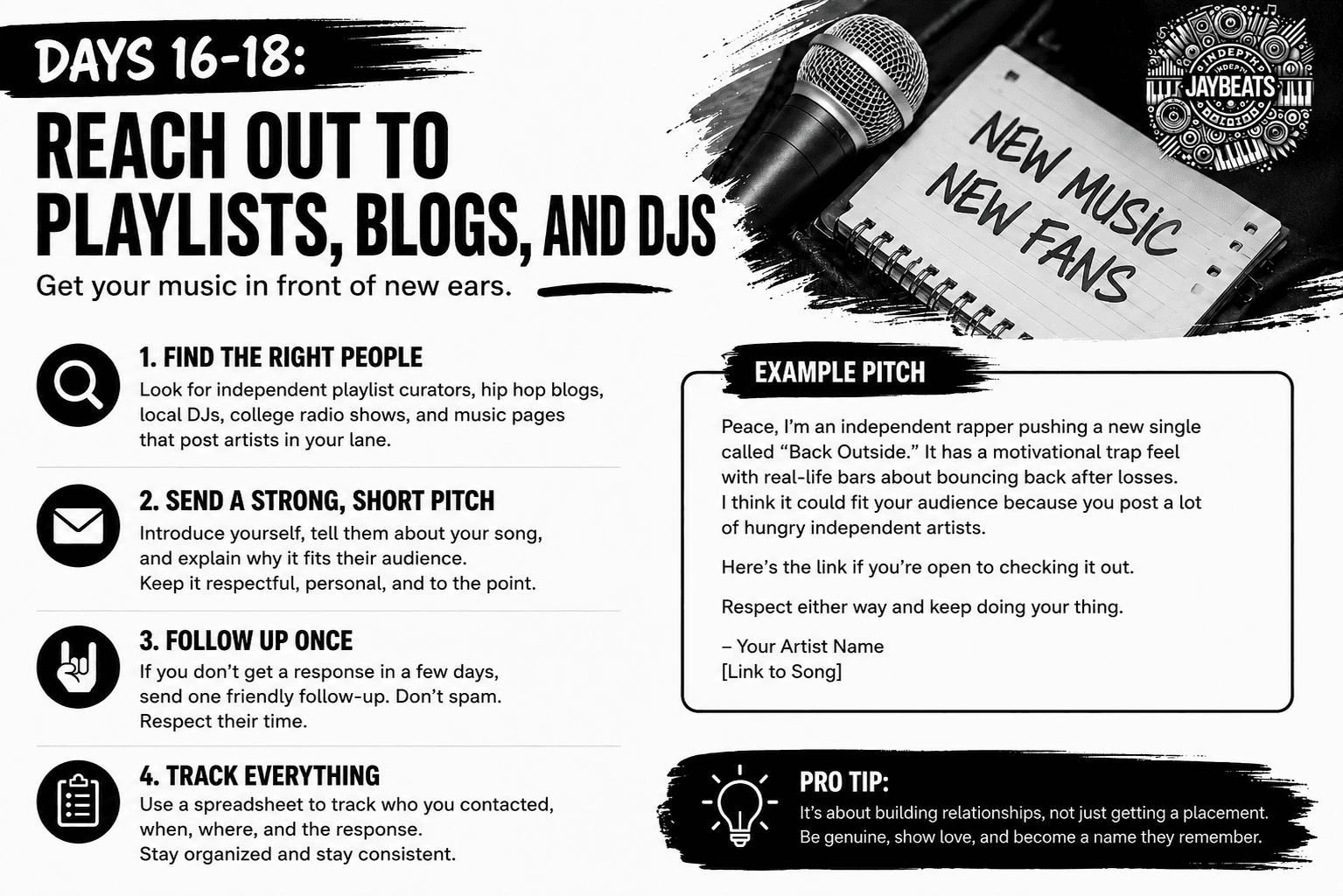
Now that your song has content behind it, start reaching out.
Find independent playlist curators, hip hop blogs, local DJs, college radio shows, reaction channels, and music pages that post artists in your lane.
Do not send a dry message like:
“Check me out.”
That is the fastest way to get ignored.
Send a short pitch:
“Peace, I’m an independent rapper pushing a new single called ‘Back Outside.’ It has a motivational trap feel with real-life bars about bouncing back after losses. I think it could fit your audience because you post a lot of hungry independent artists. Here is the link if you are open to checking it out.”
Keep it respectful. Keep it short. Make it about why your song fits them, not just why you want attention.
Track who you contact in a spreadsheet. Include the name, platform, date, link, and response. Follow up once after a few days if they do not respond. Do not be annoying. There is a thin line between hustle and “bro, please leave me alone.”
Days 19-21: Use Your Email List or Build One
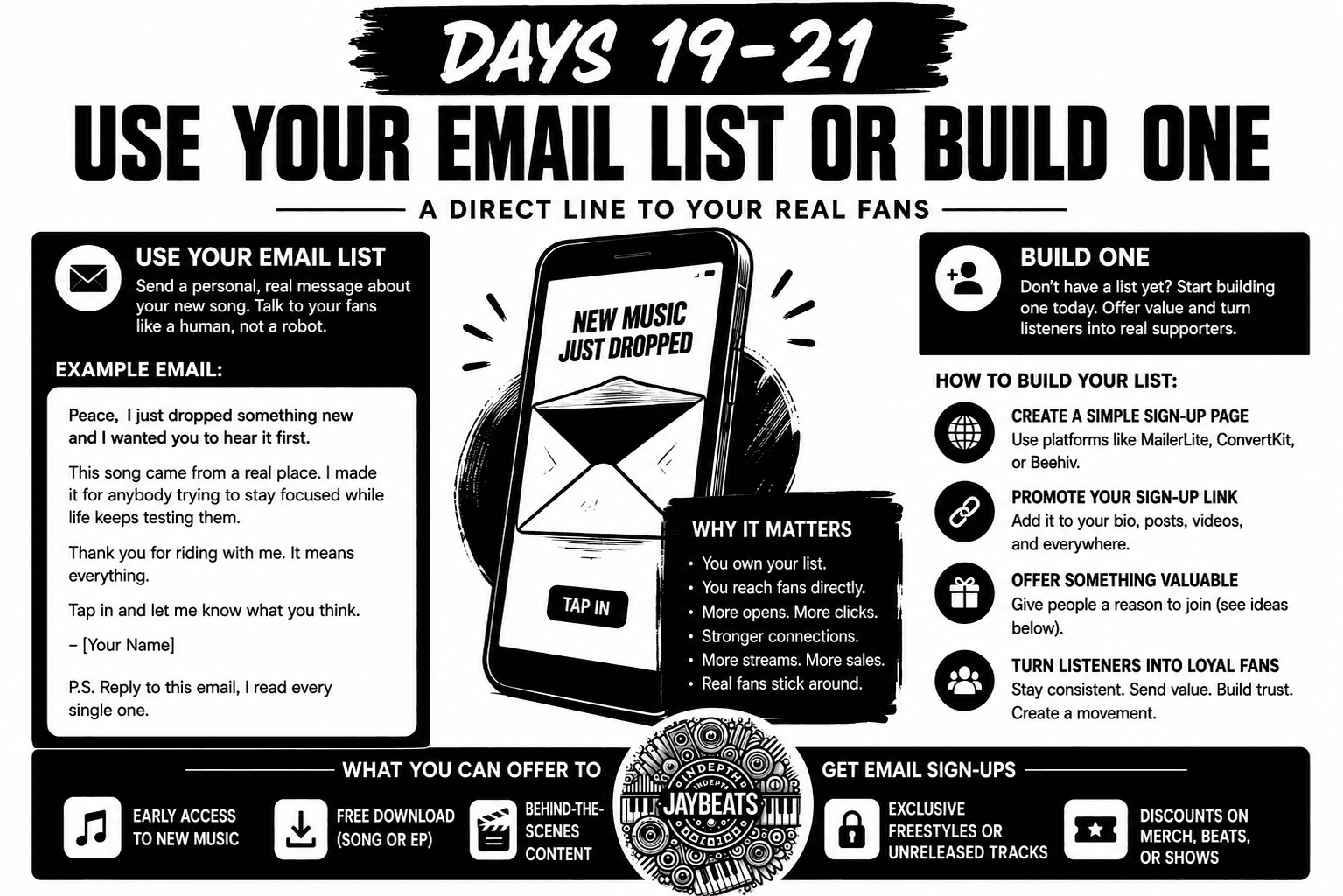
Social media is powerful, but you do not own it. Your account can get hacked, shadowbanned, or buried by the algorithm. An email list gives you a direct line to your supporters.
If you already have an email list, send a personal message about the song. Do not make it sound like a corporate newsletter. Make it feel like the artist is talking directly to the fan.
Example:
“Peace, I just dropped something new and I wanted you to hear it first. This song came from a real place. I made it for anybody trying to stay focused while life keeps testing them. Play it when you need that extra push.”
If you do not have an email list yet, start building one. Offer something simple:
Early song access
Unreleased track
Free download
Behind-the-scenes video
Private listening link
Exclusive freestyle
The goal is to turn casual listeners into reachable fans. A follower might miss your post. An email subscriber is easier to reach when it is time to drop again.
Days 22-24: Run a Small Ad Test
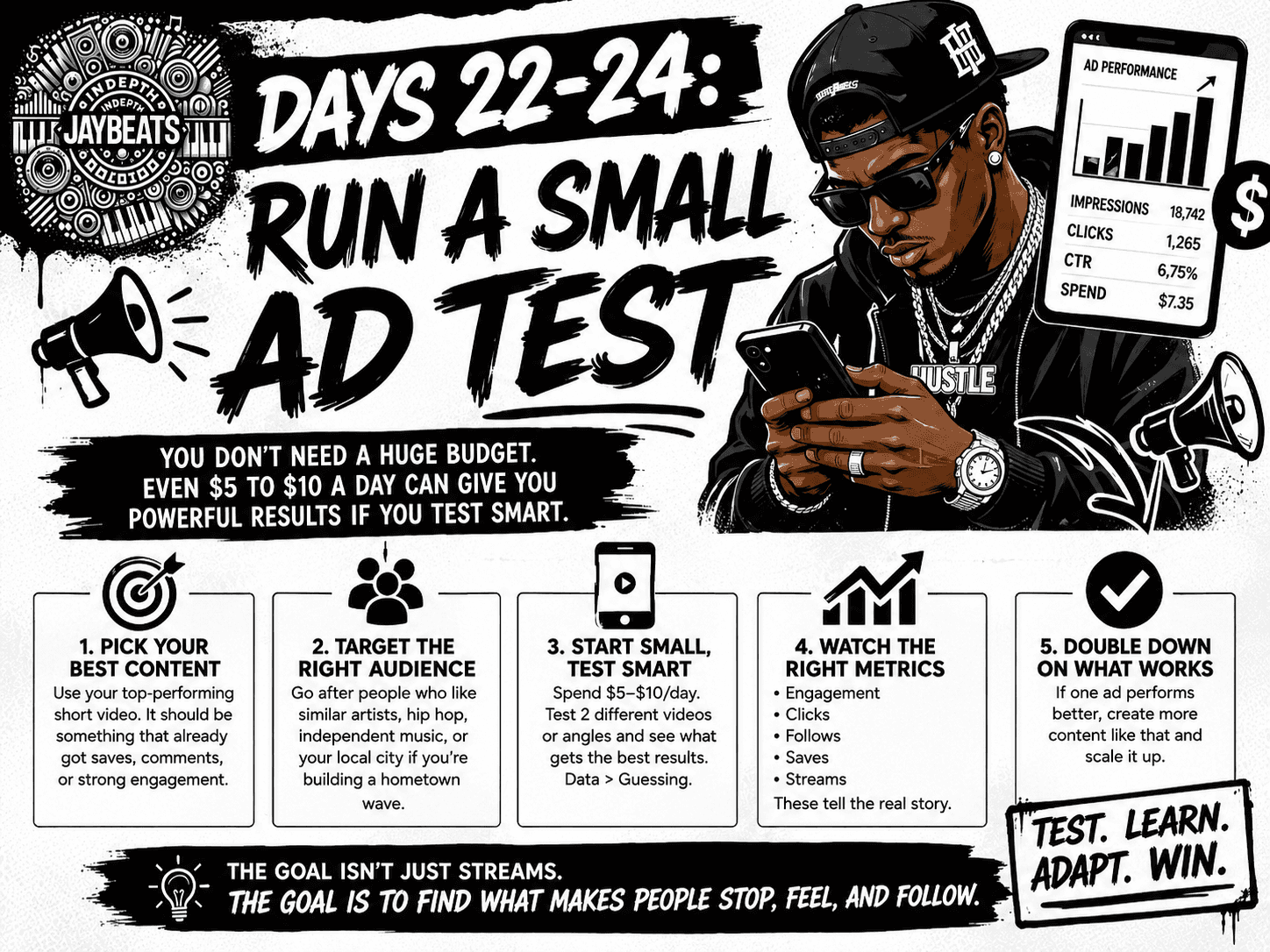
You do not need a huge ad budget to learn what works. Even $5 to $10 a day can give you useful data if you have the right content.
Pick your best-performing short video from the first three weeks. Run it as an ad to people who like similar artists, hip hop culture, independent music, or your local city if you are building a hometown movement.
Do not send cold traffic straight to a streaming platform if the video has no context. Start with content that makes people care. A good ad should feel like a post, not a commercial begging for streams.
Test two versions:
One performance clip.
One story-based clip.
Watch which one gets better engagement, clicks, saves, comments, and follows. The point is not just to get streams. The point is to find out what message makes people stop scrolling.
If one video works, make five more like it.
Marketing is not guessing forever. Marketing is testing until the audience shows you the door.
Days 25-27: Turn Fans Into a Street Team
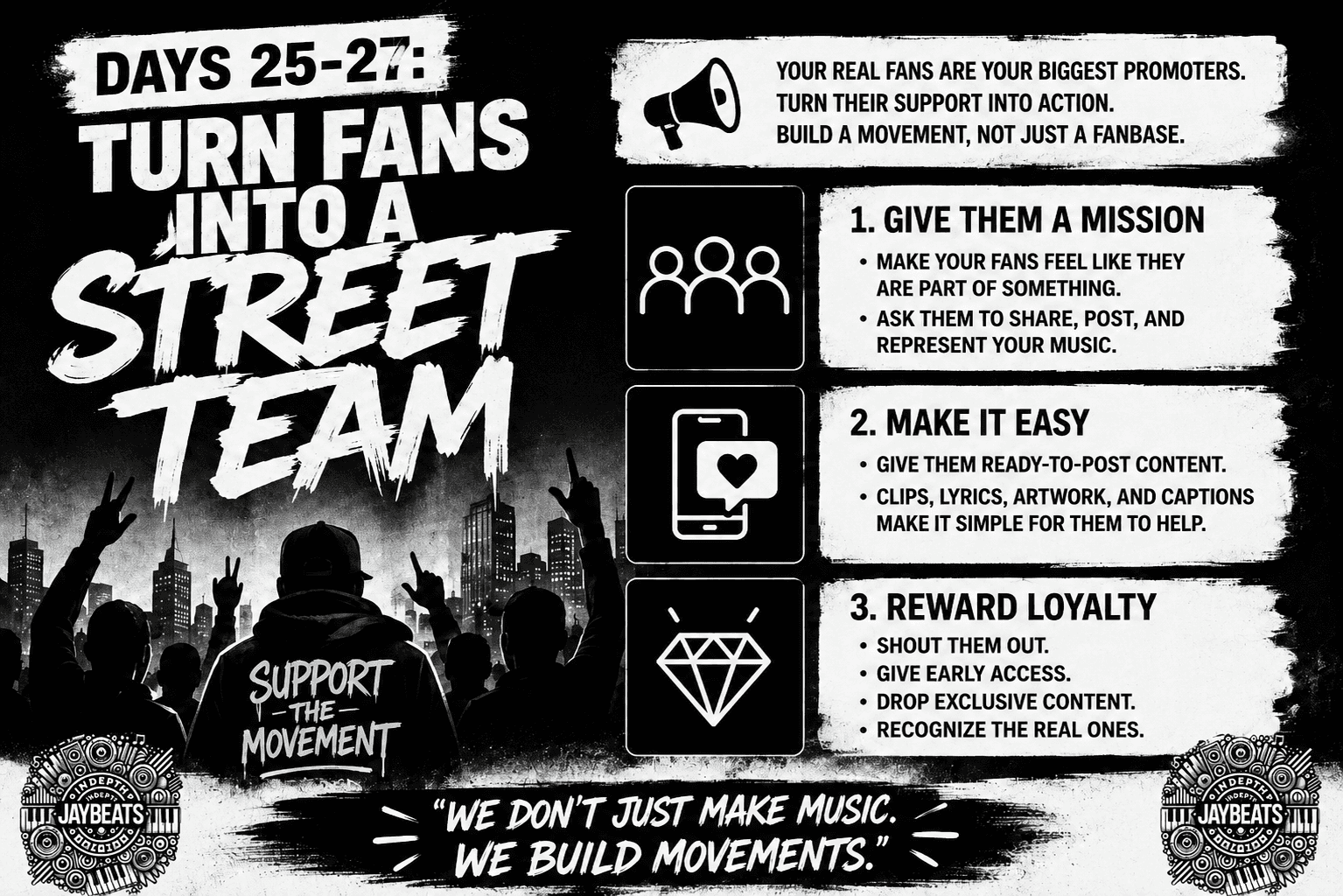
Once people start showing love, give them a mission.
Ask your supporters to help you push the song. Not in a fake way. Invite them into the movement.
Post something like:
“If this song hit you, send it to one person who needs it today. That helps more than you know.”
Or:
“I’m trying to get this record in front of more real listeners. If you believe in the movement, repost this clip and tag me.”
You can also create a small group chat or private email segment for your strongest supporters. Give them early access to new songs, exclusive clips, and personal updates.
People support harder when they feel included. Do not treat fans like numbers. Treat them like day-one investors in your dream.
Days 28-30: Review the Data and Plan the Next Move
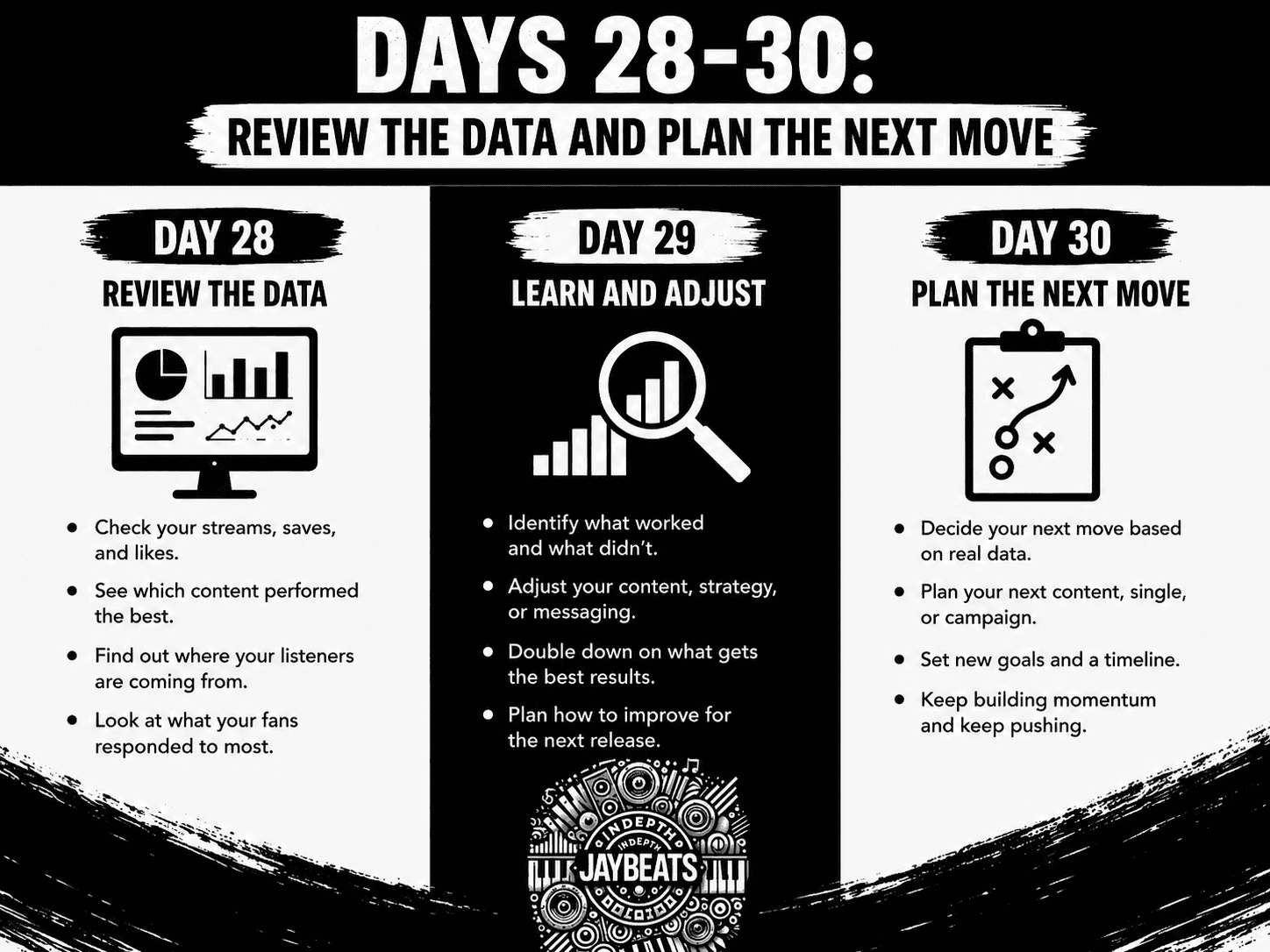
The last three days are about studying what happened.
Look at the numbers, but do not only chase vanity metrics.
Check:
Which video got the most saves?
Which post got the most comments?
Which caption made people reply?
Which platform brought the most traffic?
Which city streamed the song most?
Which playlist added the song?
Which message got the best response?
Which content felt most natural for you?
This is where you learn your audience. Maybe your fans connect more with pain music. Maybe they love your motivational records. Maybe your studio clips perform better than your music videos. Maybe your hometown is waking up before the rest of the world.
Do not ignore the clues.
At the end of 30 days, decide the next move. You can keep pushing the same song if it is growing, drop an acoustic or remix version, shoot a video, perform it live, or move into the next single with better information.
The point is to stop releasing blindly.
Every release should teach you something.
Daily Checklist for Independent Rappers
Here is the simple version of the 30-day plan:
Post one piece of content every day.
Reply to every comment.
Start five real conversations daily.
Contact three music pages, DJs, blogs, or curators daily.
Track your results.
Improve your hooks and captions.
Keep pushing even when one post flops.
That last one matters most. Most artists quit the rollout too early. They drop a song on Friday, post it twice, get mad by Monday, and then start talking about the next song. That is not marketing. That is emotional gambling.
A real rollout needs pressure. It needs repetition. It needs your face, your story, your voice, your effort, and your belief behind it.
What to Post During the 30 Days
If you get stuck, use these content ideas:
“Why I wrote this song”
“The real story behind this bar”
“Watch me record the hook”
“Rappers, would you jump on this beat?”
“POV: You finally stop doubting yourself”
“Send this to somebody chasing a dream”
“This song is for anybody who took a loss and came back colder”
“Studio session recap”
“Before the mix vs. after the mix”
“Fan reaction repost”
“Duet/open verse challenge”
“Lyric breakdown”
“Car test”
“Live performance clip”
“Mistake I made as an independent artist”
“Why I am staying independent”
You do not need to reinvent the wheel every day. You need to show up with a clear message.
The Mindset That Makes This Work
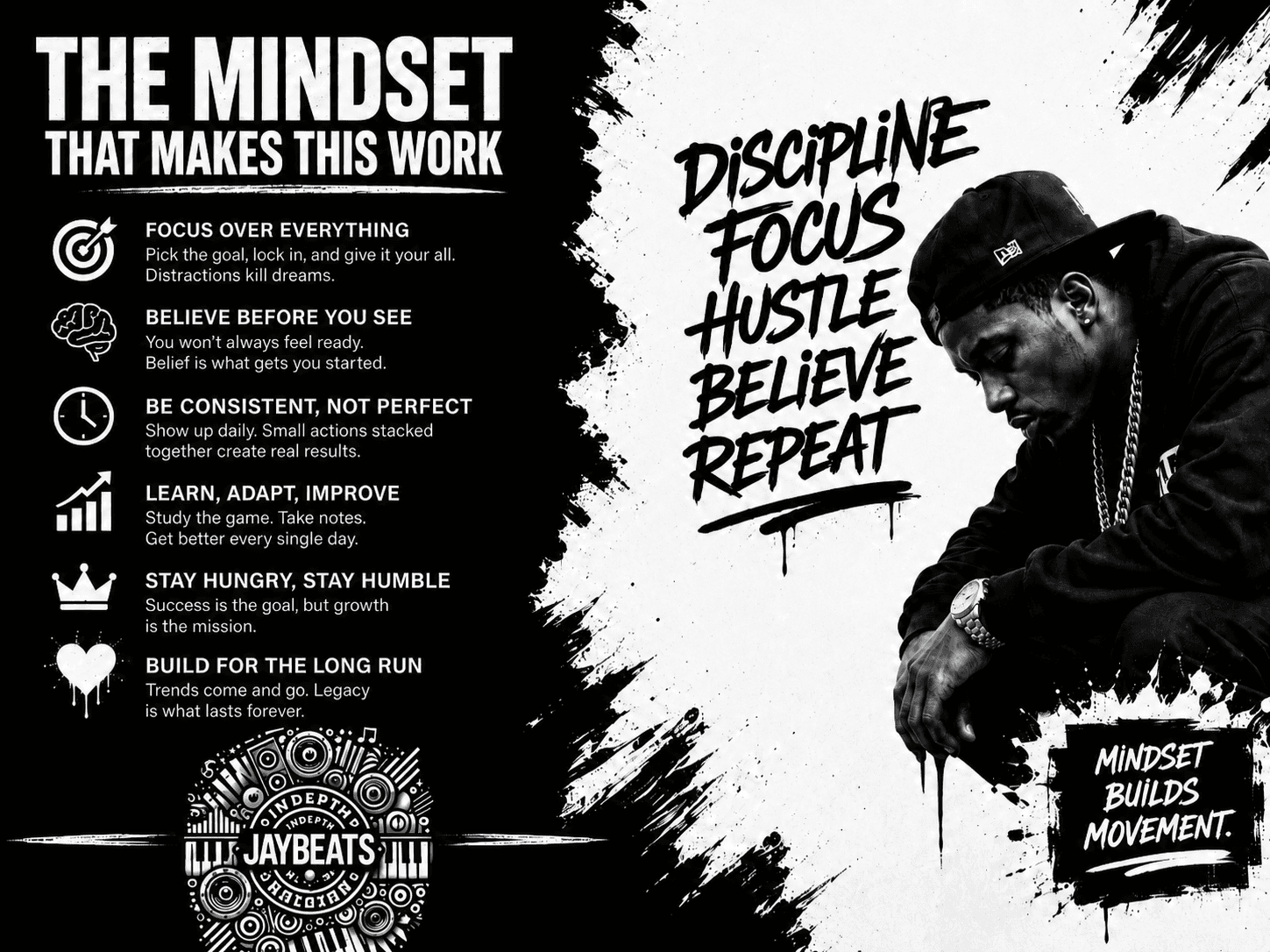
A 30-day music marketing plan only works if you stop treating your career like a lottery ticket.
Going viral is cool, but building a fanbase is better. Viral attention can disappear fast. Real fans stay, buy, stream, share, comment, pull up, and tell other people about you.
You are not just promoting a song. You are training people to care about your journey.
That means you have to be consistent when the numbers are low. You have to post when you feel awkward. You have to keep improving when the first version does not hit. You have to stop hiding your music like the world is supposed to magically discover it.
The rappers who win are not always the ones with the biggest chains, biggest budgets, or biggest connections. Sometimes it is the artist who treats every release like a campaign, every fan like a real person, and every day like a chance to build leverage.
Your music deserves more than a random upload.
Give it 30 days of real pressure.
Pick the song. Build the story. Create the content. Start the conversations. Reach out. Test ads. Study the results. Then do it again, cleaner and stronger.
That is how independent rappers build motion.
Not by waiting for a label.
Not by begging for attention.
Not by dropping and disappearing.
You build it brick by brick, post by post, fan by fan, song by song.
Thirty days from now, you can either have the same unreleased music sitting in your phone, or you can have a real campaign moving through the streets and the internet.
The choice is yours.