
Where Rappers Actually Find Free Beats Worth Using in 2026
According to the International Federation of the Phonographic Industry (IFPI), approximately 1.85 billion people, around 26% of all global music listeners, tune into rap and hip-hop music. That is an enormous audience, and the demand for quality production has never been higher. Yet for independent artists just getting started, hiring a producer outright can be prohibitively expensive. This is exactly why knowing where to find free beats worth using is one of the most practical skills any rapper can develop in 2026.
Hip-hop and rap led all genres with 34.02% of independent artist revenue in 2025, riding evergreen listener demand and efficient loop-based production that favours quick releases. If you want a slice of that audience, you need production that sounds the part, and the good news is that the internet is full of it, provided you know where to look and what to watch out for.
Key Takeaways
Free beats are tools for writing and testing, not always for release: A tagged beat is a version of a beat that includes vocal drops or producer tags throughout the track, added to protect the beat from unauthorised use, think of it like a watermark. They allow artists to preview the beat, write to it, and see how it fits their style, but they are not meant for official releases. Therefore: use tagged beats to write and practise, then licence properly before uploading to streaming platforms.
YouTube remains the biggest discovery engine for free rap beats: Producers upload millions of type beats labelled "free" each year, making it the fastest place to find a sound. Always read the description carefully, as "free" almost always means "free for non-commercial use only."
Royalty-free is not the same as copyright-free: Royalty-free does not automatically mean you can use a beat for anything. The distinction between the two has real legal and financial consequences, so always read the licence before recording.
Leasing a beat is the smart middle ground: Most rap beat leases vary in price from $10 to $200 depending on the licence type. Today, thousands of independent rappers lease beats online as an affordable way to record professional music without spending hundreds or thousands of dollars on exclusive production. Therefore: if a track is gaining traction on social media, upgrade from a free demo to a paid lease before monetising.
Beat style matters as much as sound quality: Matching the right sub-genre, boom bap, trap, drill, to your lyrical flow is what separates forgettable demos from memorable records. Spend time identifying your style before mass-downloading beats.
Quick-Start Prioritisation Framework
Source / Strategy | Best For | Effort Level | Time to First Usable Beat |
|---|---|---|---|
YouTube type beat search | Finding a specific sound fast | Low | Minutes |
Dedicated free beat websites | Downloading no-tag beats | Low | Under an hour |
Producer beat stores (free tier) | Building a producer relationship | Low, Medium | 1-2 hours |
Leasing a beat ($10, $50) | Commercial release-ready tracks | Medium | Same day |
Exclusive beat purchase | Major singles with marketing budget | High | Varies |
Custom beat commission | Unique, brand-defining sound | High | Weeks |
Start here if you are:
Brand new to recording: Use YouTube or a free beat site to find a tagged demo, write your verses, and record a practise take. Identify your style before spending anything.
Ready to release your first single: Purchase a basic lease from a trusted producer. A $20-$50 lease gives you commercial rights without a large upfront cost.
Building a long-term catalogue: Establish a relationship with one or two producers whose sound fits your brand. Many offer bulk deals or subscriber pricing that brings the per-beat cost down significantly.
What "Free Beats" Actually Means (and What It Doesn't)
Before hunting for free rap beats, it is worth understanding what producers mean when they use the word "free", because in this context, it rarely means free without conditions.
Tagged Beats vs. Beats with No Tags
A tagged beat is a version of a beat that includes vocal drops or producer tags throughout the track. These tags are added to protect the beat from unauthorised use, think of them like a watermark. Most free beats you find on YouTube come with these audio tags baked in at regular intervals. In my experience, artists who release music over tagged beats immediately signal to listeners, and industry contacts, that they have not invested properly in their project. The tag draws attention away from the vocals and undermines the professional presentation of the song.
Some platforms offer all tracks with no tags, all you have to do is follow the producer on social media. These beats are royalty-free, meaning you can use them for any purpose and never owe royalties to a producer, keeping 100% of your project's earnings. These are the free beats actually worth using, and they are more common than most new rappers realise.
Royalty-Free vs. Copyright-Free
This is one of the most misunderstood distinctions in the independent rap world. Copyright-free music, also called public domain, has no owner, anyone can use it for anything. Sounds great, right? The problem is that truly copyright-free beats are extremely rare and often low quality. Most "copyright-free" claims online are false. Royalty-free, by contrast, means you pay once (or nothing, under specific terms) and do not owe ongoing royalties, but the producer still holds the copyright. Always confirm whether a beat is cleared for commercial monetisation before uploading to Spotify or YouTube.
Pro Tip: Before downloading any free beat, scroll to the description and find the licence terms. If the description says "free for non-profit use," that means no Spotify releases and no monetised YouTube videos. If it says "free for profit," confirm whether that includes streaming platforms or just SoundCloud uploads.
The Main Places Rappers Find Free Beats in 2026
YouTube Type Beat Channels
YouTube remains the single most-used platform for finding free rap beats and hip hop beats downloads. Producers upload type beats, instrumentals designed to replicate the sound of a particular artist, and label them "free" as a lead-generation strategy. The reason producers add "FREE" in their titles has to do with marketing strategies and ranking on YouTube. In simple terms: it's often used as clickbait. That is not necessarily dishonest, the beat is free to use under specific conditions, but it does mean you need to read the description rather than assuming.
Searching terms like "trap beats free download," "boom bap instrumentals free," or "free beats no tags 2026" will surface thousands of options. The quality varies enormously. Filter by upload date to find recent production, and pay close attention to channel credibility: producers with consistent branding, a large subscriber count, and detailed licence descriptions in their video descriptions are generally more trustworthy.
Dedicated Free Beat Websites
Several platforms exist specifically to host free or low-cost beats for rappers. FreeBeats.io is one of the longest-running, offering every free beat encoded in both a 320kbps MP3 and high-quality WAV format, compatible with all major digital audio workstations. Platforms like Rapchat go further, hosting over 300,000 free beats and instrumentals spanning rap, trap, drill, and R&B from top producers. With a catalogue that large, the real skill becomes filtering efficiently, search by BPM, mood, or style rather than scrolling endlessly.
BeatsToRapOn takes a curated approach, focusing on quality over volume. The best rap beats support the rapper's flow, leave space for vocals, hit emotionally, and give the track the right feel before a single lyric is recorded. Their library spans boom bap to modern trap, and the site also includes tools like a BPM finder and stem splitter, making it useful beyond just discovering beats.
Producer Beat Stores and Free Tiers
Many independent producers offer a small selection of free beats as part of a broader catalogue. This is where the relationship model comes in. Producers like those at IndepthJayBeats, a producer with over 18 years of experience crafting hip-hop, trap, and boom bap production, offer free beat options directly to artists who sign up, allowing you to hear the production standard before committing to a licence. Dropping your email can unlock 20 or more free beats sent directly to your inbox. This approach is worth prioritising, because you are getting production from a single identifiable creator with a consistent sound, far more useful than stitching together random beats from ten different YouTube channels.
Pro Tip: Building a relationship with one producer whose style suits you is more valuable than having 200 random free beats on your hard drive. When you are ready to release commercially, upgrading from a free demo to a paid lease with someone you already trust is a straightforward conversation.
Understanding Beat Styles: Boom Bap vs. Trap
Finding a free beat is only half the equation. Knowing which style suits your approach determines whether that beat makes your performance shine or holds it back.
What Is Boom Bap?
Boom bap is a subgenre of hip-hop and music production style that was prominent in East Coast hip-hop during the golden age of hip-hop from the late 1980s to the early 1990s. The term "boom bap" is an onomatopoeia that represents the sounds used for the bass (kick) drum and snare drum, respectively.
Boom bap is characterised by hard-hitting drums, usually containing the kick drum, snare drum, and hi-hat combination, rather than claps, snaps, TR-808 bass drums, or various other percussion sounds used for rhythm. Boom bap separated itself from previously commercially released hip-hop music by replacing a full polished sound with a stripped-down beat. This minimalism is its defining quality; it gives the MC space to breathe, to emphasise syllables, to control the pace of a verse with precision.
For classic, lyrical freestyling a BPM of 85-95 is ideal. If your style is more conversational, lyrically dense, or old-school in its cadence, boom bap instrumentals are almost certainly your best starting point. A resurgence is actively underway: Griselda Records leads this resurgence with artists like Benny the Butcher, Westside Gunn, and Conway the Machine, whose gritty production and street narratives captivate audiences tired of overproduced commercial rap.
What Are Trap Beats?
Trap music is a genre rooted in Southern hip-hop, defined by aggressive 808 basslines, fast hi-hat rolls, sharp snare hits, and dark, atmospheric synths. The speed of the trap beat typically falls between 130 and 170 BPM. However, and this is a point many new rappers miss, most trap instrumentals are between 130-170 BPM, but rappers typically feel it at half that speed (65-85 BPM), creating its signature bounce.
This "half-time feel" is what gives trap its distinctive groove. When you rap over a trap beat, you are locking in with the slower, heavier pulse rather than the underlying technical tempo. The speed of the trap beat sounds from 808 drum kits, especially kick, snare, clap, and hi-hat electronic beats. Trap beats also use distortion and reverb effects to give the sound a gritty edge.
Pro Tip: When browsing for trap beats free download options, filter for beats at 140 BPM and listen specifically to where the 808 sits. A good trap beat leaves a clear vocal pocket, silence in the upper-mid frequencies where your voice will sit. If the melody is too busy or the 808 is too high in the mix, your vocals will constantly fight for space.
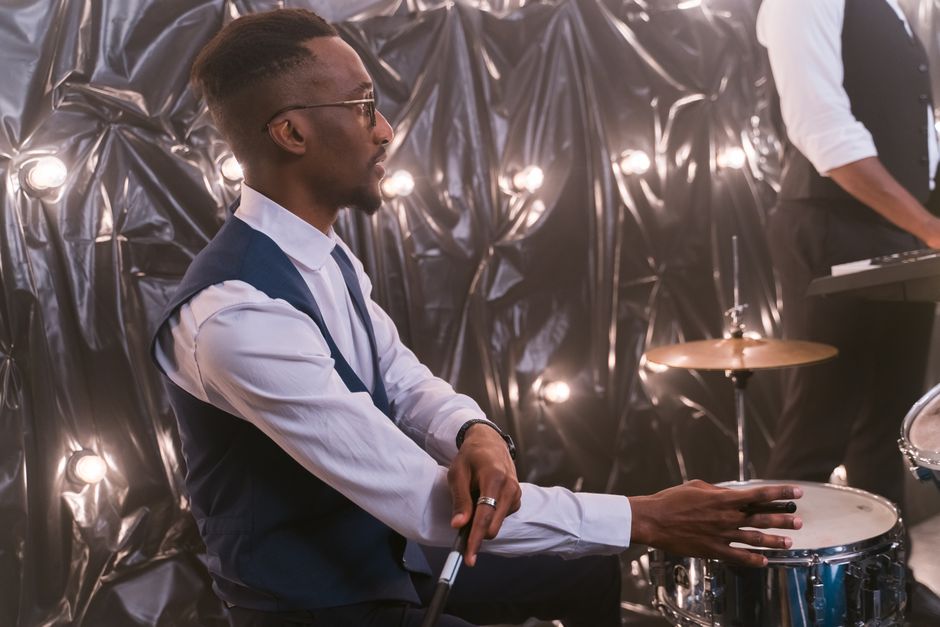
The following instrumental is a solid example of the boom bap style in practice, giving you a clear sense of its characteristic hard-hitting drum patterns and gritty texture.
When Free Is Not Enough: Leasing and Buying Beats
At some point, a free beat, especially a tagged one, will no longer serve your goals. Understanding the next step prevents costly mistakes.
How Beat Leasing Works
A lease, also known as a non-exclusive licence, allows you to use a beat while the producer can still sell it to other artists. This is the most common option, especially for independent artists. Leasing beats is similar to renting music from a producer for a certain length of time. You pay once, receive a licence agreement, and can release the song commercially within the terms of that agreement.
The practical implication: after you buy a lease, the producer can, and will, sell that same beat to other artists. Five other rappers might release a song over the same beat as you. That is not a betrayal of trust; it is the explicit structure of the deal. The low price of a lease is made possible because the same beat sells multiple times. If you want exclusivity, you need to pay for it.
Exclusive Beats: When to Upgrade
Exclusive beats are ideal when you are serious about a specific track. If you believe a song has strong potential, or if you are building a brand and want a unique sound, going exclusive can be a powerful move. It ensures that your music stands out and that no one else is using the same instrumental. Exclusive licences typically cost $500 to $3,000 or more. The beat is removed from the store and no one else can buy it, ever.
The decision rule is straightforward: if you are writing and experimenting, use free beats or lease inexpensively. If a track is gaining genuine traction and you plan to invest in a music video, press campaign, or playlist pitching, go exclusive before you scale promotion. Platforms like IndepthJayBeats offer both lease and exclusive options, with production spanning hip-hop, trap, and boom bap to suit different artist styles.
Common Mistakes Rappers Make When Sourcing Free Beats
Using Tagged Beats on Official Releases
A lot of rappers still download free beats online and hope for the best, but that can cause problems down the line. Unlicensed or tagged instrumentals can trigger copyright claims or prevent you from monetising your music. The fix is simple: always confirm the licence status of any beat before you upload to a streaming platform or monetise a video.
Ignoring YouTube Content ID
A Content ID claim is not the same as a copyright strike, but it can redirect your ad revenue to the rightsholder. Even royalty-free or paid music can trigger claims if the track is registered and your licence is not properly documented. Before buying from any producer, ask directly whether they register their beats with Content ID, and get that answer in writing. Some producers explicitly do not register, which eliminates this risk.
Treating All Free Beats As Equal
Quality varies dramatically across free beat sources. Strong drum patterns, clear pockets, vocal-friendly mixes, and space for the artist's voice are what make a beat truly usable. Every rap beat should be checked for quality, no 30-second loops, no throwaway uploads. Real instrumentals from real producers, built for rappers who need space to perform. Apply these criteria before you fall in love with a beat based on the melody alone.
Frequently Asked Questions
What does "free for non-profit use" mean on a beat?
It means you can rap over the beat, share the recording on non-monetised platforms like SoundCloud, and use it for practise sessions, but you cannot upload it to Spotify, Apple Music, or a monetised YouTube channel. When a beat is free for non-profit use, you're allowed to rap or sing over it for fun, upload your track to YouTube or SoundCloud as long as it's not monetised, or post it on social media for a freestyle video, but you can't sell the song, collect royalties, or put it on streaming platforms.
What is the difference between a beat lease and an exclusive beat?
A beat lease is a deal between a music producer and an artist, letting the artist use the producer's beat for a set time and under certain rules. With a non-exclusive lease, multiple artists can use the same beat. It is cheaper and great for new artists on a budget. An exclusive purchase removes the beat from sale entirely, meaning only you can use it. The right choice depends on your budget and how much marketing investment the song is likely to receive.
Are free beats on YouTube actually free to use commercially?
Generally, no. Free beats are instrumentals that producers make available to artists without requiring payment upfront. They're often labelled as "free for non-profit use," which sounds generous, but that label matters. A small number of producers do release beats as genuinely free for commercial use, but these are in the minority. Always read the video description in full and look for explicit language about commercial rights.
What is boom bap, and is it still relevant in 2026?
Boom bap is more than just a sub-genre of hip-hop; it is a defining sound that captures an era when hip-hop culture was still breaking into the mainstream. With a rich history, innovative production techniques, and wide-reaching influence, boom bap laid the foundation for hip-hop production as we know it today. Its raw, lyric-forward sound is actively experiencing a revival, with artists across the UK and US returning to stripped-back drums and sample-based production as a counterpoint to heavily processed commercial rap.
How do I know if a free beat is good enough quality to record over?
Listen for three things: a clear drum pocket with defined kick and snare placement, a melody that sits back in the mix rather than competing with where your voice will sit, and a consistent BPM with no timing drift. A good freestyle rap beat has a clear, predictable drum pocket, a simple looping melody that doesn't compete with vocals, and a steady BPM. The best freestyle beats leave space for the rapper's voice to be the focus. If the melody is too busy or the production is poorly mixed, even a great vocal performance will sound unprofessional.
The Bottom Line
The internet has never offered more free beats for rappers than it does right now. Independent hip-hop artists grew 32% on YouTube to 3.4 million channels, reflecting how deeply embedded this culture of online beat-sharing has become. That growth is an opportunity, but only for artists who approach the process with clarity. Know the difference between a tagged demo and a commercially usable beat. Understand what a lease actually gives you. Match your beat style to your lyrical approach.
For rappers who want to move beyond random YouTube downloads and work with a producer whose catalogue has consistent character, IndepthJayBeats is worth exploring. With over 18 years of production experience and a catalogue spanning trap, boom bap, and hip-hop, it is the kind of producer relationship that accelerates an artist's development rather than just filling a hard drive with instrumentals.
When you find a beat that genuinely fits, one that makes your words sound inevitable, the next step is protecting that investment with the right licence. Do not let a technicality strip your monetisation the moment a track starts gaining traction.
Sources
IFPI Global Music Report, International Federation of the Phonographic Industry. Global music listener data and genre consumption. https://www.ifpi.org
Independent Artists Market Report, Mordor Intelligence. Hip-hop and rap revenue share statistics, 2025. https://www.mordorintelligence.com/industry-reports/independent-artists
Free Beats: The 5 Best Free Beat Marketplaces in 2026, LANDR Blog. Overview of beat marketplace platforms and royalty-free licensing. https://blog.landr.com/free-beats/
How to Use Free Tagged Beats the Right Way, Silas Beats. Guide to tagged beat usage and licensing implications. https://www.silasbeats.com/post/how-to-use-free-tagged-beats-the-right-way-without-getting-in-legal-trouble
What Makes a Beat Copyright-Free?, Soundraw Blog. Beginner's guide to music rights and royalty-free distinctions. https://soundraw.io/blog/post/what-makes-a-beat-copyright-free
Beat Licensing Explained: Lease vs Exclusive, Tellingbeatzz. Full guide to non-exclusive and exclusive beat licences. https://tellingbeatzz.com/beat-licensing-explained-lease-vs-exclusive-full-guide/
Beat Lease vs Exclusive: Guide, The Corporate Thief Beats. Lease pricing and licensing structure breakdown. https://thecorporatethiefbeats.com/hip-hop-beats/what-does-it-mean-to-lease-a-beat/
Beat Licensing: Lease vs Exclusive 2026, O'Neil Beats. Real-world exclusive pricing and lease terms. https://oneilbeats.store/blog/lease-vs-exclusive-beat-license-guide
What Is Boom Bap Music?, eMastered. History and production characteristics of boom bap. https://emastered.com/blog/what-is-boom-bap
Boom Bap, Wikipedia. Subgenre origins, etymology, and cultural context. https://en.wikipedia.org/wiki/Boom_bap
Essential Elements of Trap Beats Explained, House of Tracks. BPM ranges, 808 characteristics, and trap production fundamentals. Key elements of a trap beat
Guide to Trap Music, MasterClass. History and characteristics of trap music production. The speed of the trap beat
YouTube Content ID for Music: 2026 Guide, Foxi Blog. Monetisation, Content ID claims, and royalty-free music interaction. https://www.foximusic.com/blog/youtube-content-id-for-music-guide-monetization/
Can You Use Free Beats on Spotify or Apple Music?, Tellingbeatzz. Commercial use rules and streaming platform licensing. https://tellingbeatzz.com/can-you-use-free-beats-on-spotify-or-apple-music-heres-what-you-need-to-know/
50+ Free Freestyle Rap Beats, BeatsToRapOn. Curated free beat library with BPM and genre breakdown. https://beatstorapon.com/freestyle-rap-beats/
FreeBeats.io, Royalty-free hip-hop beat download platform with no-tag options. https://freebeats.io/
Independent Music Industry Statistics, Gitnux. Verified data on independent hip-hop artist growth on YouTube. https://gitnux.org/independent-music-industry-statistics/
IndepthJayBeats, Producer platform offering hip-hop, trap, and boom bap beats with free and licensed options. https://indepthjaybeats.com/

Get 20+ Free Beats delivered to your inbox
Drop your name and email and I'll send a pack to your inbox right away.
We respect your inbox, no spam. Promise!