
For most independent rappers in 2026, a single dropped every 6 to 8 weeks is the sweet spot, though 4 to 6 weeks can work if your workflow can actually sustain it without cutting corners. Three plans get you there: Beginner (building from zero), Growing (some real engagement), and Established (a catalog and an audience that expects you). Berklee’s own marketing research backs the steady cadence, and Spotify’s editorial team wants your pitch in weeks before you even think about a release date.
TL;DR:
Independent artists should aim to release singles every 4 to 8 weeks to optimize discovery and growth on platforms like Spotify, TikTok, and Instagram.
A realistic release cadence for most is about 6 to 9 tracks annually, spaced roughly every 5 to 7 weeks, with diminishing returns beyond that.
For sustained success, artists must balance release frequency with quality, ensuring their tracks have strong intros and proper metadata to avoid the skip penalty.
Building a backlog of at least 4 to 8 finished tracks before starting a new cycle prevents rushed releases and maintains consistent output.
Effective promotion requires around 20 to 30 clips per release, including hooks, lyric breakdowns, behind-the-scenes, and reaction content, to maximize reach.
Table of Contents
Weekly Versus Monthly Releases: Pick a Rhythm You Can Actually Hold
Building a Singles-First Strategy and the Waterfall Approach
How Long to Promote One Song, and What to Check Before the Next Drop
How Often Should Independent Rappers Release Music in 2026?
The old model was drop an album, tour it, disappear for two years. That’s dead. In 2026, the game is singles first, algorithm-fed, and relentless in a controlled way. Slow Oak Studio’s marketing analysis found independent artists compound growth fastest when they release singles every 4 to 8 weeks, because each drop is a fresh shot at discovery across Spotify, TikTok, and Instagram. One song doesn’t have to blow up. It just has to open a new door.
Here’s the standard industry term you’ll hear producers and A&Rs throw around: release cadence. That’s just the rhythm you keep between drops. “How often should I release music” and “how often should rappers drop songs” both come back to the same answer: cadence isn’t about hustle for hustle’s sake. It’s about giving the algorithm enough fresh data points to learn who your fans are. Analysis from MusicPulse shows 6 to 9 releases a year, roughly one every 5 to 7 weeks, correlates with the strongest monthly listener growth for a lot of independent artists. Push way past that and you start seeing diminishing returns. Nobody can absorb a song a week and actually market it right.
Every artist tier needs a different pace, though. A brand new artist with zero following moves different than somebody sitting on 50,000 monthly listeners. That’s why this whole playbook runs on three lanes, and you’ll see them repeat through every section below.
Weekly Versus Monthly Releases: Pick a Rhythm You Can Actually Hold
Weekly drops sound aggressive on paper, but almost nobody sustains it without the quality falling off a cliff. It works for a specific play: viral-first artists riding a TikTok sound or a meme moment, where the goal is volume and testing, not a long promotional arc for each song. If you’ve got a team, a beat catalog ready to go, and you’re chasing trend windows, weekly can make sense for a short sprint.
For everybody else, monthly to 6 to 8 week cycles hold up better long term. You get real pitching windows, real promotional runway, and time to actually mix a record instead of rushing it out the door.
Before you commit to a rhythm, check these operational realities:
Mixing and mastering turnaround — rushed masters sound thin on Bluetooth speakers and phone speakers, which is where most of your fans are listening.
ISRC codes and metadata — every release needs clean metadata or your streams and splits get tangled up with distributors.
Artwork production time — cover art, canvas videos, and lyric visuals all eat days you didn’t budget for.
Pitching windows — Berklee’s guidance recommends submitting your pitch three to four weeks ahead, which alone rules out true weekly drops for solo artists.
If you’re a one-person operation writing, recording, and mixing yourself, monthly is realistic. If you’ve got a producer, an engineer, and a content person on your team, you can flex tighter.
Quality Versus Quantity: Avoid the Skip Penalty
Streaming platforms track skip rates hard, and a song that gets skipped in the first 10 to 15 seconds tells the algorithm to stop recommending it. That’s the skip penalty, and it’ll quietly kill your reach even if the rest of the song is solid. Your intro has to hit. No slow fade ins, no 20 seconds of ambient noise before the beat drops.
Half-finished energy reads as half-finished quality, and listeners feel it in three seconds flat.
Before you upload anything, run this checklist:
Mix balance check — vocals sit clear over the beat on phone speakers, earbuds, and studio monitors, all three.
Master loudness — matched to streaming standards so your track doesn’t sound quiet next to what’s already in the listener’s playlist.
Hook placement — the strongest bar or melody lands inside the first 15 seconds, not buried at 1:20.
Metadata accuracy — correct songwriter credits, ISRC, and genre tags so distribution doesn’t flag or delay your release.
Reference test — play it back next to two songs currently in rotation on your target playlist to hear if it holds up.
Pro Tip: Play your rough mix in your car or on cheap earbuds before you finalize anything. Studio monitors lie to you. Your fans are listening on AirPods and a phone speaker in a noisy room, and that’s the environment your mix has to survive.
Building a Singles-First Strategy and the Waterfall Approach
Every single you drop is a separate shot at discovery. That’s the whole logic behind singles first. Instead of dumping 12 tracks at once and hoping the algorithm figures out which one to push, you’re feeding it one record at a time, watching what sticks, and building momentum record by record.
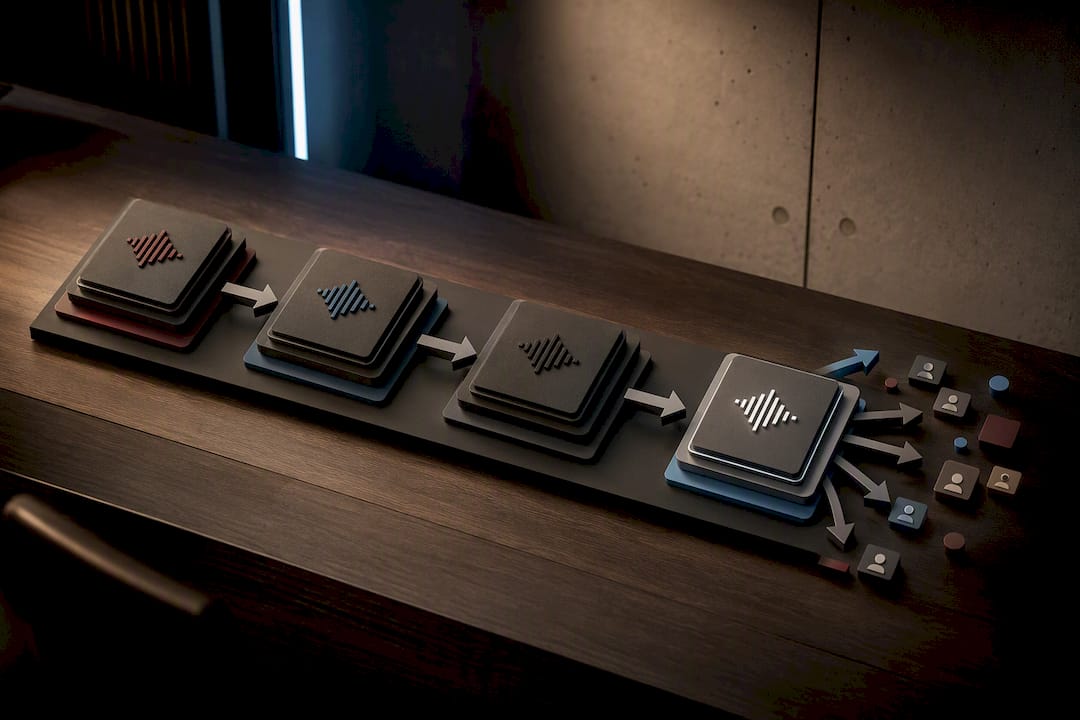
This is where the waterfall release comes in. You drop single one, let it run its promotional cycle, drop single two, and by the time you’ve got three or four singles out, you package them together as an EP that includes the already-released tracks plus maybe one or two new ones. The EP isn’t the start of the story. It’s the recap.
Here’s why this works algorithmically and not just creatively:
Each single gets its own pitching window and its own release-day push, multiplying your total touchpoints with playlist editors.
Fans who missed single one might catch single three, then go back and stream the whole run once the EP drops.
Your Spotify artist page stays active with fresh releases every 6 to 8 weeks instead of going quiet for months.
The EP becomes a natural moment to pitch bigger playlists, since it now shows a body of work instead of one isolated track.
A practical sequence: release three singles over 12 to 16 weeks, then bundle them with one new closer track into a 4 to 5 song EP. That closer gives fans a reason to come back even if they already streamed the first three.
How Many Songs to Prepare Before Launching
You don’t launch a release cadence off one song. You need backlog, real finished records sitting in the chamber before you start pitching anything. Running out mid cycle is how artists end up rushing a mix at 2 AM three days before a deadline, and it shows.
Here’s the minimum stock to have finished, not just recorded, before you start your calendar:
Beginner: 4 finished tracks. Enough to run a full quarter of releases without panic.
Growing artist: 6 to 8 finished tracks. Gives you room to test different sounds and see what your engaged fans respond to.
Established artist: 8 or more finished tracks, often organized around a theme or EP concept already in motion.
“Finished” means mixed, mastered, metadata clean, and artwork ready, not just a rough vocal over a beat. The production steps that actually eat your time are writing, tracking vocals, mixing, mastering, and artwork, in that order of time cost for most solo artists.
Batch these instead of doing them one at a time. Write four hooks in a single session instead of one per week. Track vocals for two songs back to back while your voice is already warmed up. A solo artist working nights and weekends can realistically build a 4 song backlog in 6 to 8 weeks. A small team with a dedicated engineer can cut that to 3 to 4 weeks.
Planning an EP Rollout From Singles
An EP built right doesn’t compete with your singles, it multiplies them. The move is picking your two or three strongest performing singles, the ones with the best saves-to-streams ratio, and pairing them with one or two new tracks nobody’s heard yet.
Timing matters here. Don’t wait so long between the last single and the EP that momentum dies, but don’t rush it either. A gap of 4 to 6 weeks after your final single gives you room to build promotional assets for the new songs while the earlier singles are still generating streams.
For each single going onto the EP, you want:
A short-form clip highlighting its strongest 15 seconds, reused for the EP promo push.
Updated cover art variations that visually tie the singles together as one project.
A short artist statement or behind-the-scenes clip explaining how the tracks connect.
For the EP drop itself, build one hero piece, a trailer style video cutting between all the tracks, that you can pitch to blogs and playlist curators as the centerpiece.
Catalog longevity comes from resequencing. An EP gives old singles a second life on release day, since algorithms often re-evaluate a track when it appears in a new context like a fresh project.
Creating Enough Promotional Content for Each Release
One song needs way more content than most artists think. If you drop a single and post three clips total, you’re leaving reach on the table that creators and algorithms would’ve picked up otherwise.
The target most working artists in 2026 are hitting: 20 to 30 short-form clips per release, according to independent marketing guidance for 2026. That sounds like a lot until you break down where they come from.
Hook clips (5 to 8 versions) — the same 15 second hook cut with different visuals, captions, and text overlays for testing.
Lyric breakdowns (3 to 5 versions) — one bar per clip, close captioned, for fans who discover through lyrics.
Behind-the-scenes (4 to 6 versions) — studio footage, writing process, mixing session clips.
Reaction bait (3 to 5 versions) — clips designed for other creators to duet or stitch.
Full visualizer or lyric video — one polished piece for YouTube and as your pinned post.
Seed a handful of creators with an isolated hook stem or a clean instrumental clip early, before release day, so they can build content that drops right when your song goes live instead of catching up a week late.
Pro Tip: Cut your promotional content the same week you finish the master, not the week before release. If you wait until release week to start editing clips, you’ll rush it, and rushed content performs exactly like rushed mixes: forgettable.
When Frequent Releases Become Too Much
Cadence turns into a trap when you’re releasing on schedule but the songs stop landing. That’s the signal to slow down, not push harder.
Watch for these warning signs:
Save-to-stream ratio dropping across consecutive releases, meaning people play it once and move on instead of adding it.
Playlist adds shrinking release over release, even when your follower count keeps climbing.
Creative burnout showing up in the writing — hooks feel recycled, flows sound rushed, mixes get thinner because you’re skipping revision passes.
Engagement per post declining on the promotional content itself, not just the streaming numbers.
If two releases in a row show these signs, don’t force a third one out on schedule. Options that actually help: push a remix of your best-performing recent single instead of a brand new track, release a short compilation pulling deep cuts back into rotation, or re-pitch an older focus track to a different playlist angle you haven’t tried yet. Sometimes the fix isn’t a new song. It’s giving your last good one a second wind.
A 90-Day Release Calendar You Can Actually Run
Two templates work depending on your capacity: a 6 week cadence for artists with a small team or strong backlog, and an 8 week cadence for solo artists balancing this with a job or school.
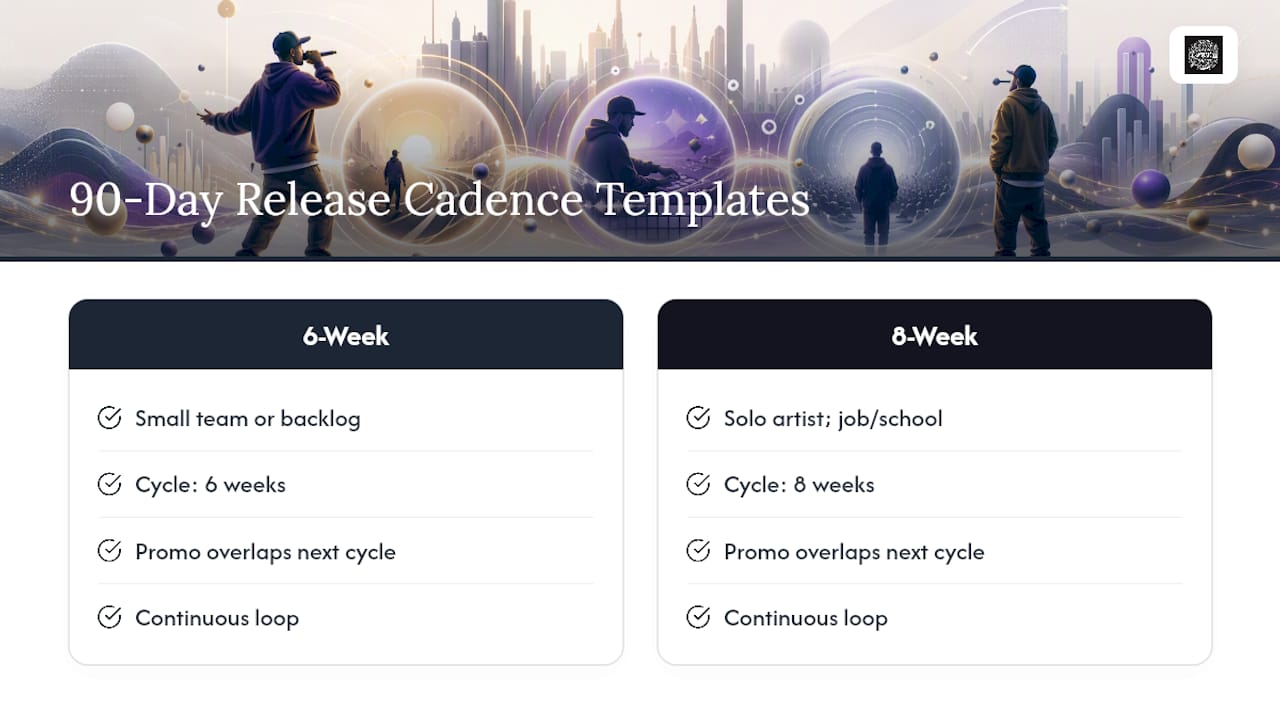
Run this as a loop, not a one-off sprint. The moment week 6 (or 8) ends, week 1 of the next cycle starts. That overlap is intentional, since your promotional runway for the last release keeps running while you’re already writing the next one.
Checklist items worth confirming every single week regardless of which template you’re on: is the pitch submitted, is the metadata clean, are creator seeds sent out, and has anyone on your team actually listened to the mix on a phone speaker this week.
How Long to Promote One Song, and What to Check Before the Next Drop
Plan on 4 to 8 weeks of active promotion per song. That window lines up with how DSPs treat newness, since Spotify’s algorithm gives freshly released tracks extra visibility in the first few weeks, and pitching cycles typically run their course in that same span.
Before you schedule the next release, pull these numbers:
Streams and save rate — a healthy save-to-stream ratio tells you people want to hear it again, not just once.
Listener retention — are people skipping before the hook, or riding the full track?
Playlist adds — organic adds beyond your own pitch signal real traction.
Follower growth tied to the release — did the song convert listeners into people who follow you?
Social engagement on your promo clips — comments and shares matter more than raw views here.
MusicPulse’s release-frequency analysis found that artists releasing 6 to 9 times a year, which lines up almost exactly with a 5 to 7 week promotional cycle per song, saw stronger monthly listener growth than those pushing far more frequently.
Simple decision rule: if saves and playlist adds are still climbing at week 4, keep promoting and push your next release back a week or two. If the numbers have flattened by week 5 or 6, that’s your green light to move on.
Spotify Pitching and Editorial Timing, Step by Step
Spotify’s editorial pitching process works best when you submit your focus track 2 to 4 weeks before release, giving editors real time to consider it before the song goes live. Submit too late and you’ve missed the window entirely, since editorial teams don’t scramble to catch up on last minute submissions.
Before you pitch, get this in order:
Complete metadata — correct title, featured artists, genre, and mood tags, since sloppy metadata gets pitches deprioritized.
A finished master, not a rough mix, since editorial teams pitch what they hear, not what you promise it’ll become.
A clear description of the track’s sound and story, written tight, since pitch forms reward specificity over generic hype.
Consistent release history, since editorial curators lean toward artists showing an active pattern rather than a one-off drop.
For a deeper walkthrough of the submission form itself, Intonality’s pre-release pitching guide breaks down the playlist pitch fields step by step.
Here’s what a lot of artists miss: pitching isn’t a one-time favor you ask for and then forget about. Spotify keeps evaluating tracks after release too, so the promotion doesn’t stop on drop day. Keep posting, keep running your promo clips, and keep engaging fans through release week and beyond, since a song that shows sustained activity after release has a better shot at landing on editorial radar later in its life, not just in its first 48 hours.
The Producer’s Take: Real Workflows, Real Placements
I’ve been behind the boards since 2007, and the biggest lie in this industry is that grinding harder automatically means dropping more music. What actually moves the needle is having a system that produces release-ready material without you burning out chasing a calendar.
Batching isn’t a shortcut. It’s how professionals protect their sound while still moving fast. When you separate the vocal stem, the instrumental, and cut a 15 to 30 second hook clip at the same time you finalize the master, you’re not scrambling for content later. You’re already three steps ahead of your own release date.
That’s the actual studio process behind IndepthJayBeats. Every project gets delivered with vocal stems, instrumental stems, and a hook clip built for creator use, because the artists who keep a real cadence going aren’t the ones working harder in release week. They’re the ones who front-loaded the work months earlier.
Placements in projects like WWE 2K25 and Love and Hip Hop Atlanta didn’t happen because a beat sounded good in isolation. They happened because the production quality held up in a completely different context than a Spotify stream, on TV mixes, in game audio, places where a thin master gets exposed instantly. If your workflow can survive that kind of scrutiny, it can survive a monthly release schedule too.
Artists asking “how often should rappers drop songs” are usually really asking “how do I keep quality up while moving fast.” The answer isn’t magic. It’s stems, batching, and having your beat catalog sorted before you ever sit down to write. If you’re leaning into licensing your music for film and TV placement down the line, that same production discipline is what gets your record considered in the first place.
Pick Your Lane and Run the Calendar
Look, none of this works if you’re not honest about where you’re at right now. Beginner, Growing, Established, whichever lane you’re in, the calendar doesn’t care about your feelings, it cares about your consistency. Run the 90 day loop, watch your numbers at week 4, and adjust before you’re three releases deep into a strategy that isn’t working.
Test a cadence for one full cycle before you judge it. Don’t switch from monthly to weekly after one slow release, and don’t panic and go silent after one that underperforms either. The data takes a few cycles to tell you the truth. Your job is to keep showing up with material that’s actually finished, measure what happens, and adjust the next cycle based on what the numbers say, not what your mood says on a Tuesday.
Pick a plan. Run the calendar. Let the streams talk.
— IndepthJayBeats
Keep the Cadence With the Right Production Behind You
A release calendar only works if the studio side keeps up, and that’s exactly where IndepthJayBeats fits into your workflow instead of slowing it down. Every beat comes with the stems and hook clips you need for a full promo run, not just a finished instrumental, which means you’re not scrambling to build creator content after the fact.
For a single you’re planning to promote heavy, an exclusive license makes sense since it locks the beat to your project only. If you’re building a fast backlog to hit your Beginner or Growing plan targets, non-exclusive licensing lets you move quicker without waiting on a custom build every time. Either way, you get the same stems and hook-ready clips baked into the delivery. Need the mix tightened before you submit your Spotify pitch? The mixing and mastering service exists specifically so your master survives the skip test in the first 15 seconds.
Start with the free beat pack to hear the sound before you commit to anything, then browse the beat catalog or the full beat store to build your next backlog of release-ready tracks.
Sources
How to get your music on Spotify playlists | Berklee Online Take Note
Independent artist marketing strategy 2026 | Slow Oak Studio
Recommended

Get 20+ Free Beats delivered to your inbox
Drop your name and email and I'll send a pack to your inbox right away.
We respect your inbox, no spam. Promise!