Licensing trap beats legally means securing both a sync license (covering the composition) and a master use license (covering the recorded audio file), matched to your exact project type and distribution platform. These are two separate rights, and missing either one puts your release at legal risk. Whether you’re dropping a single on Spotify, placing a record on a TV show, or running a YouTube channel, the rules are the same. Get the right paperwork before you push anything out. This guide breaks down every license type, Content ID pitfall, and legal workflow you need to move with confidence in 2026.
What licenses do you need to legally use trap beats?
Legal use of music in media requires both a sync license and a master use license. The sync license covers the composition, which includes the melody, chord structure, and any written elements. The master use license covers the actual recorded audio file you downloaded from the producer. Both must be cleared before your project goes live anywhere.
Here is a breakdown of the core licenses and when each applies:
Sync license: Required any time music is paired with video. This covers YouTube uploads, short films, TV placements, ads, and social media content. The producer or publisher grants this right.
Master use license: Covers the specific recording you are using. For beats purchased from a producer like Indepthjaybeats, the producer holds the master and grants this right through the beat purchase agreement.
Mechanical license: Required when you distribute a recorded song commercially, including digital streaming. Platforms like DistroKid handle mechanical licensing through services like Songfile or the Mechanical Licensing Collective (MLC) in the U.S.
Public performance license: Needed when music is played publicly at venues, on radio, or in commercial spaces. Organizations like ASCAP and BMI administer public performance rights separately through blanket licenses for venues.
The split between composition and recording rights must be confirmed before you clear anything. Both the music publisher and the master recording owner must approve the use. For independent producers selling beats online, that is typically one person. For major label samples, it gets complicated fast. Stick to beats where the producer controls both sides of the split.
Non-exclusive vs exclusive: which trap beat license is right for you?
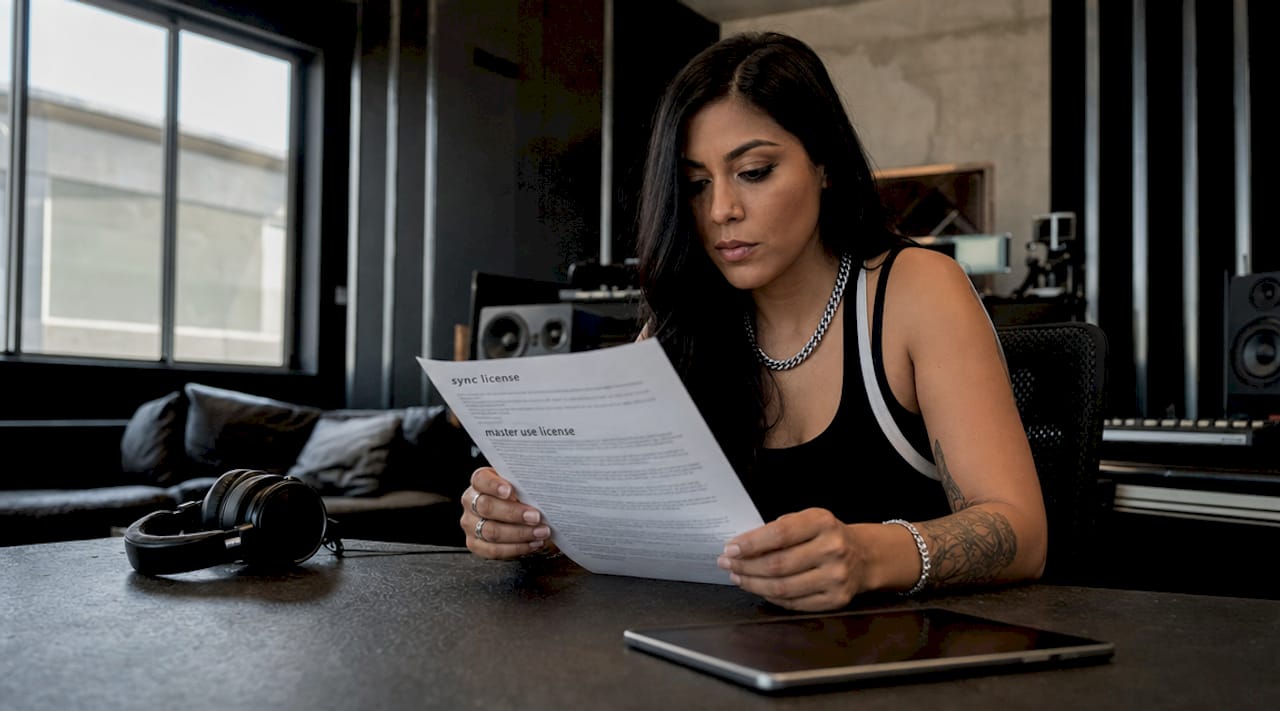
Choosing the right license tier is one of the most important decisions you will make when you buy legal trap beats. The difference between non-exclusive and exclusive licenses goes beyond price. It determines your legal control, your Content ID eligibility, and how much protection you actually have.
License type | Rights granted | Content ID eligible | Typical use case |
|---|---|---|---|
Non-exclusive lease | Limited streams, downloads, and video views | No | Independent releases, demos, mixtapes |
Exclusive license | Sole licensee status, full commercial use | Yes | Major releases, sync placements, brand campaigns |
Unlimited lease | Higher usage caps, broader distribution | No | Mid-level artists scaling up |
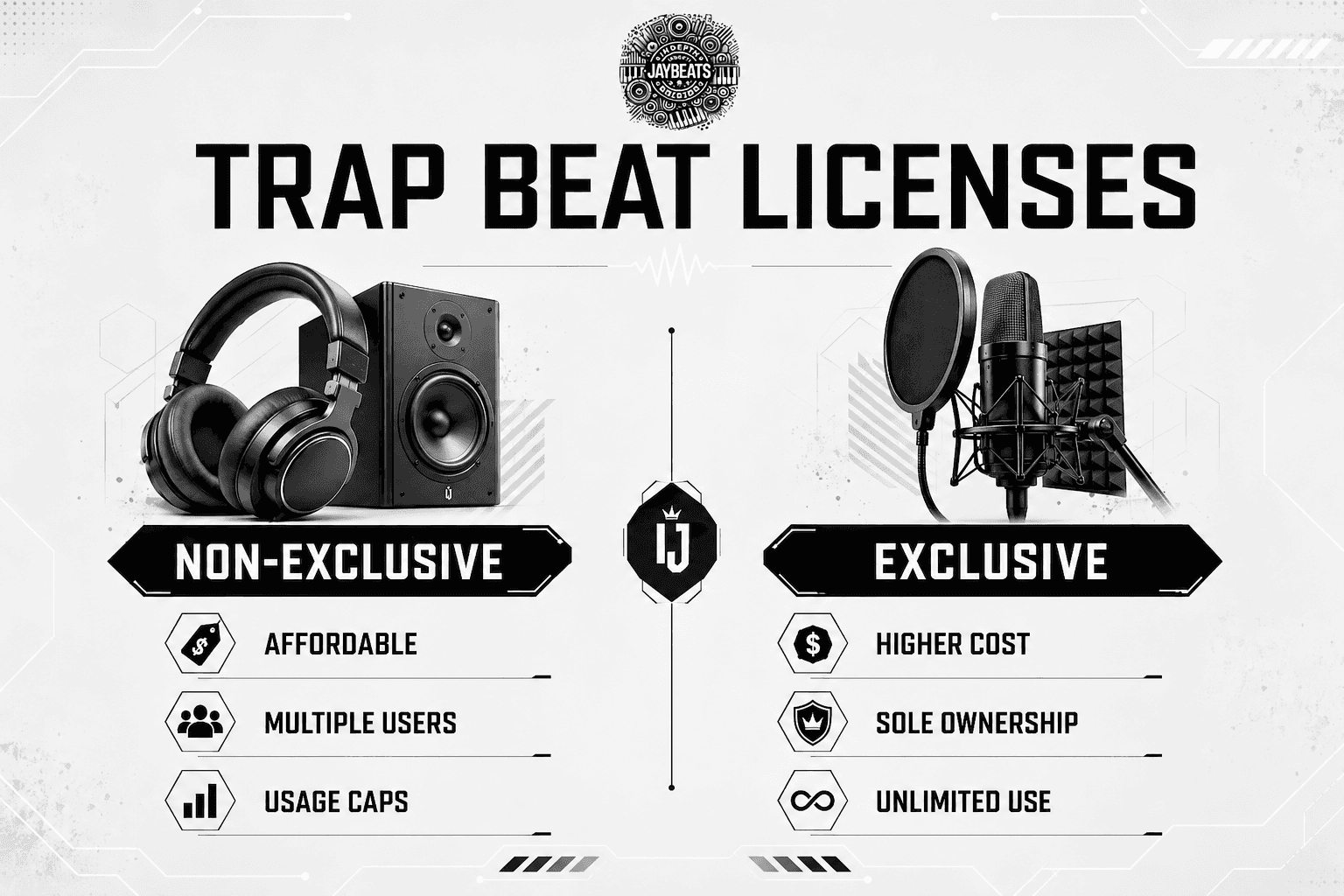
A non-exclusive license means the producer can sell the same beat to multiple artists simultaneously. You get rights to use it within the terms of the agreement, but you do not own the beat and cannot stop others from using it. Exclusive licenses grant sole licensee status and prevent the producer from licensing that beat to anyone else going forward. That exclusivity is what makes Content ID registration safe and legally defensible.
Pricing reflects this gap. Non-exclusive leases typically run from $20 to $100. Exclusive licenses can range from $200 to several thousand dollars depending on the producer’s catalog and track record. For serious sync placements or major label pitches, the exclusive is almost always worth the investment.
Pro Tip: Read every usage cap in a non-exclusive lease before you buy. Most leases cap streams at 100,000 to 500,000 and limit video views. Blow past those numbers without upgrading your license and you are technically in breach of contract.
Watch out for ambiguous terms like “perpetual rights” or “unlimited use” in cheap lease agreements. Those phrases do not mean what they sound like. Perpetual refers to the duration of the license, not the scope of use. Always check whether the license covers commercial use, sync use, and the specific platforms where you plan to distribute.
How does Content ID affect licensing trap beats?
Content ID is YouTube’s automated copyright system that fingerprints audio and matches it against uploaded videos. When a producer registers a beat with Content ID, any video using that audio gets flagged. Understanding how this system interacts with your license type is critical for avoiding revenue loss and account strikes.
Non-exclusive leased beats should not be registered in Content ID by the licensee. Because multiple artists share rights to the same beat, the system cannot distinguish who holds valid use. The result is false claims landing on other artists who paid for the same lease. This is one of the most common and damaging mistakes independent artists make.
Here is what you need to know about Content ID and trap beat licensing in 2026:
Exclusive licenses only: Content ID registration requires exclusive rights to the audio fingerprint. Without exclusivity, multiple users exist and conflicts are unavoidable.
Distributor auto-enrollment: DistroKid’s automatic Content ID enrollment for leased beats is a leading cause of unexpected claims. Disable this option when distributing a track built on a non-exclusive lease.
Prior leased versions: Even after purchasing an exclusive license, Content ID conflicts can occur if a prior leased version of the beat was already registered in the system. Dispute proof is your only defense.
Royalty-free is not the same as exclusive: Most royalty-free licenses allow streams and video use but do not grant Content ID registration rights. Royalty-free means no per-use royalties, not exclusive control of the audio fingerprint.
Safe registration requirements: Content ID registration requires 100% original tracks without uncleared samples. Only instrumentals or beats without featured artists qualify for clean registration.
If you receive a Content ID claim on a track where you hold a valid license, dispute it immediately with your license documentation. The claim does not mean you did anything wrong. It means the system flagged a match. Your license contract is your proof.
Platform permissions do not always transfer to off-platform uses. A license that covers organic YouTube uploads does not automatically cover paid brand campaigns, cross-platform ads, or TV placements. Verify your rights for every destination before you distribute.
Step-by-step guide to legally licensing trap beats
Follow these steps every time you license a trap beat for professional use. Skipping any step creates gaps that can cost you revenue, distribution access, or legal standing.
Define your project’s use and distribution plan. Know exactly where the track will live before you buy. Streaming only? YouTube? TV pitch? Brand campaign? Each destination may require different rights.
Research and verify beat ownership. Confirm the producer controls both the composition and the master recording. For beats on platforms like Indepthjaybeats, this is clearly stated in the licensing terms. Check the licensing options before you commit.
Select the correct license tier. Match the license to your actual use. A non-exclusive lease works for an independent release under the usage cap. An exclusive license is required for sync placements, major distribution, or Content ID registration.
Purchase and download your license documentation. Save the receipt, the license contract, and the beat file together. Do not rely on email alone. Store copies in cloud storage and a local drive.
Build a rights proof folder. A rights proof folder should contain your license contract, payment receipt, beat version or file ID, and a record of your planned usage platforms. Many licensing disputes hinge on whether use matches contract scope, not just whether payment was made.
Disable Content ID auto-enrollment if distributing a leased beat. When uploading through DistroKid or similar distributors, turn off automatic Content ID registration for any track built on a non-exclusive lease.
Dispute claims with documentation. If a Content ID claim appears, file a dispute through YouTube’s dispute process and attach your license proof. A valid license resolves most claims quickly.
Pro Tip: When you download trap beats legally from a reputable producer, the license agreement should specify the beat title, your name, the date, and the permitted uses. If any of those details are missing, ask the producer to update the document before you release anything.
Common mistakes that can jeopardize your legal use
Most legal problems with trap beats do not come from bad intentions. They come from gaps in knowledge. These are the mistakes that show up most often and how to avoid each one.
Assuming one license covers everything. The biggest misconception is believing a single license covers all rights. Sync and master licenses are separate. Both are required for legal use in video or media projects.
Ignoring platform-specific rights. A license for Spotify distribution does not cover YouTube monetization or TV sync. Platform permissions do not transfer to off-platform or commercial brand reuse without additional rights.
Registering a leased beat with Content ID. Registering a non-exclusive beat with Content ID can trigger false claims on other artists using the same beat and can result in your distributor account being revoked.
Losing your license documentation. If you cannot produce your license contract during a dispute, you have no legal defense. Keep every document organized and backed up.
Exceeding usage caps without upgrading. Non-exclusive leases have hard limits on streams, video views, and sometimes geographic distribution. Blowing past those limits without upgrading puts you in breach of contract.
Confusing royalty-free with fully licensed. Royalty-free beats still require a license agreement. The term only means you do not pay per stream or per use. It does not mean you have exclusive rights or Content ID eligibility.
Key takeaways
Legally licensing trap beats requires both sync and master use licenses matched to your specific project, platform, and distribution scope.
Point | Details |
|---|---|
Two licenses required | Sync and master use licenses are both needed for legal use in any video or media project. |
License tier determines Content ID rights | Only exclusive licenses allow safe Content ID registration; non-exclusive leases do not. |
Build a rights proof folder | Store your license contract, receipt, beat ID, and usage plan together for legal defense. |
Disable distributor auto-enrollment | Turn off automatic Content ID registration when distributing tracks built on leased beats. |
Royalty-free does not mean exclusive | Royalty-free licenses permit use without per-stream fees but do not grant exclusive audio fingerprint control. |
What I’ve learned from 20 years of watching artists get this wrong
I have been producing since 2007. I have watched talented artists lose monetization, get their distributor accounts suspended, and miss sync placements because they skipped one step in the licensing process. The music was great. The paperwork was not.
The most common mistake I see is artists treating a lease like a full buyout. A $30 lease gets you in the door, but it does not get you on TV. It does not get you a Content ID-clean release. And it does not protect you when a claim lands on your video three months after release. Exclusive licensing feels expensive until you compare it to losing a placement or rebuilding a distributor account from scratch.
My honest advice: build your rights proof folder before you release anything. Not after. Not when a claim shows up. Before. That folder is your legal foundation. Without it, you are building on sand. The artists I have worked with who placed music in productions like WWE 2K25 and Love and Hip Hop Atlanta did not get there by cutting corners on rights. They got there by treating every release like a professional project from day one.
Content ID conflicts are manageable. False claims happen even to artists doing everything right. What separates the ones who recover quickly from the ones who spiral is documentation. Keep your receipts. Know your license terms. And if you are serious about sync placements, invest in the exclusive.
__ IndepthJayBeats
Get properly licensed trap beats built for professional use
If you are ready to move past confusion and start releasing with confidence, Indepthjaybeats has you covered. Every beat in the catalog comes with clear licensing tiers, transparent terms, and production quality built for real placements.
Browse the full selection of hard 808 trap beats with licensing options designed for independent artists and content creators at every level. Whether you need a non-exclusive lease for your next single or an exclusive for a sync pitch, the terms are spelled out clearly so you know exactly what you are buying. Check the licensing page for a full breakdown of rights, usage caps, and what each tier covers. Indepthjaybeats has been in the game since 2004, and the catalog reflects that experience. Grab a free beat pack and hear the quality for yourself before you commit.
FAQ
What does it mean to license trap beats legally?
Licensing trap beats legally means obtaining both a sync license and a master use license from the producer before using the beat in any commercial, video, or distributed project. Both licenses must match your intended use and distribution platforms.
Can I register a leased trap beat with YouTube Content ID?
No. Non-exclusive leased beats should not be registered with Content ID because multiple artists share rights to the same audio, which causes false claims on other licensees and can result in distributor account suspension.
What is the difference between royalty-free and exclusive trap beat licenses?
Royalty-free means you pay no per-use or per-stream fees, but the license is still non-exclusive and does not grant Content ID registration rights. An exclusive license gives you sole licensee status and is required for safe Content ID registration.
How do I dispute a Content ID claim on a beat I licensed?
File a dispute through YouTube’s dispute process and attach your license contract, payment receipt, and beat file details as proof. A valid license document resolves most claims, provided your use falls within the contract’s stated scope.
Do I need a separate license for each platform I distribute to?
Yes, in most cases. A license covering Spotify distribution does not automatically extend to YouTube monetization, TV sync, or paid brand campaigns. Verify that your license explicitly covers every platform and use type before you distribute.