How to Market Your Music as a Rapper With No Fanbase
Meta Description:
Learn how to market your music as a rapper with no fanbase using direct-to-consumer strategy, email marketing, content, branding, and ownership so you can grow real fans and make money from your music.
Introduction: No Fanbase No Future
Let’s keep it real. Starting as a rapper with no fanbase can feel like standing on stage with the lights on and nobody in the crowd yet. You got songs. You got bars. You got hunger. You might even have music better than artists with thousands of followers. But if nobody knows you exist, talent alone will not save you.
That does not mean you are stuck.
A lot of rappers look at marketing like it is begging for attention. Wrong mindset. Marketing is not begging. Marketing is making sure the right people hear the right song at the right time. If your music is fire, marketing is the bridge between your talent and the people who need to hear it.
The problem is most new rappers move like employees instead of owners. They drop a song, post it one time, hope the algorithm blesses them, and then disappear when the numbers look ugly. That is not a business. That is gambling with Wi-Fi.
If you want to make a living from your raps, you have to stop thinking like “I just need one viral moment” and start thinking like “I am building a brand, an audience, and a direct relationship with my fans.”
That is where the game changes.
1. Build the Foundation Before You Chase Fans
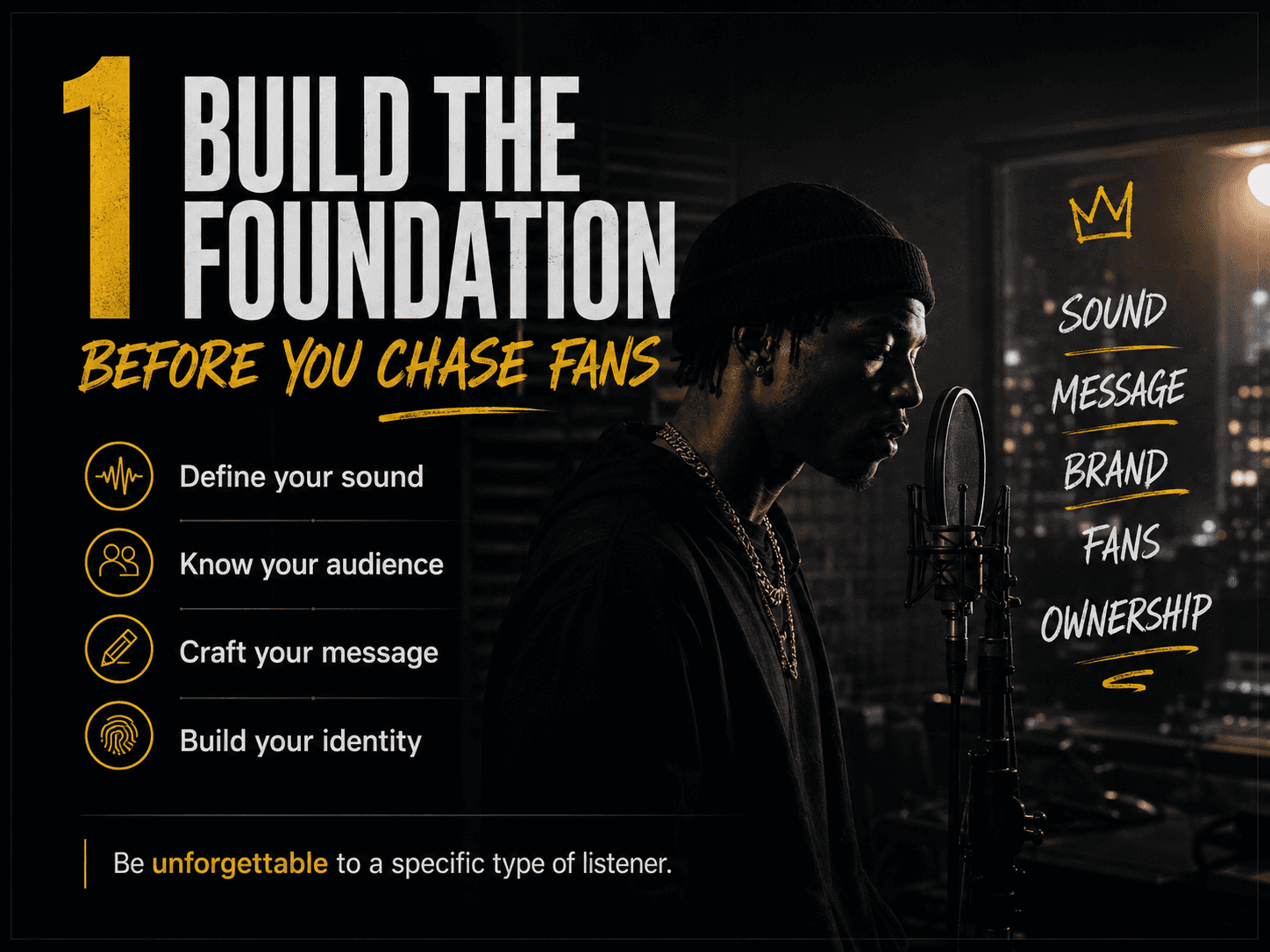
Before you spend money on ads, before you spam links, before you DM every playlist page on Earth, get your foundation tight.
A rapper with no fanbase needs three things first: a clear sound, a clear message, and a clear reason people should care.
Ask yourself:
Who is my music for?
What pain, lifestyle, dream, or energy does my music speak to?
Why would somebody follow me after hearing one song?
If your answer is “everybody,” that is the wrong answer. Everybody is not your fanbase. You need a lane. Maybe you make pain music for people fighting through depression. Maybe you make luxury trap for hustlers. Maybe you make soulful rap for people who miss real lyrics. Maybe you make party records for people who want to turn up and forget the week.
Your first job is not to reach the world. Your first job is to become unforgettable to a specific type of listener.
Think like a corner store in the hood. The best ones know exactly who they serve. They know what people buy, when they come in, what they complain about, and what keeps them coming back. Your music brand should work the same way.
2. Stop Dropping Songs With No Rollout
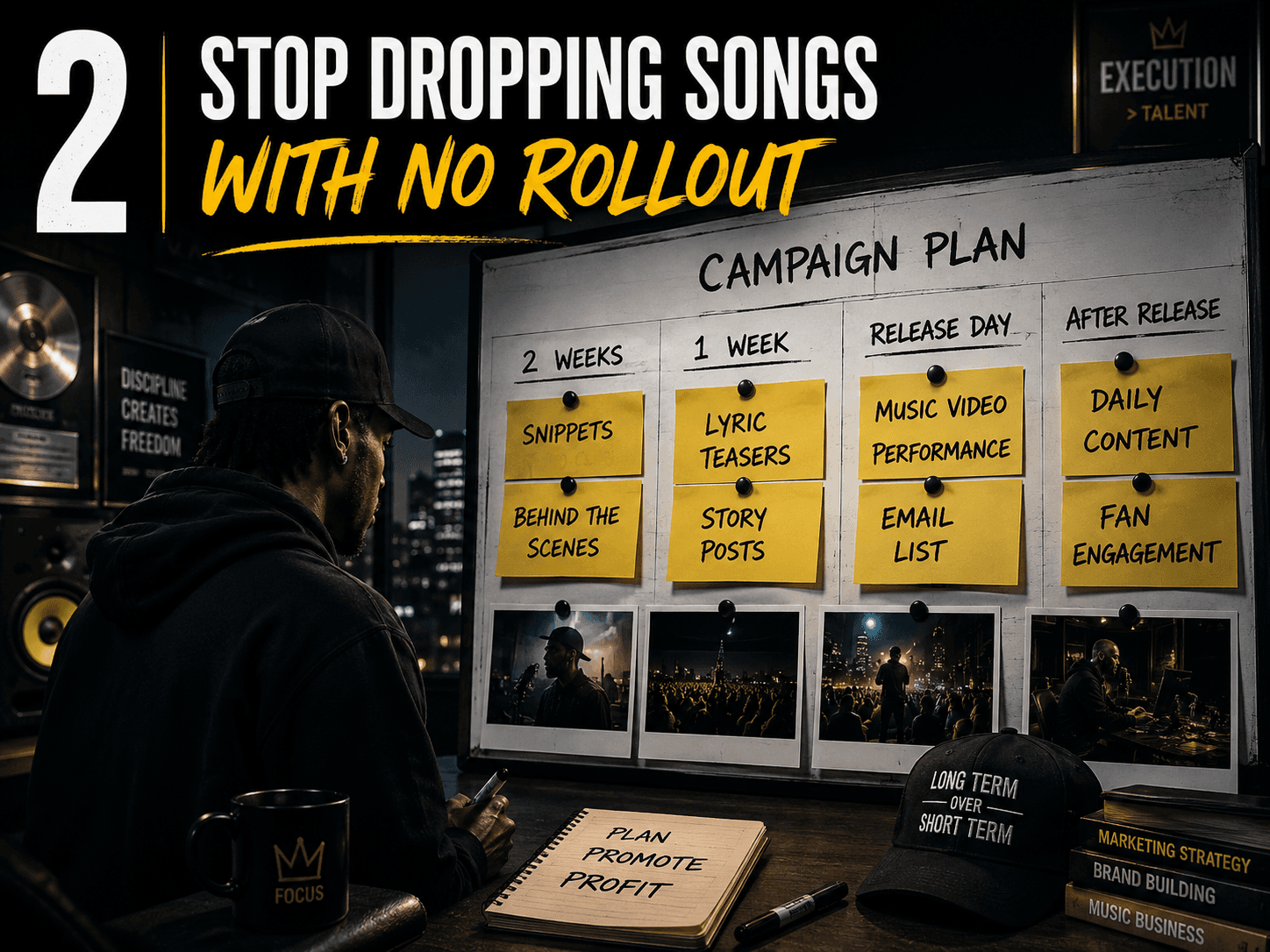
One of the biggest mistakes new rappers make is dropping music with no plan. They upload the song, post “out now,” throw a link in the bio, and expect magic.
That is not a rollout. That is a digital flyer in a hurricane.
Every song needs a campaign. Even if you have no fanbase, you can build attention before the song drops.
Here is a simple rollout:
Two weeks before release: Start posting short videos around the song’s theme. Do not just say, “new song coming.” Tell the story behind it. Talk about what inspired it. Show studio clips. Post lyric snippets. Let people feel the record before they hear the full thing.
One week before release: Create curiosity. Use captions like “I wrote this for everybody who had to rebuild from nothing” or “This one is for anyone who got counted out.” Make people relate before asking them to stream.
Release day: Post multiple pieces of content. Performance clip. Lyric video. Behind-the-scenes clip. Short story post. Email your list. Text people who actually support you. Do not rely on one post.
After release: Keep promoting the song for at least four weeks. Most rappers quit promoting after 48 hours. That is why songs die early. A song is not old just because you got bored promoting it.
The biggest artists in the world promote one record for months. New rappers should not be scared to promote for weeks.
3. Use Content to Build a Fanbase From Zero
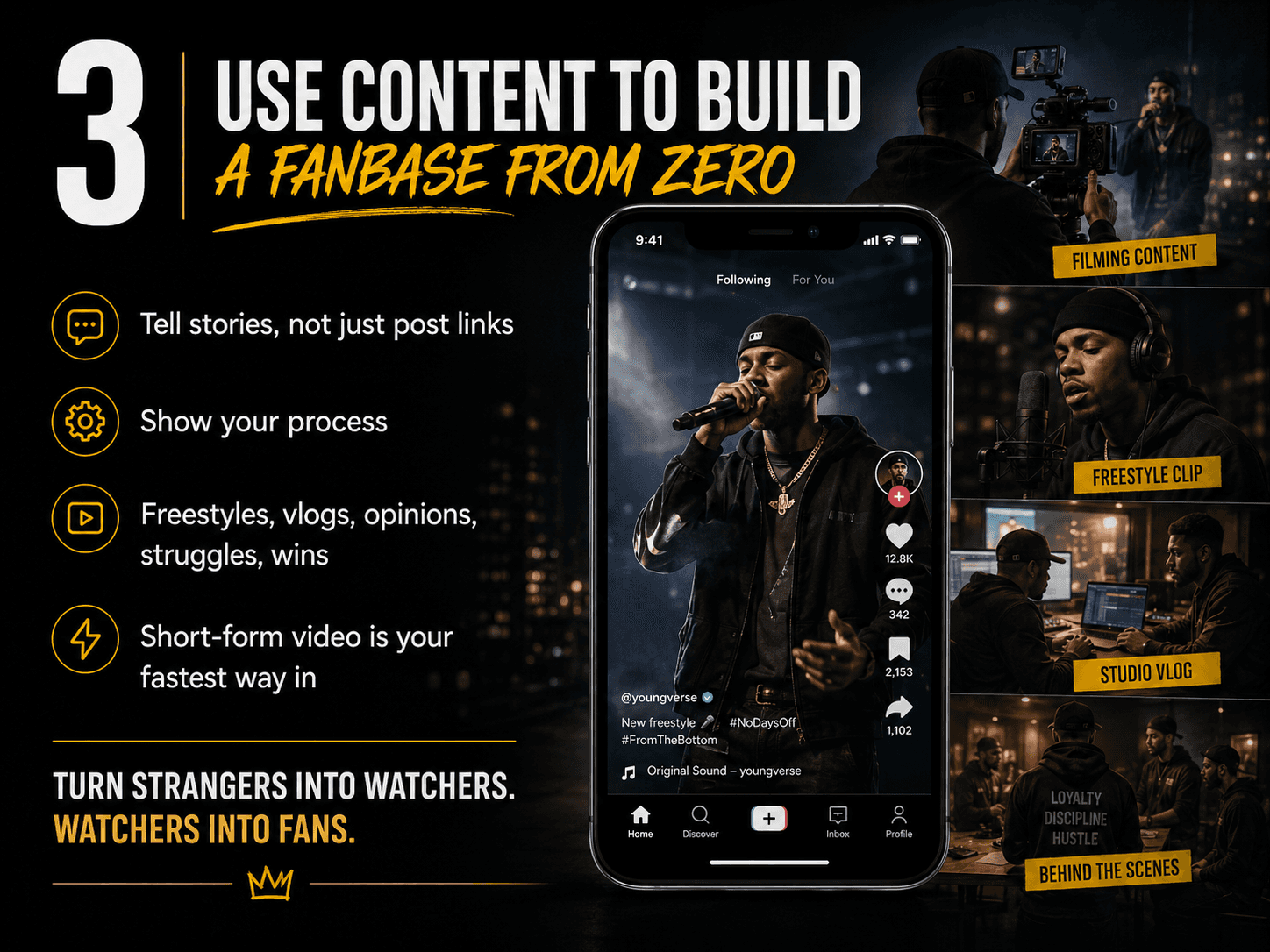
When you have no fanbase, content is your street team. Every video is a chance for somebody new to discover you.
But here is the secret: do not only post music links. Post moments.
People do not connect with links. They connect with emotion, story, confidence, struggle, humor, pain, and personality.
You can create content around:
The meaning behind your lyrics
Studio sessions
Freestyles in unique locations
Your daily grind
Your wins and losses
Your opinion on the rap game
Your journey from zero
Fan-style captions that speak directly to your listener
Before-and-after clips of raw vocals turning into a finished song
A rapper with no fanbase should focus on short-form video because it gives you a chance to reach strangers fast. TikTok, Instagram Reels, YouTube Shorts, and Facebook Reels can all work. But do not just throw random clips everywhere. Build a repeatable format.
For example:
“Bars From the Basement”
“Songs I Wrote When I Almost Quit”
“Studio Confessions”
“Pain Rap Sundays”
“Freestyle Friday”
“Turn My Real Life Into Lyrics”
Series make people come back. Random posts make people forget you.
The goal is simple: turn strangers into watchers, watchers into followers, followers into email subscribers, and subscribers into buyers.
4. Email Marketing Is Your Secret Weapon
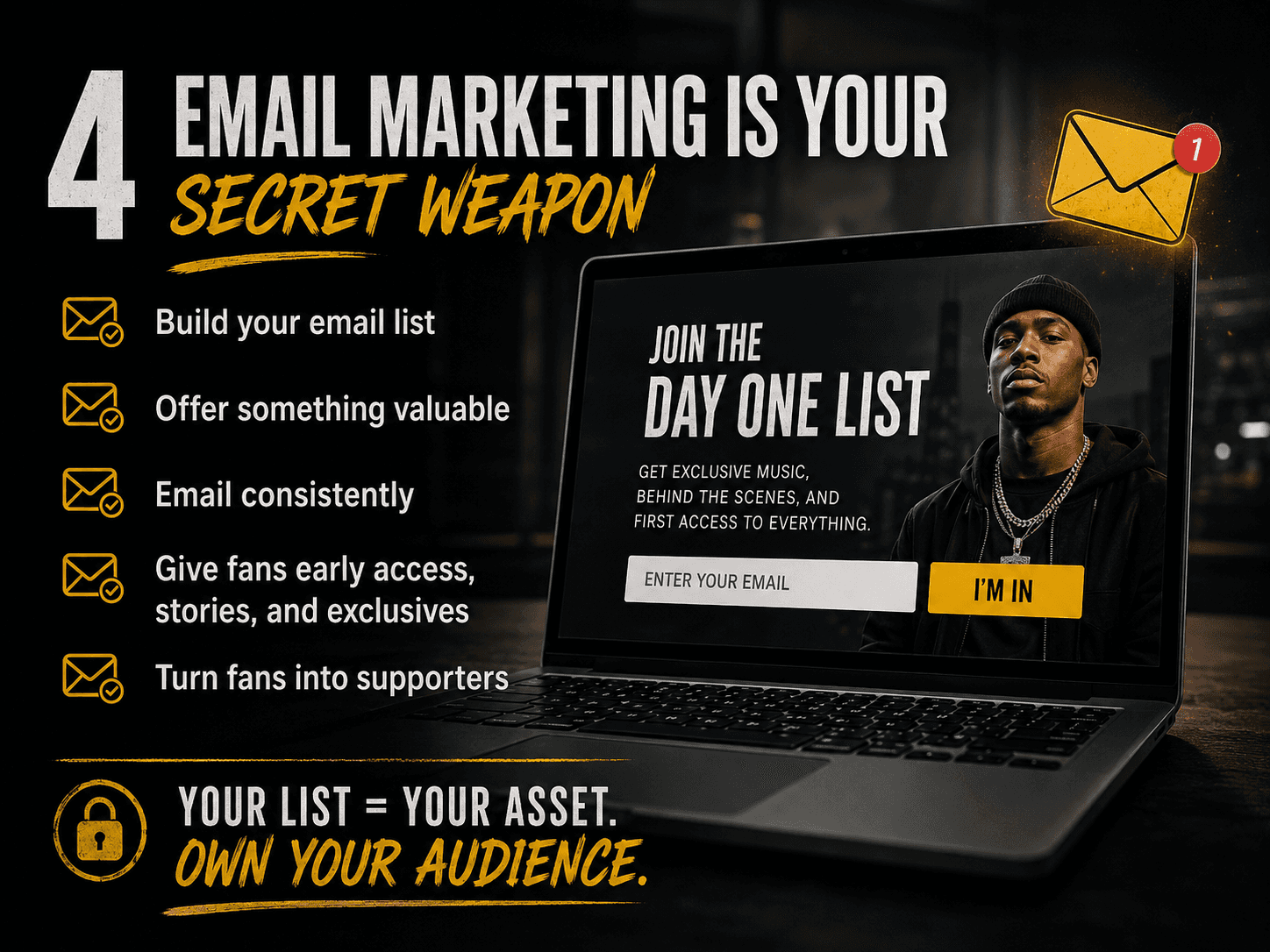
Social media is rented land. Your account can get hacked, banned, shadowbanned, or ignored by the algorithm. One day your post hits 10,000 views. The next day it hits 92 views and a bot comment selling sunglasses.
That is why email marketing matters.
An email list is one of the most powerful tools a rapper can build because it gives you a direct line to your supporters. No algorithm standing in the middle. No platform deciding if your fans see your message. When you send an email, you are speaking directly to people who gave you permission to contact them.
Most rappers sleep on email because they think it is only for brands or old-school businesses. That is exactly why you should use it. While everybody else is fighting for attention on crowded feeds, you can build your own fan list.
Offer something valuable to get people on your list:
A free unreleased song
A private freestyle
A free EP
A behind-the-scenes video
A discount on merch
Early access to new music
A private fan club experience
A “day one supporter” download pack
Do not just say “join my newsletter.” Nobody wakes up excited to join a newsletter. Say something stronger:
“Join my day-one list and get the unreleased track I’m not posting anywhere else.”
Now that feels exclusive.
Once people join, email them consistently. Tell stories. Share your journey. Give them early access. Ask questions. Let them vote on cover art. Give them a reason to feel like insiders.
A fan who feels included is more likely to stream, buy, share, and support.
5. Direct-to-Consumer: Stop Waiting for a Label to Save You
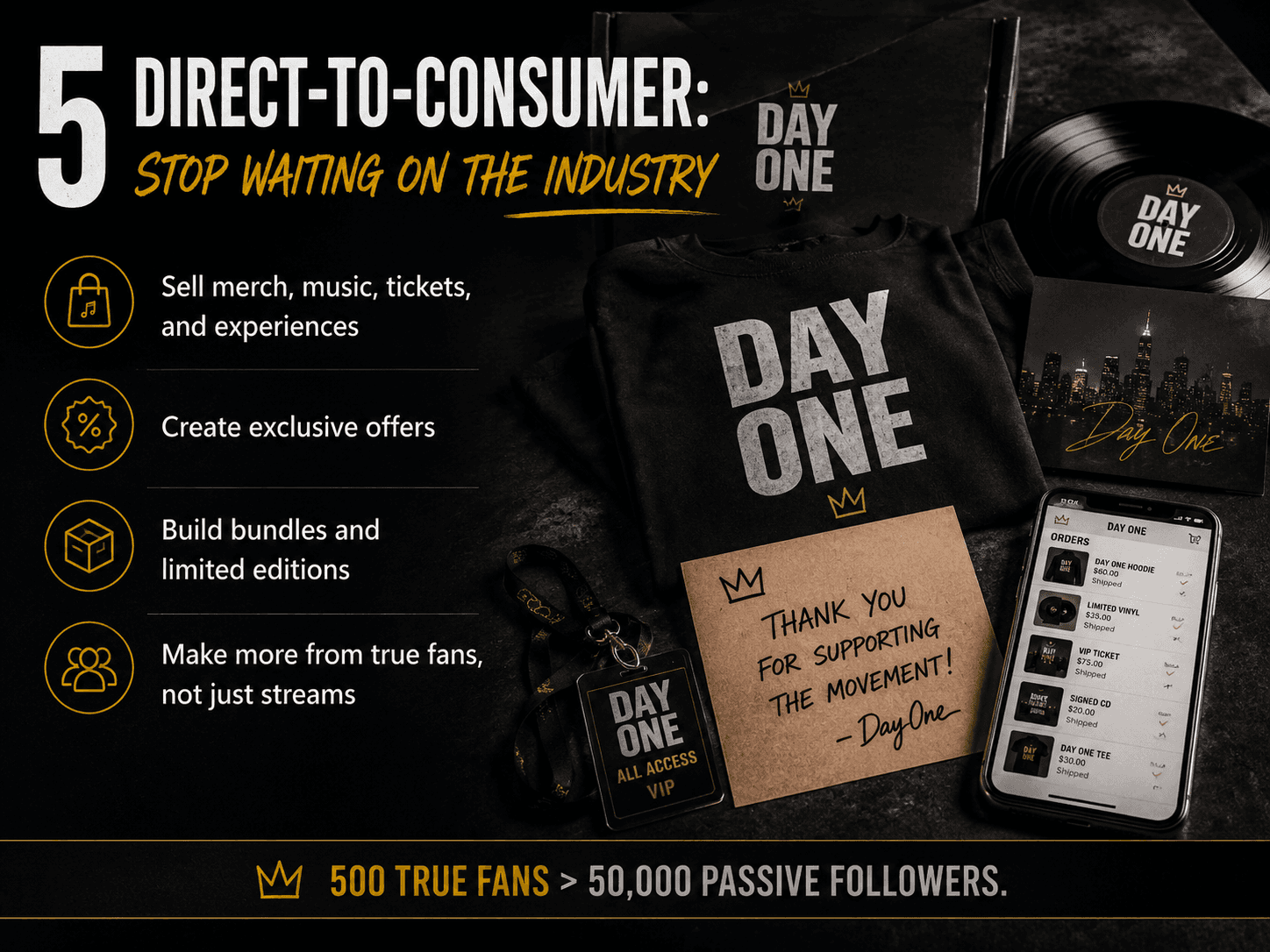
Direct-to-consumer means you sell straight to your audience instead of waiting for a label, playlist, or industry gatekeeper to put you on.
This is how independent rappers start thinking like owners.
You can sell:
Merch
Digital albums
Limited-edition CDs
Vinyl
Show tickets
Private livestreams
Fan memberships
Exclusive songs
Behind-the-scenes content
Songwriting services
Features
Custom songs
Bundles
The key is to build offers around your music, not just streams.
Streams are cool, but streams alone usually will not feed you in the beginning. You need direct support. You need people who love what you represent enough to buy from you.
A rapper with 500 true fans can sometimes make more money than a rapper with 50,000 passive followers. Why? Because followers watch. Fans buy. Supporters invest. Believers spread the word.
Create offers that feel personal:
“Limited 50-copy signed CD run”
“Supporter bundle with shirt, album, and handwritten thank-you note”
“Private listening session for day-one fans”
“Deluxe digital album with bonus tracks and lyric breakdowns”
“Early access pass for every song I drop this year”
Do not be afraid to sell. Selling is not corny when the product is real. If you believe in your music, give people a way to support it.
The goal is not just popularity. The goal is ownership.
6. Build a Fan Journey, Not Just Random Attention
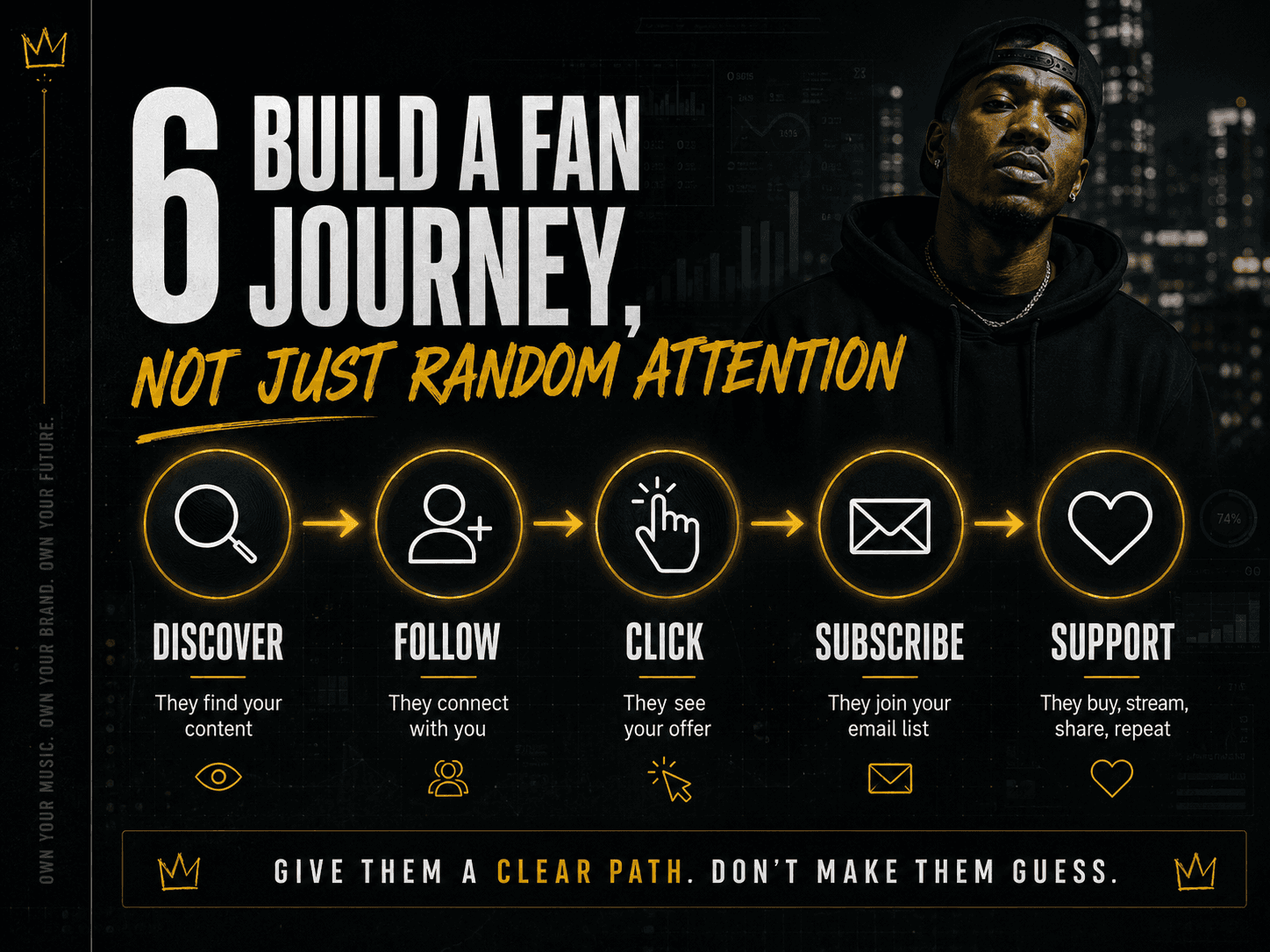
Every new listener should have a path.
Most rappers lose people because they do not tell them what to do next. Somebody watches a video, likes the song, visits the profile, and then sees chaos. No clear bio. No strong link. No offer. No reason to stay connected.
Your fan journey should look like this:
They discover you through content.
They follow you because the content connects.
They click your link because the offer is clear.
They join your email list because you give them something valuable.
They receive emails that build trust.
They stream, buy, share, or join your community.
That is a system.
Your bio should not just say “rapper/songwriter.” Make it specific.
Example:
“Pain music for people rebuilding from rock bottom. Get my unreleased track free below.”
That tells people who you are, who it is for, and what to do next.
Your link-in-bio should not be a messy list of 20 links. Keep it focused. New fans need direction, not a scavenger hunt.
Best links to include:
Listen to the newest song
Join the email list
Buy merch or music
Watch the latest video
Book features or contact
Clean beats clutter every time.
7. Turn Your Story Into Your Brand
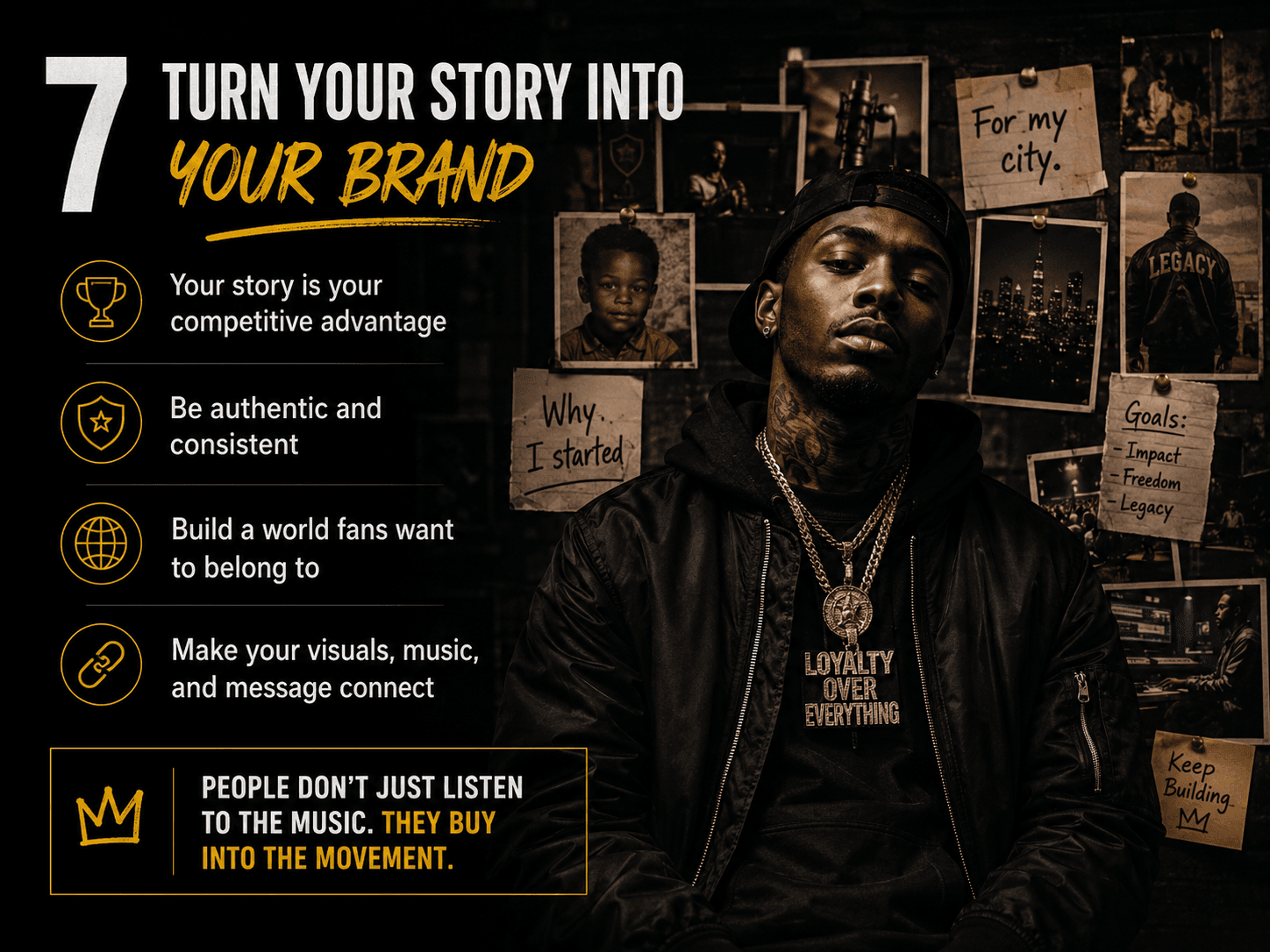
A lot of rappers think branding is just a logo. Nah. Branding is the feeling people get when they hear your name.
Your story is your strongest marketing tool because nobody else has it.
Where are you from?
What did you survive?
What do you stand for?
What are you chasing?
What do you want fans to feel when they hear you?
Your story gives your music context. It makes people care beyond the beat and hook.
If you came from nothing, say that. If you make music for people fighting silent battles, own that. If your sound is about ambition, luxury, and pressure, build the world around that. If your music is spiritual, motivational, dangerous, soulful, or raw, let the visuals, captions, emails, and content match that energy.
The strongest artists build worlds.
When fans enter your world, everything feels connected: your photos, videos, cover art, captions, emails, merch, website, and live show energy.
Do not copy another rapper’s brand. Study the strategy, not the costume.
Your uniqueness is the sauce. Do not water it down trying to look like everybody else.
8. Collaborate Smart, Even With No Fanbase
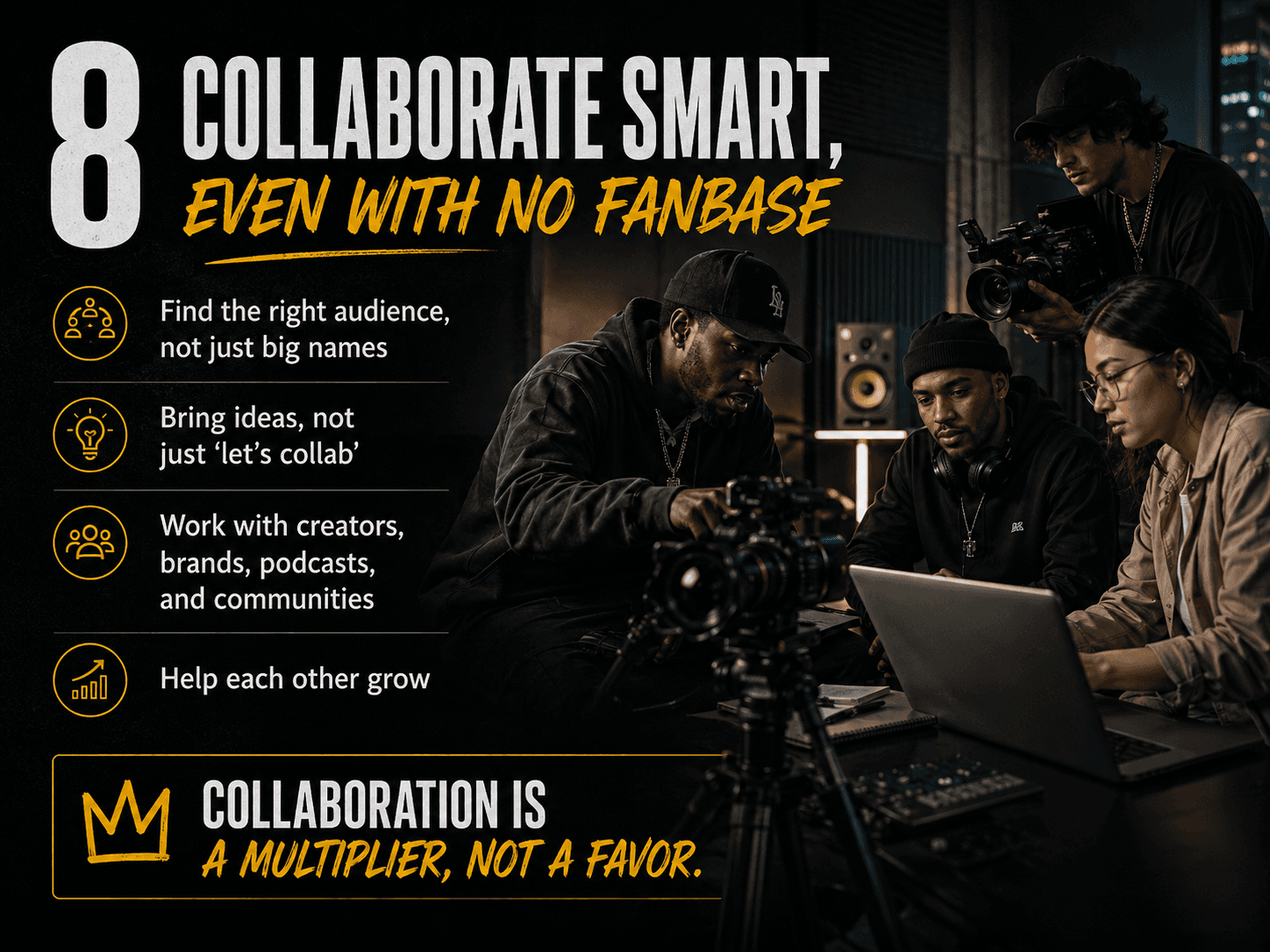
When you have no fanbase, collaboration is one of the fastest ways to get in front of new people. But do not just chase artists with bigger numbers. Chase artists with the right audience.
A smaller artist with loyal fans can be more valuable than a bigger artist with fake engagement.
Collaborate with:
Rappers in your lane
Producers with active audiences
Videographers
Dancers
Podcast hosts
Reaction channels
Local clothing brands
Barbershops
Skate crews
College creators
Open mic communities
Give people a reason to work with you. Do not just say “let’s collab.” Bring an idea.
Example:
“I have a record about staying focused while everybody doubts you. I think your audience would connect with it. Let’s shoot a raw performance clip in your studio and both post it.”
That sounds like a plan, not a favor.
You can also collaborate with fans. Ask them to use your sound in videos. Ask them to submit artwork. Let them vote on hooks. Turn listeners into part of the movement.
People support what they help build.
9. Treat Your Music Like a Business Every Week
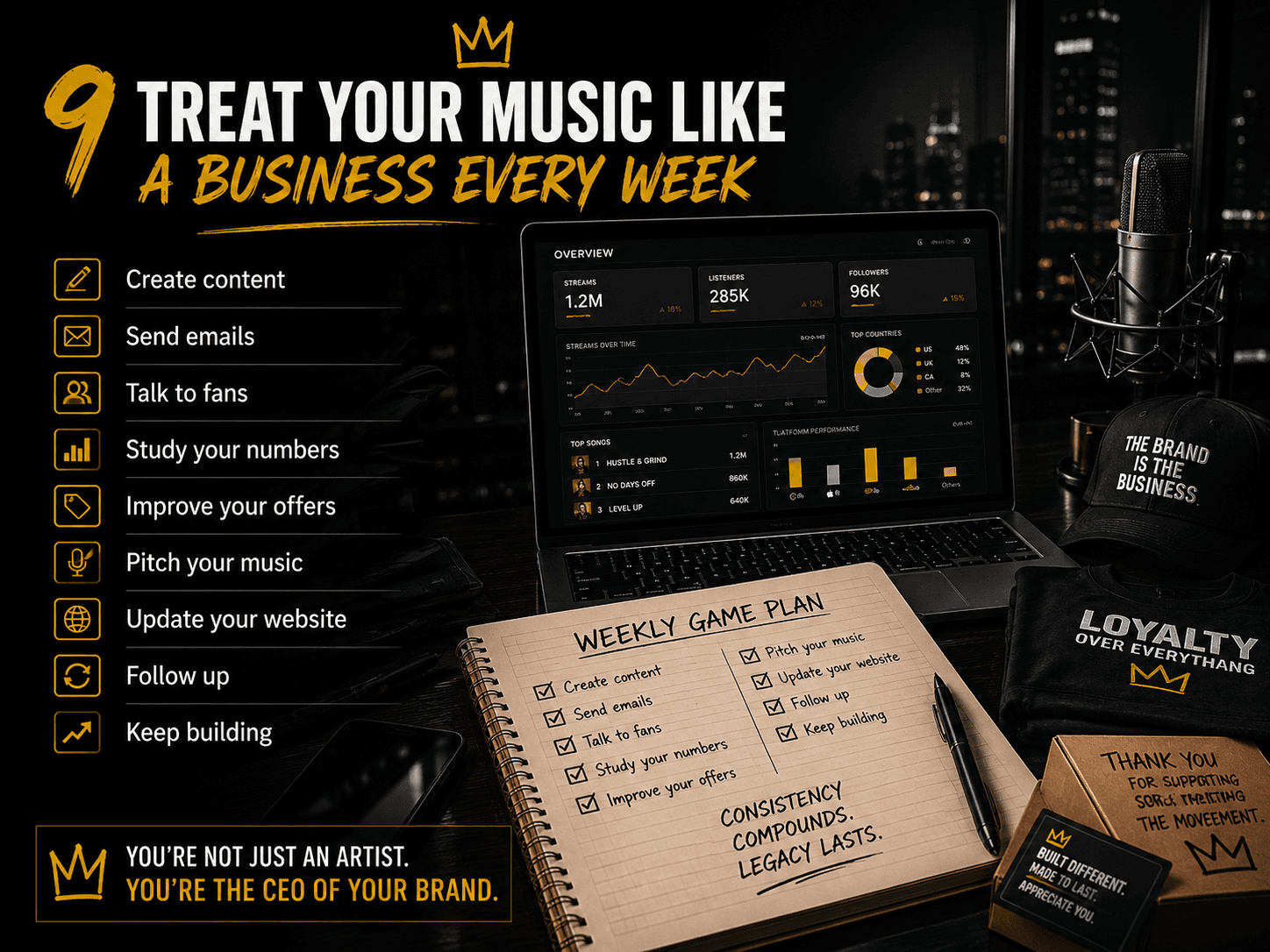
If you want to make a living from rap, you need weekly business habits.
Not just recording. Not just posting. Business habits.
Every week, do this:
Create content
Send emails
Reach out to collaborators
Talk to fans
Study your numbers
Improve your offer
Update your website
Pitch your music
Test new hooks
Follow up with people who showed interest
The money is usually in the follow-up. Somebody may not buy merch the first time. They may not join your fan club the first time. They may not stream your song the first time. But if you keep showing up with value, they start remembering you.
You are not just an artist. You are the owner of a music company built around your voice.
That means you need to understand marketing, sales, branding, content, relationships, and customer experience. Yes, customer experience. Fans are not “customers” in a cold way, but when someone spends money with you, they should feel respected.
Send thank-you emails. Package merch clean. Reply to supporters. Give people good experiences. Make them proud to support you.
That is how you build long-term money, not just quick attention.
10. The No-Fanbase Marketing Plan
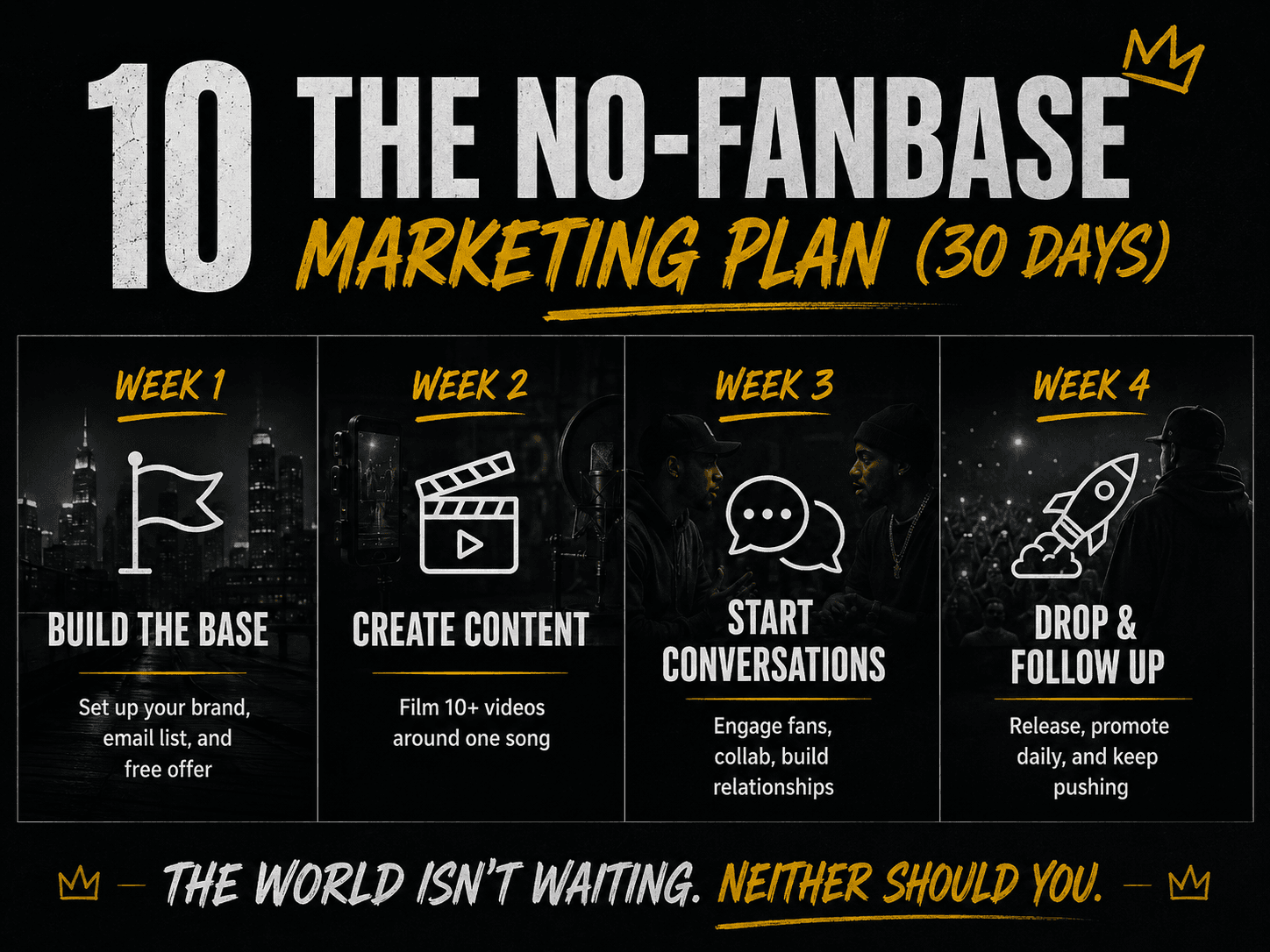
Here is a simple 30-day plan for a rapper starting from zero.
Week 1: Build the base
Choose your lane, clean up your profiles, create a strong bio, set up an email list, and create a free offer for fans.
Week 2: Create content
Film 10 short videos around one song. Use performance clips, lyric breakdowns, behind-the-scenes footage, and story-based captions.
Week 3: Start conversations
Reply to every comment. DM people who engage. Ask fans what they think. Reach out to five possible collaborators.
Week 4: Drop and follow up
Release the song, email your list, post daily clips, pitch it to small pages, and keep promoting after release day.
Do this every month and you will not stay at zero.
The rapper who wins is not always the most talented. It is the one who keeps building when nobody is clapping yet.
You do not need a million fans to start. You need a system. You need consistency. You need a message. You need ownership. You need to treat every listener like they matter because in the beginning, they really do.
No fanbase is not the end.
It is the beginning of building one the right way.
Final Call-to-Action
If you are a rapper trying to build from zero, stop waiting for permission. Start building your fanbase one real supporter at a time. Record the music. Tell your story. Capture emails. Sell direct. Follow up. Think like an owner.
Your rap career is not just a dream.
It is a business waiting for you to run it.