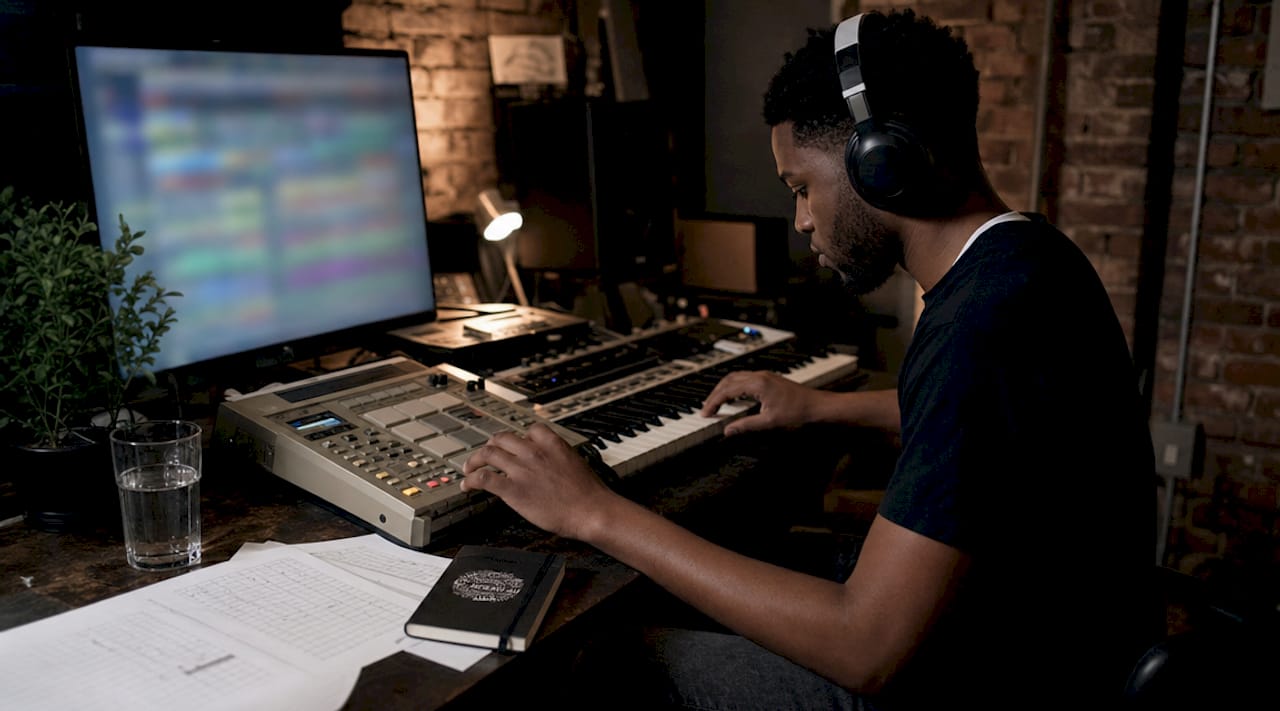
1. What are the main types of trap beats in hip hop
Modern trap subgenres include Melodic Trap, Dark Trap, Detroit Trap, Trap Soul, and Festival/EDM Trap. Each one carries a distinct tempo range, drum feel, 808 character, and emotional tone. The shared DNA across all five is the 808 bass, the hi-hat roll, and the snare placement, but how producers use those tools separates a Metro Boomin dark banger from a Bryson Tiller Trap Soul record. Think of these five styles as five different moods you can hand an artist. Pick the wrong one and the vocal will fight the beat. Pick the right one and the record writes itself.
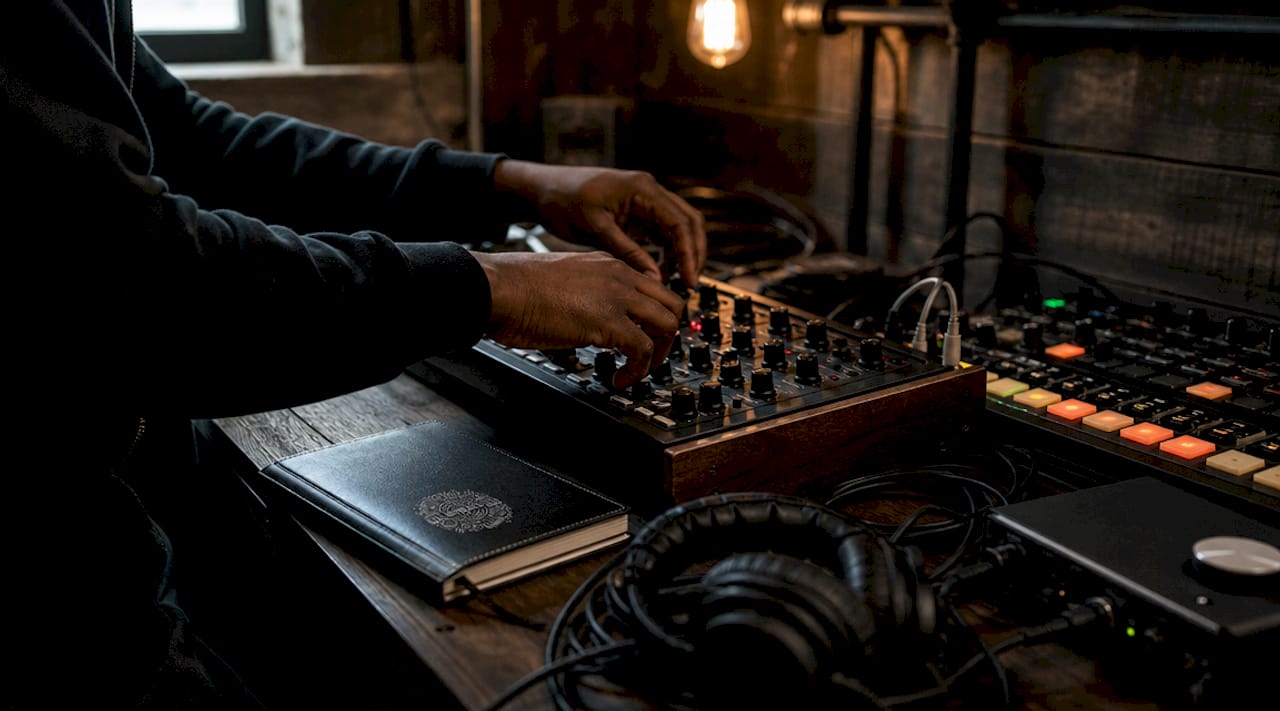
2. Melodic trap beats: rhythm meets emotion
Melodic trap is the most commercially dominant style in hip hop right now. It balances rhythm and melody using lush pads, plucked synths, chord extensions, and tuned 808s to create an atmospheric, emotional sound within the 130 to 160 BPM range. Producers like Wheezy and Tay Keith built their signatures here. The half-time groove makes the beat feel slower than it actually is, giving rappers room to ride the pocket.
Key production elements in melodic trap:
Melody: Minor key progressions with chord extensions (minor 7ths, 9ths) for depth
Drums: Crisp snares on beats 2 and 4, hi-hat rolls in 16th and 32nd note patterns
808: Tuned to the key of the track with glide for smooth note transitions
Texture: Reverb-heavy pads and plucks layered behind the main melodic hook
Mood: Nostalgic, melancholic, or triumphant depending on chord choice
Tuning every 808 note to the key of the track is non-negotiable in melodic trap. An out-of-tune 808 creates muddiness that no EQ will fix after the fact.
Pro Tip: Set your 808 pitch glide between 50 and 100ms for smooth, vocal-like slides between notes. Shorter glide times sound choppy; longer ones blur the rhythm.
3. Dark trap and Detroit trap beats: space and aggression
Dark trap and Detroit trap are often grouped together, but they operate differently. Dark trap leans on minimalism and aggression, using sparse but punchy drum programming, minor key piano riffs, and lo-fi sample chops to create a menacing atmosphere. Detroit trap takes that darkness further by making the 808 the melodic lead through pitch bends and slides, with drums that are punchy but deliberately thin in the mix.
Here is how the two styles compare:
Feature | Dark trap | Detroit trap |
|---|---|---|
808 role | Sub-bass foundation | Melodic lead with pitch slides |
Drum density | Sparse but punchy | Minimal, wide open |
Melody source | Piano riffs, lo-fi samples | 808 pitch glides, minimal keys |
Tempo range | 130 to 150 BPM | 140 to 160 BPM |
Mood | Aggressive, moody | Cold, hypnotic, cinematic |
Space and silence increase impact and listener anticipation more effectively than adding complexity. Detroit trap producers like producers in the Sada Baby and 42 Dugg camp understand this instinctively. They strip the arrangement down to kick, snare, hi-hat, and a sliding 808, then let the silence do the work between phrases.
Key traits of both styles:
Minimal melodic layers, often just one or two elements
Heavy use of reverb and delay on sparse piano or synth hits
808 pitch glides set between 50 and 100ms for the sliding bass effect
Kick and snare tightly quantized; hi-hats with slight swing for human feel
Pro Tip: When making Detroit trap, program your 808 melody first before adding any other element. The 808 line is the song. Everything else just frames it.
4. Trap Soul: where R&B meets trap drums
Trap Soul is the subgenre that expanded trap’s emotional ceiling. Trap Soul blends R&B smoothness with trap’s signature drum elements and deep 808 bass, creating spacious, emotionally rich records that work for both hip hop and R&B audiences. Bryson Tiller’s T R A P S O U L album from 2015 defined the blueprint, and producers like Boi-1da and Frank Dukes have pushed the style forward since.
What makes Trap Soul distinct from standard melodic trap is the arrangement philosophy. The beat creates space for the vocal to breathe. Reverb-heavy production, emotional vocal samples, and complex minor key chord progressions replace the aggressive energy of dark trap with something more intimate.
Core elements of Trap Soul production:
Spacious arrangements with low element density in the mix
Emotional vocal chops or samples processed with heavy reverb and pitch correction
Minor key chord progressions featuring 7th and 9th extensions
Trap drums (808, snare, hi-hat) sitting lower in the mix than in standard trap
Tempo typically between 130 and 150 BPM with a strong half-time feel
The melodic component in trap is what defines subgenre moods and emotional range. In Trap Soul, that melodic component is everything. Strip the melody and you have a decent trap beat. Keep it and you have a record that connects emotionally with listeners on a different level.
5. Festival and EDM trap beats: built for the drop
Festival trap, also called EDM trap, is the most structurally different style in the trap family. EDM trap emphasizes build-ups, risers, and drops with minimal vocals, focusing on instrumental energy for festival crowds rather than MC-driven storytelling. Producers like Flosstradamus and RL Grime built careers in this lane, pulling trap’s rhythmic vocabulary into electronic music contexts.
The structure of a festival trap beat follows a different logic than hip hop trap. Instead of verse-hook-verse, you get intro, build, drop, and break. The drop is the payoff, and everything before it exists to create anticipation.
Key production characteristics:
Long build-ups using risers, reverse cymbals, and filter sweeps
Big-room synths layered with 808 bass for maximum low-end impact
Snare rolls that accelerate into the drop
Tempo around 130 to 150 BPM with a pronounced half-time feel
Minimal or no rap vocals; the instrumental carries the full emotional arc
Authentic trap centers on MCs and storytelling, while EDM trap prioritizes festival-ready drops. That distinction matters when you are choosing a beat for a rap project. Festival trap sounds incredible in a DJ set but can feel disconnected from a rapper’s narrative if the artist is not specifically writing to that energy.
Pro Tip: If you want to blend festival trap with hip hop, keep the verse section stripped down like traditional trap and save the big synths and risers for the hook. That contrast makes both sections hit harder.
6. How to choose the right trap beat style for your project
Choosing the right trap beat style comes down to three things: your lyrical theme, your vocal delivery, and your target audience. A cold, introspective verse about street life fits Detroit trap. A melodic hook about loss or love fits Trap Soul or melodic trap. A high-energy performance record fits dark trap or festival trap.
Use this reference table to match your project to the right style:
Style | Best for | Core mood |
|---|---|---|
Melodic trap | Emotional rap, crossover records | Nostalgic, atmospheric |
Dark trap | Street rap, aggressive delivery | Menacing, raw |
Detroit trap | Introspective or hypnotic flows | Cold, cinematic |
Trap Soul | R&B-influenced rap, singing hooks | Intimate, soulful |
Festival/EDM trap | High-energy performances, DJ sets | Explosive, euphoric |
A few practical tips for making the right call:
Test your vocal demo over two or three different styles before committing
Match your 808 energy to your vocal energy. A soft delivery over a hard 808 creates tension, not vibe
Hard 808 trap beats work best when the rapper’s cadence locks into the kick pattern
Blending elements from two subgenres works, but anchor the beat in one primary style first
Professional trap drum programming uses tight quantization on kicks and snares with 5 to 10 percent swing on hi-hats for a human feel
The goal is not to pick the most popular style. The goal is to pick the style that makes your best performance possible.
Key takeaways
The five main types of trap beats in hip hop each require a different production approach, and matching the right style to your project is what separates a good record from a great one.
Point | Details |
|---|---|
Trap beat foundations | All trap styles share 808 bass, hi-hat rolls, and snare placement on beats 2 and 4. |
Melodic trap production | Tune every 808 note to the track key and use minor chord extensions for emotional depth. |
Detroit trap identity | The 808 pitch glide is the melody. Keep the arrangement minimal and let silence create impact. |
Trap Soul distinction | Spacious arrangements and reverb-heavy production define the style; the vocal leads, not the drums. |
Style selection strategy | Match beat style to lyrical theme and vocal delivery before committing to a production direction. |
What 19 years of production taught me about trap subgenres
Here is something most articles will not tell you: the producers who dominate each trap subgenre are not the ones who know the most rules. They are the ones who committed to one style long enough to break it intelligently. I have been producing since 2004, and the biggest mistake I see from new producers is jumping between styles before they understand what makes any single one of them work.
Melodic trap sounds easy until you realize that a slightly out-of-tune 808 or a chord extension that clashes with the sample will ruin the entire emotional effect. Detroit trap sounds minimal until you try to make silence feel intentional rather than empty. The difference between a Detroit trap beat that hits and one that just sounds unfinished is in the 808 melody. If that line does not tell a story on its own, the beat is not done.
The one thing I push every producer to do is build one beat in each subgenre before deciding which one fits their voice. You will learn more from that exercise than from any tutorial. Trap’s continued dominance in hip hop is not an accident. It is because the genre rewards producers who understand that rhythm and melody are not separate conversations. They are the same conversation.
— IndepthJayBeats
Find the right trap beat for your next record
If you are ready to stop searching and start recording, Indepthjaybeats has a catalog built for exactly this moment. Every beat in the collection is produced with the same attention to 808 tuning, drum programming, and arrangement that this article breaks down.
From hard-hitting dark trap to soulful Trap Soul instrumentals, the catalog covers every style discussed here. Indepthjaybeats has been placing music in major productions including WWE 2K25 and Love and Hip Hop Atlanta since 2004, and that production experience shows in every beat. Browse the full selection of hard 808 trap beats and grab a free beat pack to hear the quality before you commit. Your next record deserves a beat that was built with the same seriousness you bring to the booth.
FAQ
What tempo do trap beats use?
Trap beats run between 130 and 170 BPM, with a half-time groove felt at 65 to 85 BPM. This combination creates the genre’s signature heavy-yet-fast rhythmic feel.
What makes Detroit trap different from regular trap?
Detroit trap uses 808 pitch glides as the melodic lead rather than keys or synths, with sparse drum programming and deliberate use of silence. The 808 line carries the emotional weight of the entire beat.
How do I tune my 808 for melodic trap?
Tune every 808 note to match the key of your track before mixing. Out-of-tune 808s create muddiness that cannot be corrected with EQ after the fact.
What is Trap Soul and who created it?
Trap Soul is a subgenre that blends R&B chord progressions and vocal production with trap drums and 808 bass. Bryson Tiller’s 2015 album T R A P S O U L defined the style and established its production blueprint.
How is festival trap different from hip hop trap?
Festival trap prioritizes instrumental drops and build-ups over MC-driven storytelling, making it better suited for DJ sets and live performances than traditional rap records.