
Yo, what’s good, fam? The right beat can make your freestyle feel locked in before the first bar lands. I checked the main options available for rappers and found two standout paths: a flexible beat marketplace and a producer-made track tagged for freestyle rap. Here’s where each one fits, plus how to judge tempo, key, sound, and licensing before you record.
Table of Contents
Indepth Jay Beats: Versatile instrumentals for serious independent artists
Spaced Out by Cole Mize: An open pocket for freestyle practice
Free Royalty-Free Freestyle Beats: Low-cost practice and demo options
Trap Freestyle Beats: Faster drums and room for punchline-heavy flows
Boom-Bap and Old-School Freestyle Beats: Classic pockets for cyphers and bars
Melodic and R&B Freestyle Beats: Space for singers, hooks, and hybrid flows
1. Indepth Jay Beats: Versatile instrumentals for serious independent artists
Indepth Jay Beats is a beat marketplace for independent rappers, singers, and content creators who need polished instrumentals. It’s the strongest first stop when you want more than one freestyle mood, especially if you may turn a rough cypher into a finished song.
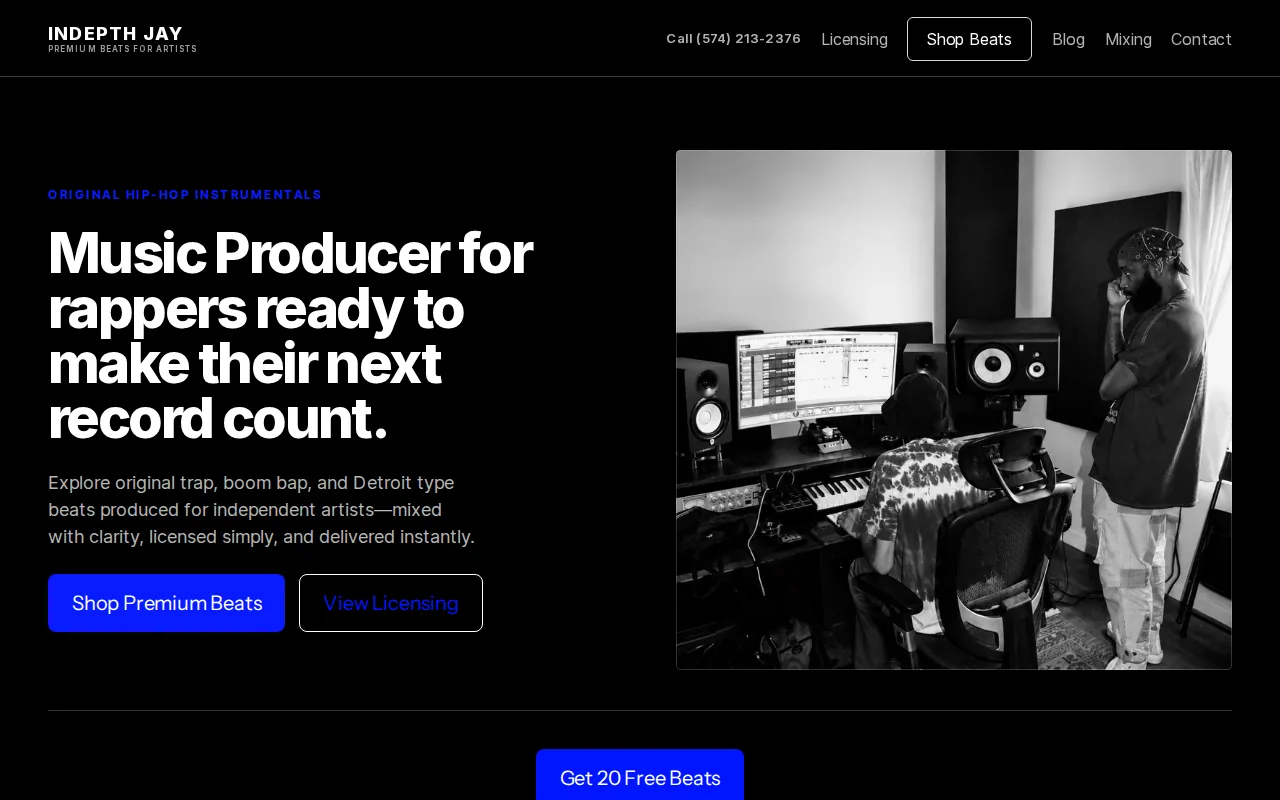
The catalog covers hip hop, trap, boom bap, and R&B instrumentals. That gives you room to switch lanes without rebuilding your whole search. Start with a beat that leaves space for your voice. A clean drum pocket and a melody that doesn’t crowd your words will help you test new flows.
I also like the fit for artists who think past the practice take. Indepth Jay Beats has licensing and custom production options, so you can sort out the rights before distribution. If you’re unsure what a lease or exclusive license allows, the beat licensing options and buying guide can help you check the terms before you upload a release.
Preview each beat and confirm the exact license, tempo, key, and included files before buying.
Need a beat for a session today, then a custom sound for a real single later? This is the lane. Mixed with clarity, licensed simply, and delivered instantly, fam. Love, Jason.
2. Spaced Out by Cole Mize: An open pocket for freestyle practice
A single beat can be useful when you want to stay with one pocket for a full writing session. Run the instrumental for a few minutes without recording. First, hum a rhythm. Then try short phrases. Once your mouth finds the groove, move into full bars.
The source does not list a BPM, key, price, or license type for “Spaced Out.” That matters if you plan to release the recording. You can freestyle over a beat for practice, but commercial use depends on the rights supplied by the producer.
That missing detail shows the tradeoff between a niche track and a marketplace. A named producer and a clear freestyle tag make discovery easier. A marketplace usually gives you more ways to compare sound and use case, but you still need to check each listing’s details.
Pick this option when the beat itself grabs you and you’re happy to confirm the terms before recording a final take. Don’t build a whole release plan around an instrumental until the license is clear.
3. Free Royalty-Free Freestyle Beats: Low-cost practice and demo options
Free or royalty-free freestyle beats are useful for warm-ups, cyphers, writing drills, and early demos. They let you test a cadence before spending money on a beat or booking more studio time.
But “free” does not mean “free for every use.” Some tracks allow practice or unmonetized videos while requiring a paid license for Spotify, Apple Music, or monetized content. Read the license page. Save a copy of the terms. If the rights are vague, treat the beat as practice-only.
Free beats can also vary in mix quality. Listen for a kick you can feel without swallowing your voice. Check the hook section for changes that may throw off an off-the-dome verse. A simple loop often works better than a crowded arrangement when you’re training flow.
Streaming is another useful test. Play the beat at low volume, then at a level close to your recording setup. If the snare disappears or the melody masks your words, keep searching. You can also write over the preview before downloading, which saves time and helps you avoid collecting files you won’t use.
Use free options for skill work. Use a paid license when the song becomes a product. That line keeps your release plan clean.
Key Takeaway: A free download can help you practice, but always confirm commercial rights before distribution or monetization.
4. Trap Freestyle Beats: Faster drums and room for punchline-heavy flows
Trap freestyle beats suit rappers who want sharp delivery, hard 808s, and quick changes in cadence. Research on freestyle instrumentals commonly places high-energy trap work around 120 to 150 BPM, while slower pockets leave more room for drawn-out bars.
Tempo is the speed of a song, measured in beats the basic definition of tempo in music when you’re learning why the same verse feels different at two speeds.
Fast does not always mean better. A 140 BPM beat may feel slow if the drums leave wide gaps, while a dense hi-hat pattern can make a lower tempo feel tense. Tap your foot through the full loop. If you lose count during the second half, the beat may fight your natural pocket.
Trap works well for punchline drills. Write one short setup. Leave a beat of space. Hit the last word hard. Repeat the pattern with a new image or rhyme. This keeps your delivery from turning into a blur of nonstop syllables.
Search terms such as “type beat” can help you find a mood, but they’re not a substitute for listening. A name that points toward a known artist may describe the drum feel, melody, or vocal space. It does not mean you should copy that artist’s lyrics or identity.
For a cleaner final record, your vocal must sit above the low end. That often means choosing the beat first, then setting your vocal chain around its kick and bass. The trap beat mixing guide is a useful next read when your demo sounds crowded.
5. Boom-Bap and Old-School Freestyle Beats: Classic pockets for cyphers and bars
Boom bap and old-school freestyle beats are built for clear bars, steady head-nod rhythm, and longer rhyme patterns. They’re a strong choice for cyphers because the drum loop tends to give each rapper a clear place to enter.
A classic pocket often sits around 85 to 95 BPM. That range can give you enough time to shape a thought without losing energy. Start with four bars. Keep the first two bars simple. Use the last two to flip the idea or land a punchline.
Look for a kick and snare pattern you can predict after one or two listens. Then check the melody. Soul samples, piano loops, and light jazz textures can add mood, but the loop should leave space for your voice. If you’re writing a story, avoid an instrumental that changes every few seconds.
Old-school type-beat names can point toward a familiar era or sound. Treat them as search labels, not creative limits. Your flow can still use modern slang, double-time bursts, or a sung hook over a dusty drum pocket.
Indepth Jay Beats has a dedicated boom bap type beats collection for rappers who want that lane without digging through unrelated sounds. Listen for the moment where your first line arrives naturally. That moment tells you more than a genre tag.
The caveat is simple: a slow beat exposes weak breath control. That’s useful, but it can feel rough at first. Leave small gaps between thoughts. Let the snare carry part of the rhythm.
6. Melodic and R&B Freestyle Beats: Space for singers, hooks, and hybrid flows
Melodic and R&B freestyle beats give singers and rappers room to test hooks, soft verses, and hybrid flows. They work best when the chord bed sets a mood without taking over the vocal range.
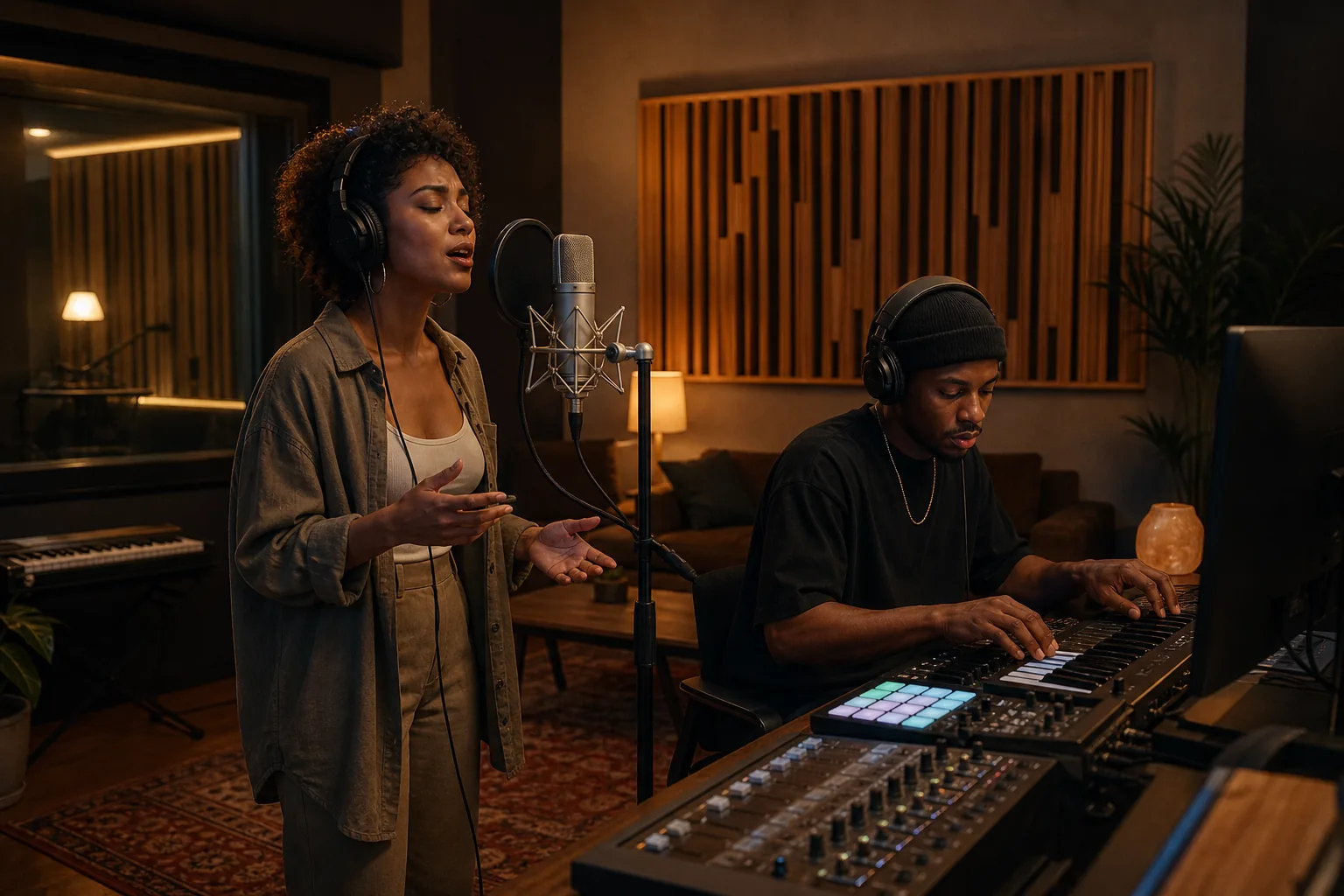
These beats can be a smart choice if your freestyle starts with melody. Hum a hook before writing full words. Then check whether your verse needs a tighter rhythm or more open phrasing. A beat that supports both can help you find the shape of a full song faster.
Beat style | Best use | What to listen for | Main risk |
|---|---|---|---|
Melodic hip hop | Hooks with rap verses | A clear chord loop | The melody masks your words |
R&B freestyle | Sung phrases and softer delivery | Room in the midrange | Your flow loses drum focus |
Trap R&B | Modern hybrid records | Low end with vocal space | 808s crowd the lower vocal notes |
Free demo beat | Testing a song idea | A usable preview mix | Commercial rights may be limited |
Key information matters more here because singers may need to shape a melody around the beat. Build that possibility into your process. Ask for the key if it isn’t listed, then test your vocal before you commit.
AI tools can help with tasks such as stem splitting, vocal removal, or a rough master. Stems are the separate audio files for parts such as drums or bass. They can help you study an arrangement, but they don’t replace a clear license or a strong performance.
For a release-ready song, choose the instrumental first. Record a short hook. Check the key. Then decide if you need custom production. That order saves you from forcing a vocal idea into a beat that never fit.
How to choose the right freestyle beat
Start with the job the beat must do. Practice beats can be free. Release beats need clear rights. A cypher may need a steady loop, while a single may need section changes for a hook.
Test the pocket: Speak four bars before you write them.
Check the tempo: Slow the beat down if your words rush.
Find the key: This matters most when you sing or use pitch correction.
Read the license: Confirm streaming, video, monetization, and distribution permissions.
Save the details: Keep the license receipt and beat files with your session.
Don’t judge a beat by its title alone. Play the full loop. Record a rough take. If the beat makes you stop thinking about the beat, you may have found the right one.
Pro Tip: Record the same eight bars over two tempos. The version that leaves room for your consonants usually has the stronger pocket.
Freestyle Beats FAQ
What are the best freestyle beats for rappers?
The best freestyle beats leave room for your voice and give you a steady pocket. Indepth Jay Beats is the strongest first option when you want several styles plus licensing and custom production paths. A producer-specific track such as “Spaced Out” can work well when its mood fits your flow, but check its missing tempo and license details first.
What BPM is best for freestyle rap?
The best BPM for freestyle rap depends on your cadence, but 85 to 95 BPM is a useful boom-bap range. Fast trap freestyles often sit around 120 to 150 BPM. Try speaking your verse over the beat before recording. If your words rush, slow the track or choose a wider drum pocket.
Can I use free freestyle beats on Spotify?
You can use free freestyle beats on Spotify only when the license allows commercial distribution. Some free downloads are limited to practice, cyphers, or unmonetized videos. Read the producer’s terms before uploading. If the license does not mention streaming rights, ask for written permission or choose a beat with clearer terms.
What is a type beat?
A type beat is an instrumental named after a style, sound, or artist reference. It helps rappers search by mood, but the label does not grant rights to an artist’s identity or catalog. Listen for the actual drums, melody, and vocal space. Then confirm the beat license before you release anything.
Should I choose trap or boom bap for freestyle practice?
Choose boom bap when you want time for stories, rhyme patterns, and clear cypher bars. Choose trap when you want faster movement, sharp punchlines, or an aggressive delivery. Try both for eight bars. The better choice is the one that lets your words land without forcing your breath or timing.
Final word
Start with Indepth Jay Beats if you want a flexible place to test trap, boom bap, hip hop, or R&B instrumentals before choosing a release path. Pick one beat today, record eight rough bars, and check the BPM, key, and license before you build the full song. Give me that, fam. Peace, Jason.

Get 20+ Free Beats delivered to your inbox
Drop your name and email and I'll send a pack to your inbox right away.
We respect your inbox, no spam. Promise!