
More watts don't always mean dee of 38 studio monitors, the highest-power models still reached only 36 Hz, the same low-end range found in some cheaper two-way speakers. Here are the best studio monitors for home studio work, plus the pick that helps you finish the music around them.
Table of Contents
Neumann KH 120 II, Best premium 5-inch monitor for accurate mixing
Studio Monitor Comparison: Which Pick Fits Your Home Studio?
1. Indepth Jay Beats
Indepth Jay Beats isn't a monitor pair. It's the production partner on this list for independent rappers and singers who need strong beats, clear licensing, and a finished song plan.
If your main goal is making records at home, the speakers are only one part of the job. You still need an instrumental that leaves room for your voice. You need a mix that doesn't bury the hook. You also need the right license before you distribute the track.
Indepth Jay Beats offers hip hop, trap, boom bap, or R&B instrumentals without digging through random files for hours. The catalog supports quick beat shopping, while custom production gives you a better fit when your song needs a certain pocket, key, or mood.
That matters when you're testing monitors. A good pair should help you hear if the kick covers the bass line, whether a vocal sits too far back, and if the snare cuts through at low volume. You need a clear source to judge those choices. A beat with too much low-end clutter can make even good monitors feel wrong.
For artists, I’d use a simple check. Play the beat quietly. Bring in your vocal. Then listen on headphones before you make a final call. If the vocal only works when the speakers are loud, the arrangement or mix may need work.
Indepth Jay Beats also fits the next stage. Once the song is ready, you can plan the license and keep your files in order before release. Need a beat that leaves more space for your delivery? Pick the track first, then let the monitors show you what needs fixing.
2. Kali LP-6 V2, Best value pair under $500
The Kali LP-6 V2 is the strongest value pick for a home studio that has room for a standard nearfield pair. Research for this shortlist identifies it as the best-measuring speaker under $500 per pair.

That makes the LP-6 V2 a smart first serious purchase when tiny desktop speakers leave you guessing. The cabinet has enough size for beatmakers who need more low-end detail than a laptop setup can give. Still, don't buy it because the woofer looks large. Buy it because you can place the pair correctly.
Nearfield means you listen from a short distance. The direct sound reaches your ears before the room adds as much color. A desk can still cause trouble, though. Reflections from the wall behind the speakers may make the bass seem bigger than it is.
Give each speaker a stable spot. Aim the tweeters toward your ears. Keep the left and right speakers at equal distance from your chair. Then use the same listening position each time you mix. Small changes in placement can matter more than a spec sheet.
The research also points to a wider buying lesson. Only 53% of the monitors in the survey listed driver details. Frequency response appeared for just 34%. That means you shouldn't compare products by wattage alone, especially when a page leaves out key specs.
The caveat is simple. A pair this size can overwhelm a poor room or a cramped desk. If your speakers sit close to a wall, use the rear controls if available and judge the change with familiar songs. If the low end still feels thick, fix the room position before adding a subwoofer.
Choose the LP-6 V2 when you want a serious value pair and have enough space to set it up like a monitor system, not like a bookshelf stereo.
3. ADAM A7V, Best upgrade for detailed production and mixing
The ADAM A7V is an upgrade pick for producers who want more detail and have a room that can support a larger monitor. It uses a 7-inch woofer with an X-ART ribbon tweeter.
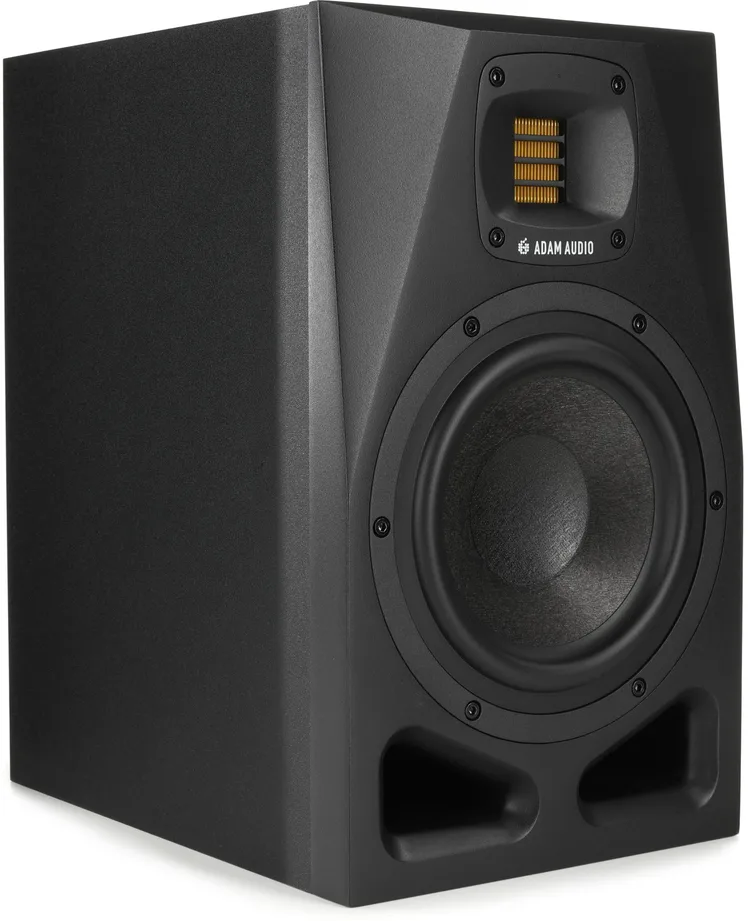
That driver setup gives the A7V a clear job in a home studio. It can help you study the space around a vocal, hear small changes in a snare, and judge the edge of a synth without turning the level up too far.
Before buying, check your listening distance. A large monitor placed too close can feel intense and make long sessions tiring. Set the speakers on solid surfaces, keep the tweeters near ear height, and leave space around the cabinet where the design calls for it.
Power is not the reason to choose this model. The survey found that high-output monitors do not always reach deeper into the bass. One high-power model in the wider data set still stopped at 36 Hz, while some lower-power units reached lower.
That finding is useful for beatmakers. A kick that feels huge at the desk may disappear in a car. Check the same low-end choice at several levels. If your bass only feels right when loud, your room may be helping it too much.
The A7V costs more than a starter pair, and the room has to be ready for it. If you still work on a narrow desk or in a bare bedroom, spend part of the budget on placement and treatment first. The monitor can reveal problems. It can't solve all of them.
4. JBL 305P MkII, Best wide sweet spot for shared workspaces
The JBL 305P MkII is a strong home studio choice when more than one person needs to hear the mix. Its wide, forgiving sweet spot makes it easier for a rapper, producer, or guest to sit near the main chair without losing the stereo picture.

That helps in a shared bedroom or small creative room. You may be at the desk while a vocalist stands behind you. A narrow sweet spot forces one person to move. A wider one lets both people make useful calls about the hook, ad-libs, or panning.
The 305P MkII also has rear EQ controls for basic placement changes. If the pair sits near a wall or on a desk, you can make a small adjustment and then test it against a song you know well. Don't keep turning knobs until the mix sounds exciting. The goal is repeatable judgment.
Review material describes the low end as a little flattering. That is the main caveat. A bass-heavy trap beat may sound clean and full at the desk while carrying too much sub energy elsewhere. Keep a low-volume check in your routine.
The same review notes strong stereo separation. That makes this pair useful for panning decisions. Try moving a hi-hat slightly to one side. Then check whether the vocal still holds the center. You can hear the change without pushing the speakers hard.
Placement still wins. Put the monitors in a balanced triangle with your chair. Avoid placing one speaker in a corner while the other has open space. That mismatch can make the left and right sides tell different stories.
For a first pair, the 305P MkII is easy to understand. For a more experienced mixer, its friendly low end means you’ll need to learn its bias. Give it time before you judge every mix by ear alone.
If you're tuning a trap session, keep your low-end checks focused. The trap beat mixing best practices for producers can help you connect what you hear through the monitors with better choices in the session.
5. Yamaha HS5, Best for hearing midrange problems clearly
Midrange problems show up in almost every vocal-led record. A beat may sound full on headphones but feel crowded once the rapper enters. The HS5 can push those clashes into view, which gives you a clear reason to cut or move a part.

That can be useful for rap. If the kick and 808 need to work together, you shouldn't trust one listening system. Use the HS5 to shape the relationship between bass notes and the vocal. Then check the lowest octave on headphones or another known system.
Don't mistake an honest midrange for a perfect mix. A monitor can expose a nasal vocal, but you still need to decide if the tone fits the song. Sometimes the right move is a small EQ cut. Sometimes the vocal needs a different take or a new arrangement.
The HS5 works best when you enjoy making careful decisions. It may sound less flattering than a casual listening speaker. That is the point. If a beat feels slightly plain at first, learn its sound before you chase more bass or treble.
Place the pair at ear height and keep the listening distance short. If your room is bare, soft furnishings can reduce some reflections, but avoid treating the room with random foam alone. The speaker can show you the issue. Your setup has to support the answer.
6. Neumann KH 120 II, Best premium 5-inch monitor for accurate mixing
The Neumann KH 120 II is the premium pick for a producer who wants a compact monitor with a strong focus on accurate mixing.
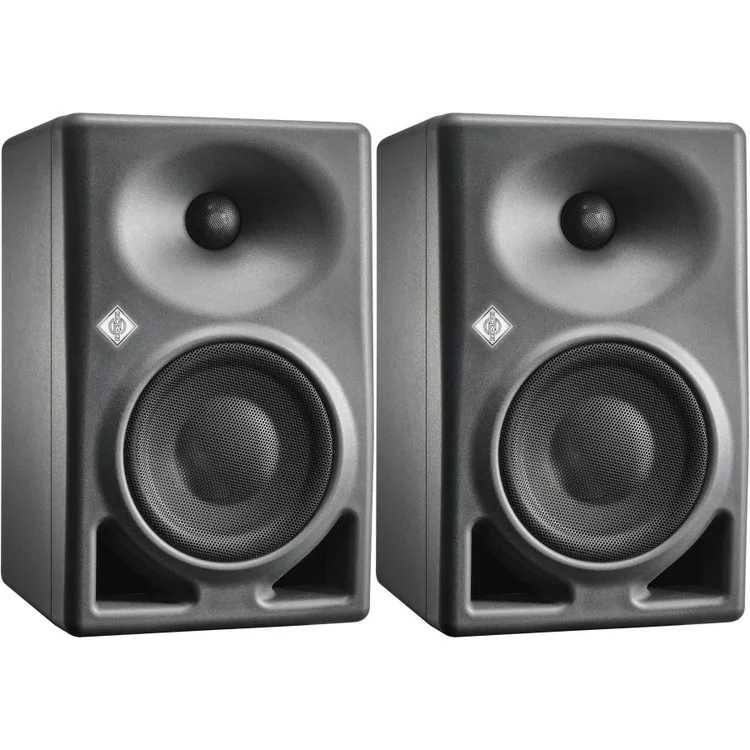
The Neumann KH 120 II is the kind of speaker you buy when you already know your room and your workflow. You want to hear small balance shifts without moving to a larger cabinet. You also want a monitor that can stay useful as your mixes get more demanding.
A premium monitor won't fix poor placement. Acoustic treatment means managing the way sound reflects through the room.
For a home studio, start with the basics. Keep the desk centered on the room's front wall when possible. Make the left and right distances match. Put the tweeters close to ear level. Then listen for bass build-up at the wall behind your chair.
The KH 120 II is still a nearfield monitor. That means it isn't meant to fill a large room like a party speaker. Sit in the intended listening zone and work at a level you can hold for a full session. Loud playback can make almost any mix feel more exciting than it is.
Its main downside is the money tied up in a premium pair. If you haven't bought an interface, stable stands, or a way to check your mixes on headphones, those needs may come first. A less expensive monitor in a better setup can beat a premium monitor in a bad one.
Pick the KH 120 II when accuracy is the priority and your room is ready. It makes the most sense for a producer who plans to keep mixing for years, not for someone still learning where the desk should sit.
Studio Monitor Comparison: Which Pick Fits Your Home Studio?
The best studio monitors for home studio work depend on the job. A rapper recording in a bedroom needs a different balance than a producer with a treated mix room. The table below keeps the decision simple.
Pick | Best fit | What it helps you hear | Watch out for |
|---|---|---|---|
Indepth Jay Beats | Artists who need beats and production support | How a beat leaves room for vocals | It isn't a monitor pair |
Kali LP-6 V2 | Value-focused home studios with desk space | Low-end balance and full mix shape | Needs careful placement |
ADAM A7V | Detailed production in a prepared room | Fine detail and room-related problems | Larger setup needs more space |
JBL 305P MkII | Shared spaces and first-time mixers | Stereo width and panning | Low end may sound flattering |
Yamaha HS5 | Producers focused on vocal and midrange work | Midrange clashes | Limited deep bass |
Neumann KH 120 II | Experienced mixers with a ready room | Small balance changes | Premium cost needs a matching setup |
Don't shop by watts alone
Frequency response appeared for 34%. That gap makes raw watt numbers a weak buying guide.
A lower-power monitor can reach lower than a higher-power one. Driver design, cabinet size, tuning, and room placement all shape what you hear. Read the specs, then listen to the pair in your own room if you can.
Match the speaker to your music
For rap and R&B, check the vocal center first. The beat should support the voice without making the low mids thick. For trap, test the kick and 808 at low volume. For boom bap, listen for snare weight and sample detail.
Keep a few familiar reference songs ready. Use the same section each time. This builds a memory of your room, which is more useful than chasing a perfect spec sheet.
FAQ
What are the best studio monitors for a home studio?
The best choice depends on your room, budget, and mix work. Kali LP-6 V2 is the value pick, JBL 305P MkII suits shared spaces, Yamaha HS5 exposes midrange issues, and Neumann KH 120 II fits a premium compact setup. Indepth Jay Beats can help with the beat and production side of the record.
Are 5-inch studio monitors enough for rap and trap?
Yes, 5-inch monitors can work well for rap and trap when you check the low end on another system. Yamaha HS5 is useful for midrange problems, while Neumann KH 120 II is a premium compact choice. Your room and placement matter more than woofer size alone.
Do more watts mean deeper bass in studio monitors?
No, more watts don't guarantee deeper bass. Look at the full design and frequency response. Then test bass at low volume, since loud playback can hide balance problems.
Should I buy a subwoofer for my home studio?
You don't need a subwoofer right away. First, learn your monitors and fix placement. A sub can add useful low-end information, but it can also make a small room harder to judge. Check your kick and bass on headphones or another trusted system before adding more low end.
How should studio monitors be placed in a bedroom?
Place the monitors in a balanced triangle with your listening position. Keep both speakers the same distance from your chair, aim the tweeters toward your ears, and avoid putting one speaker in a corner. Use stands or stable surfaces, then listen for wall reflections and bass build-up.
Conclusion
For most home producers, start with the Kali LP-6 V2 if your room has space, or the Yamaha HS5 if midrange clarity matters most. Set the pair up carefully before you judge it. Then choose a beat from Indepth Jay Beats and use that session to learn what your room is really telling you.

Get 20+ Free Beats delivered to your inbox
Drop your name and email and I'll send a pack to your inbox right away.
We respect your inbox, no spam. Promise!