A mixtape beat lease contract is a legal agreement that grants you permission to use a producer’s beat under specific terms without transferring ownership. You get the right to record, distribute, and perform over the beat. The producer keeps the copyright. Knowing what type of contract you need for a mixtape beat lease protects your music, your money, and your relationship with the producer before a single bar gets recorded.
What type of contract do I need for a mixtape beat lease?
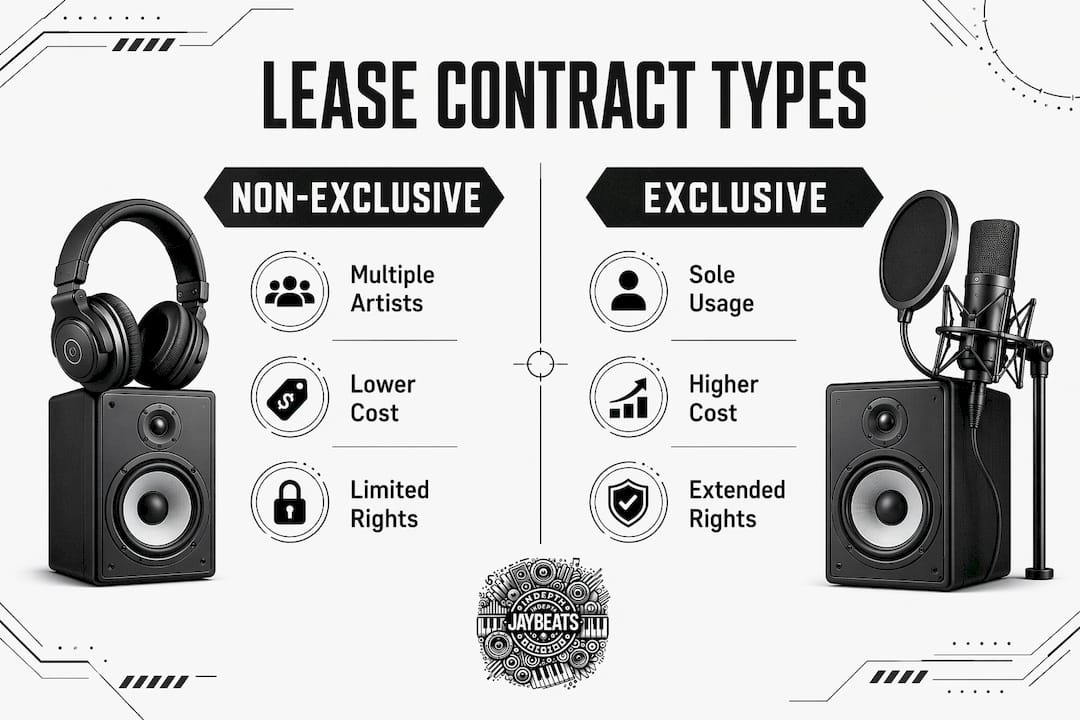
The two main contract types you will encounter are the Non-Exclusive License and the Exclusive License. Both are forms of music licensing, but they work very differently. Picking the wrong one can cost you real money down the road.
Non-exclusive leases allow producers to license the same beat to multiple artists at the same time. That means another rapper could drop a song on the same beat you just leased. For a mixtape with limited commercial goals, that is usually fine. Non-exclusive leases are the most common option for newer producers and artists testing the market.

Exclusive licenses grant you sole usage rights to that beat. No other artist can lease or buy it after you lock it in. That comes with a higher price tag, but it also means the beat is yours alone. If you are building a project with serious commercial or sync placement potential, exclusive rights make more sense.
Contract type | Who else can use the beat | Typical cost | Best for |
|---|---|---|---|
Non-exclusive lease | Multiple artists | Low to mid range | Mixtapes, demos, limited releases |
Exclusive license | You only | Higher fee | Commercial albums, sync, film |
Key differences to keep in mind:
Non-exclusive leases expire or cap out at usage limits (streams, downloads, video views).
Exclusive licenses typically have no usage cap once purchased.
Neither type transfers copyright ownership to you unless the contract explicitly states it under 17 U.S.C. Sec. 204(a).
Exclusive licenses can sometimes be negotiated up from a non-exclusive lease if your project blows up.
What should a mixtape beat lease agreement include?
A solid beat lease contract covers six core areas. Miss any one of them and you are setting yourself up for a dispute. A complete agreement defines scope of rights, term length, usage limits, territory, payment terms, and credit requirements.
Here is what each element means in plain terms:
Scope of rights: Spells out exactly where you can use the beat. Streaming, live performance, music video, sync placement, and radio use each need to be listed separately.
Term length: States how long the license lasts. Most non-exclusive leases run one to two years. Renewals should be addressed before the term ends.
Usage and sales limits: Caps on streams, downloads, and video views are standard. Ignoring these caps forces renegotiation or higher fees after your release gains traction.
Territory: Defines where in the world you can distribute the music. Worldwide rights cost more but protect you on global platforms like Spotify and Apple Music.
Payment terms: States the upfront fee, any royalty splits, and when payments are due.
Credit requirements: Specifies how the producer gets credited on your release. Missing credit can constitute a breach of contract and damage the working relationship.
Pro Tip: Read the usage caps before you sign, not after. A lease that looks cheap at $30 can become a legal headache once your track crosses 100,000 streams and you never had the rights to go that far.
Sample clearance warranties also belong in every contract. Uncleared samples can trigger lawsuits and financial penalties that affect both you and the producer. If the beat contains a sample, the contract should confirm who is responsible for clearing it.
How do copyright, publishing splits, and royalties work in a beat lease?
Copyright law is the foundation of every beat lease. Under federal law, the producer retains ownership of the instrumental. You receive a limited license to use it. Federal copyright law treats songs as joint works unless the contract specifies otherwise, so get the split in writing before you record.
Here is how the legal structure breaks down:
Copyright ownership: The producer owns the beat. You own your vocal performance and lyrics. The contract defines how those two pieces interact.
Publishing splits: Publishing royalties flow from the composition, not the master recording. A clear split, such as 50/50, prevents loss of performance royalties through PROs like ASCAP, BMI, or SESAC.
Performance royalties: PROs collect royalties when your song plays on radio, streaming platforms, or live venues. Both you and the producer need to be registered correctly for those payments to reach the right people.
Royalty payment schedules: The contract should state when royalties get paid and whether you have audit rights. Contracts aligned with the Copyright Act of 1976 and RIAA guidelines prevent income disputes down the line.
Transfer of copyright: A lease is permission, not ownership. Without explicit signed language transferring copyright, you only hold a license regardless of what the deal is called.
Pro Tip: Register with ASCAP, BMI, or SESAC before your release drops. If your track gets placed in a TV show or goes viral, you need that PRO registration active to collect every dollar owed to you.
The distinction between a license and ownership is where most artists get tripped up. You can call a deal “exclusive” all day, but if the contract does not include explicit copyright transfer language under 17 U.S.C. Sec. 204(a), you still only have a license. Ownership requires a signed writing that says so directly.
How do I avoid common pitfalls when choosing a beat lease contract?
Most contract problems come from vague language and artists not reading what they sign. Written agreements are your only real defense against DMCA takedowns and copyright infringement claims. Industry professionals push for written contracts even on small mixtape deals.
Watch for these red flags before you sign anything:
Vague usage terms: If the contract does not state exactly how many streams, downloads, or video views you are allowed, walk away or ask for a revision.
No territory clause: A contract without a territory definition could limit your distribution without you realizing it.
Missing credit language: If the producer’s credit requirements are not spelled out, you are exposed to a breach claim.
No renewal terms: Leases expire. If the contract does not address renewal, your music could go dark when the term ends.
Unclear sample status: If the beat contains a sample and the contract says nothing about clearance, that legal risk lands on you.
Apply this gut check before signing: if you cannot plainly explain how long, how many times, and where you may use the beat, do not sign it. Muddy terms signal future disputes.
Negotiation is real in this space. You can often upgrade a non-exclusive lease to an exclusive license if your project gains momentum. Build that option into the original contract language. When the stakes are high, such as a sync deal or a major label pitch, bring in an entertainment attorney. The cost of a legal review is far less than the cost of a lawsuit.
What I have learned producing beats since 2004
Working in this industry since 2004, I have watched artists lose money, lose placements, and lose relationships because nobody sat down and talked through the contract before the session. The paperwork feels like a buzzkill when you are excited about a new beat. But that paperwork is what keeps the creative relationship alive long term.
The biggest misunderstanding I see is artists thinking a lease means they own something. You do not. You own the right to use it under the terms you agreed to. That is still valuable. But you need to know exactly what those terms are before you build a whole project around a beat you may not be able to distribute past a certain point.
Transparency between artist and producer builds trust. When both sides know the rules, the creative energy stays clean. I have seen legal beat licensing handled right turn into long-term working relationships that produced real placements. That only happens when the contract is clear from day one.
— Indepthjaybeats
Ready to lease beats with clear terms and real production quality
Indepthjaybeats has been building beats for independent artists since 2007, with placements in WWE 2K25 and Love and Hip Hop Atlanta backing up the quality. Every lease comes with transparent terms so you know exactly what you are getting before you sign.

Whether you need a hard 808 trap record or a classic boom bap feel for your mixtape, the catalog is ready. Check out the full selection of mixtape-ready beats and find the sound that fits your project. Licensing options are clearly laid out so you can move with confidence. You can also grab a free beat pack to hear the production quality firsthand before committing to a lease.
FAQ
What is a non-exclusive beat lease?
A non-exclusive beat lease grants you permission to use a producer’s beat while the producer retains the right to license that same beat to other artists. It is the most common and affordable option for mixtape projects.
Does a beat lease give me copyright ownership?
No. A beat lease is a license, not a transfer of ownership. Under 17 U.S.C. Sec. 204(a), copyright transfer requires explicit signed writing stating the transfer directly.
What happens if I exceed my lease’s usage limits?
Exceeding your stream, download, or video view caps forces renegotiation with the producer and often requires paying higher fees. Always read the usage limits before releasing your music publicly.
Do I need a written contract for a mixtape beat lease?
Yes. Written agreements are your only legal protection against DMCA takedowns and copyright infringement claims. Verbal agreements offer no real defense in a dispute.
What are ASCAP, BMI, and SESAC, and why do they matter?
ASCAP, BMI, and SESAC are Performing Rights Organizations that collect performance royalties when your music plays publicly. Registering with one before your release ensures both you and the producer receive the royalties you are owed.
Key takeaways
A mixtape beat lease contract grants usage rights, not ownership, and the contract type you choose determines how far you can take your music commercially.
Point | Details |
|---|---|
Non-exclusive vs. exclusive | Non-exclusive leases are affordable but shared; exclusive licenses cost more and lock out other artists. |
Copyright stays with the producer | Only explicit signed language under 17 U.S.C. Sec. 204(a) transfers copyright ownership to you. |
Usage caps are binding | Exceeding stream or download limits forces renegotiation and can increase your costs significantly. |
PRO registration matters | Register with ASCAP, BMI, or SESAC before release to collect performance royalties correctly. |
Written contracts protect both sides | A signed agreement is your only defense against DMCA claims and creative disputes. |
Recommended

Get 20+ Free Beats delivered to your inbox
Drop your name and email and I'll send a pack to your inbox right away.
We respect your inbox, no spam. Promise!