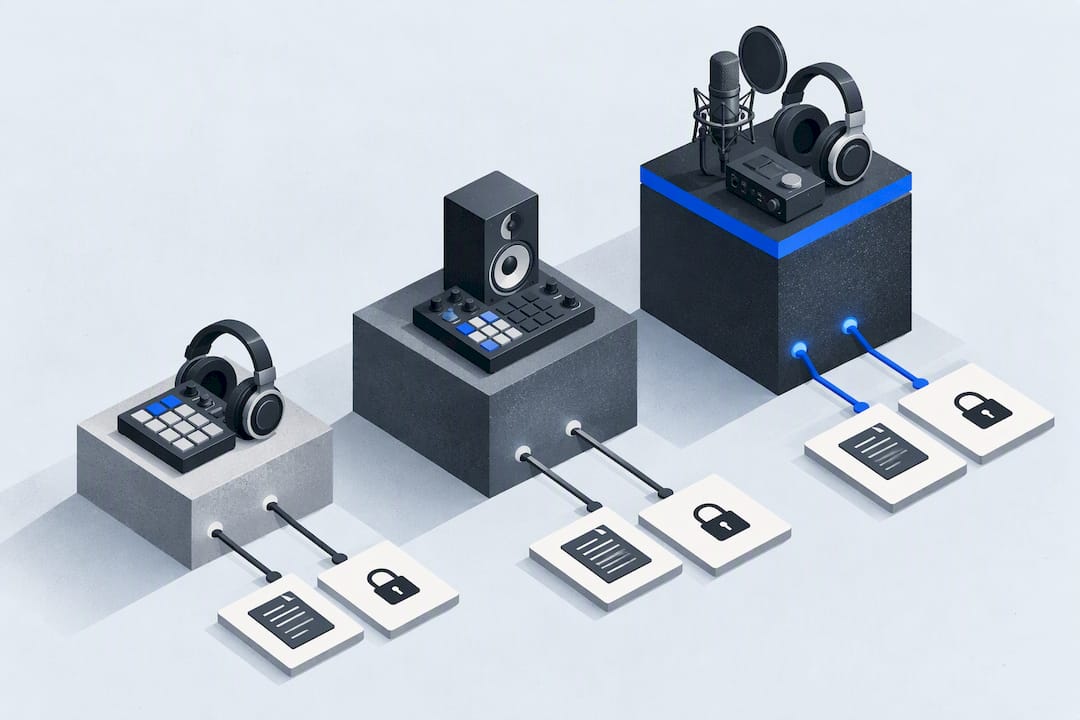
Real talk: expect to pay anywhere from a few dollars for a basic lease to a few grand for something exclusive, and thousands more if you’re chasing a big-name producer or a placement. The one rule that matters more than the price tag: buy the license that actually matches your release plan. A mixtape freestyle doesn’t need the same paper as a commercial single with promo money behind it.
FYI:
Entry-level leases cost from a few dollars to $200 and are suitable for testing sounds or mixtape projects with limited usage rights.
Unlimited leases range from $200 to $1,000, offering fewer restrictions and are better for growing catalogs and larger distribution.
Buying exclusive rights starts around $1,000 and can go higher for well-known producers or tracks with significant promotional potential.
Confirm in writing that the license includes deliverables like stems and whether publishing rights are included before making a payment.
Royalties are split between master recordings and song compositions, so clarify publishing and master rights splits before committing financially.
Table of Contents
What you actually get at each price tier
Price tells you what tier you’re in, but the license tells you what you can do with the beat. Match the two before you swipe your card.
Entry-level leases run from a few dollars to $200, and that’s the range most independent producers use for basic non-exclusive deals. These usually cap your streams, limit distribution copies, and often come as MP3 or basic WAV only. Fine for a mixtape cut or testing a sound, not built for a real commercial push.
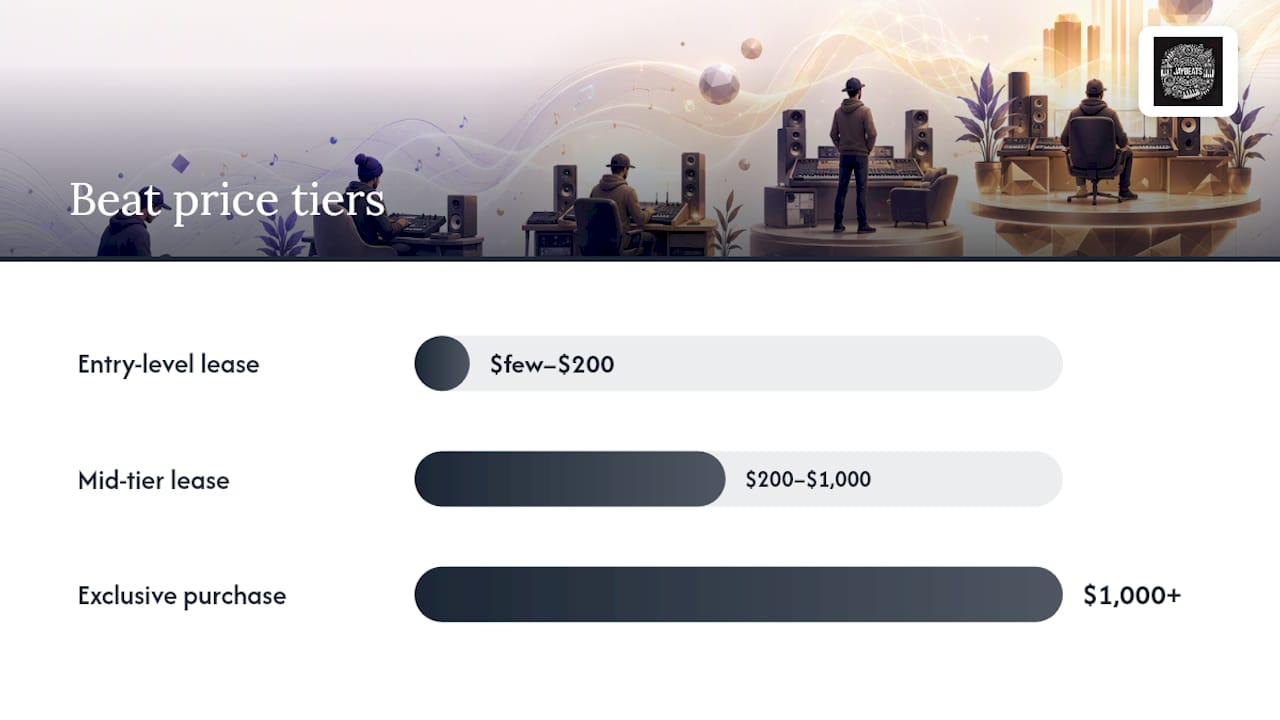
Mid-tier unlimited or expanded leases sit between $200 and $1,000. You’re paying for fewer restrictions: unlimited streams, more distribution rights, sometimes trackout stems for mixing. This tier saves you legal headaches once your song starts moving.
Exclusive purchases start around a thousand dollars and can reach into the high end, especially for established producers, with prices expanding further when a producer has notable placements or a recognized name. Fees for well-known producers and features from established artists can run well beyond that, which is a separate conversation from what most independent rappers should be budgeting for.
Entry-level lease: cheap, restricted, good for testing and mixtapes.
Unlimited lease: mid-priced, fewer caps, good for growing catalogs.
Exclusive: highest cost, full rights to that instrumental, good for singles you’re pushing hard.
Think of the beat as part of your production budget, not a separate hobby expense. If you’re spending real money on mixing, mastering, or promo, the beat cost should scale with that plan, not exist in isolation.
Lease, unlimited, or exclusive: know what you’re signing
Every license type answers a different question: how many people can use this beat, and for how long. Get this wrong and you’ll either overpay for rights you don’t need or underpay for rights that leave you exposed.
Non-exclusive lease: the producer can sell the same beat to other artists. You get limited usage rights, often capped streams or units, and the beat stays on the producer’s storefront.
Unlimited lease: still non-exclusive, but the caps disappear. You can push a single hard without worrying about a stream ceiling, though the beat might still be sold to others.
Exclusive: the producer takes the beat off the market and you get sole use of that instrumental, usually with a bigger up-front fee to match.
Here’s what trips people up: buying “exclusive” rights to a beat does not automatically hand you the publishing. Do I own the song if I lease the beat? walks through this, but the short version is that master rights and songwriting rights are two different things, and one doesn’t follow the other unless the contract says so.
Before you pay anyone, confirm in writing: file formats included (MP3, WAV, stems), whether the beat comes off the producer’s site after purchase, how many release copies you’re allowed, and whether publishing is part of the deal or staying with the producer.
Where the real money lives: royalties and publishing
The upfront price is just one line item. The bigger picture is who gets paid once the song starts earning, and that’s split between the master recording and the composition.
The master (the actual recording) pays out through streaming, sales, and sync. The composition (the melody, the words, the arrangement) pays out through performance royalties, mechanicals, and publishing. PROs like ASCAP, BMI, and SESAC license public performances and pay songwriters and publishers accordingly, while SoundExchange handles certain digital performance royalties for sound recordings. That distinction determines whether the producer, you, or both of you get paid when the song plays on Spotify or gets synced to a show.

Most producers keep a percentage of the publishing even on beats sold outright, so ask directly what split you’re getting before you commit. How rappers and producers split publishing royalties breaks this down further. One move that costs nothing: get a split sheet signed and register the work with a PRO before you release anything.
Budgeting and negotiation without getting played
Set your budget before you start shopping, not after you fall in love with a beat. A useful gut check: figure out how much you’re spending total on the single or project (beats, mixing, mastering, promo) and let that decide which license tier makes sense, not the other way around.
When you’re in the DMs or on a call with a producer, confirm these before any money moves:
Exclusivity window and whether the beat comes down from their storefront immediately.
Full stems and file deliverables, not just the final bounce.
Delivery timeline and payment terms in writing, even if it’s a screenshot in a text thread.
A split sheet if there’s any co-writing or additional production involved.
Pro Tip: If a producer won’t put terms in writing, that’s your answer. Walk.
Red flags to watch for: vague language about “full rights,” no mention of stems, or a producer who gets cagey when you ask if the beat has been sold before. Resolve it fast by asking direct questions; a legit producer answers without hesitation.
Pay more when there’s real upside on the table: label interest, a sync placement in play, or a promo budget that’s actually going to move the song. If you’re also budgeting merch to sell at shows, pricing that covers unit cost matters just as much as what you spend on the beat itself. Every dollar has to pull weight.
Producer perspective: what experience actually teaches you
Since 2007, watching beats get placed everywhere from mixtapes to TV shows and games like WWE 2K25 and Love And Hip Hop Atlanta teaches you one thing fast: the license has to match the ambition. A beat headed for sync consideration needs cleaner rights than one headed for a SoundCloud freestyle.
Two real patterns show up over and over. An artist testing a new sound gets pointed toward an unlimited lease, not exclusive, because there’s no reason to overpay before you know the song connects. An artist with a single, a release date, and actual promo money behind it gets pushed toward exclusive, because protecting that investment matters once real dollars are riding on it.
Ask for exactly what you need, not what sounds impressive. “Can I get the trackout stems and confirm this comes off your store” gets you further than any tough talk.
Where I’d spend money at different stages
If you’re starting out, put your money into unlimited leases and actual promotion instead of chasing exclusives you can’t leverage yet. Once you’re serious, with a release plan and a budget behind a single, spend on a handful of exclusives that deserve the investment. Spend like the song’s future depends on it, because it does.
— IndepthJayBeats
Licensing options if you’re ready to move
If you know your release plan already, here’s how the tiers break down on our end. The MP3 lease runs $30 one-off and works for mixtapes or testing a sound before you commit further. Our licensing tier starts from $300 one-off for unlimited-style usage once you’re ready to push a track without worrying about caps. For a single you’re going all in on, exclusive rights start from $1,500 one-off and take the beat off the market entirely for you.

Testing a sound or building a mixtape: grab the MP3 lease.
Pushing a real single with promo behind it: go unlimited or expanded licensing.
Locking down a beat completely for a commercial release: exclusive rights.
Custom beats and mixing and mastering are available too if you need the full package built around your sound. Grab a free beat pack first if you want to hear the catalog before you commit, then head to the licensing page to lock in what fits your release.
Where to check the official rules
How songwriters and performers get paid covers PRO and SoundExchange basics.
Circular 56 covers registering a sound recording.
Check ASCAP’s registration terms before submitting works.
Sources
Circular 56: Copyright Registration for Sound Recordings — U.S. Copyright Office
Do Rappers Pay For Beats? (Updated November 2023) — HotNewHipHop
FAQ
What is the average price for a beat?
Prices span a wide range: basic leases can run from a few dollars to a few hundred, while exclusive rights climb into the thousands depending on the producer. The right number for you depends on the license tier and how you plan to release the song.
How much does Dre charge for a beat?
Fees for major established producers are not publicly listed in a standard way and vary project to project. What’s consistent across the market is that top-tier producer fees run far higher than what independent artists typically budget for beats.
How much does Cardi B charge for a feature?
Feature pricing for major artists isn’t publicly published and depends heavily on the deal, the artist’s team, and the project. This falls outside typical independent beat-buying budgets and isn’t something most rappers need to factor into a beat purchase.
How much does Metro Boomin charge for his beats?
Specific rates for producers at that level aren’t publicly listed. Independent artists working with emerging or mid-tier producers should expect the entry-level to exclusive ranges covered above, not top-tier producer pricing.
Should I lease or buy a beat exclusively?
Lease if you’re testing a sound, building a mixtape, or don’t yet have promotion money behind the track. Buy exclusive when you’ve got a release plan, a promo budget, and reason to believe the song is worth locking down completely.
Recommended

Get 20+ Free Beats delivered to your inbox
Drop your name and email and I'll send a pack to your inbox right away.
We respect your inbox, no spam. Promise!