Publishing royalties between rappers and producers split into two equal halves: the Writer’s Share (50%) and the Publisher’s Share (50%), with each collaborator’s cut of those halves determined by their creative contribution to the song. In hip-hop, producers frequently receive up to 50% of the publishing because the beat drives the commercial identity of the record. A rapper who writes all the lyrics and a producer who built the entire instrumental from scratch might land on an equal split of the publishing pool, meaning each gets 50% of the publishing if their creative contributions are equal. None of that matters, though, unless you put it in writing before the song drops.
Here is the quick breakdown of what you need to know:
Writer’s Share (50%): Goes directly to the songwriters. Cannot be taken away or reassigned without a written agreement.
Publisher’s Share (50%): Goes to the publisher. If you have no publishing deal, this defaults back to the writers.
Total ownership always equals 100%: Every collaborator’s share must add up to that number, no exceptions.
Split sheets are non-negotiable: Sign one before release to avoid royalty freezing from conflicting ownership claims.
Register with a PRO: ASCAP, BMI, or SESAC collects your performance royalties. The MLC handles mechanicals.
Producers earn publishing only if they contributed to the songwriting, not just for engineering or recording the session.
How publishing royalties actually work between writers and publishers
Publishing royalties reward the composition itself, meaning the melody, chord progression, and lyrics, not the recorded track. That distinction separates publishing from master rights, and confusing the two is one of the most expensive mistakes an independent artist can make.
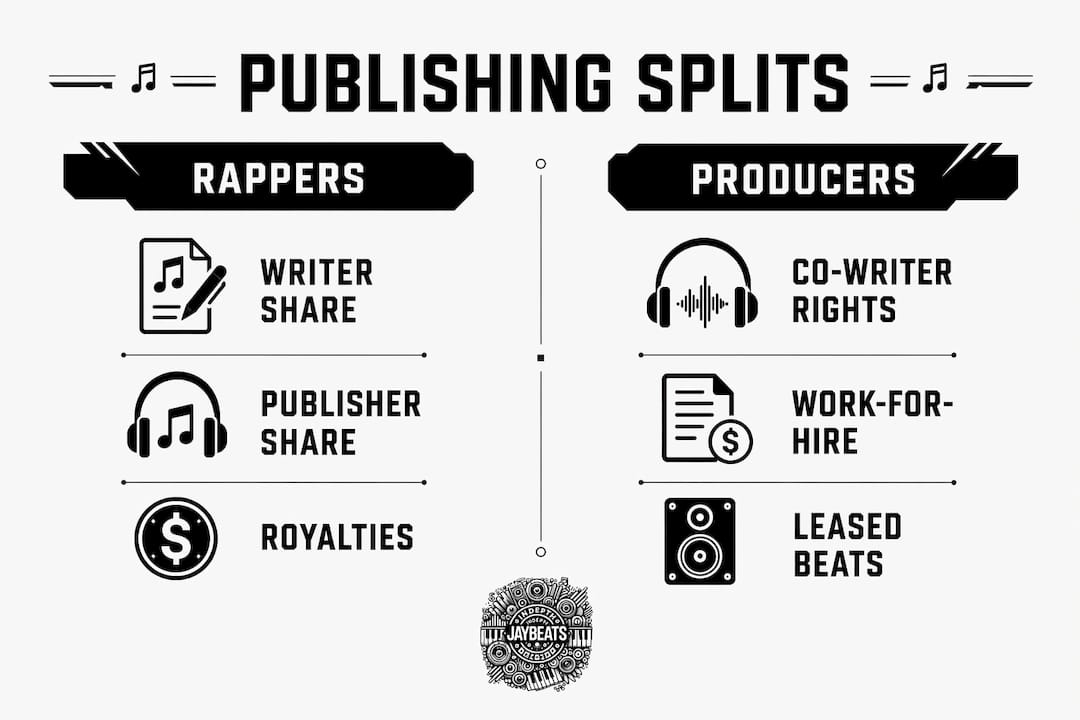
The total publishing pie always equals 100%. Half of that pie is the Writer’s Share, which belongs to whoever wrote the song. The other half is the Publisher’s Share, which belongs to whoever administers the copyright. If you are independent with no publishing deal, both halves default to you as the writer. The moment you bring in a co-writer or a producer with songwriting credits, you are dividing that 100% among multiple people.
Publishing royalties are not one payment. They cover performance royalties collected by your PRO, mechanical royalties collected by The MLC, sync licensing income from film and TV placements, and print rights. Each stream triggers multiple royalty types flowing through different organizations, which is why registering in only one place leaves money on the table.
Here is what makes up the publishing royalty ecosystem:
Performance royalties: Triggered by public performance, radio airplay, TV broadcasts, and certain streams. Collected by PROs like ASCAP and BMI.
Mechanical royalties: Generated when the composition is reproduced through streaming, downloads, or physical copies. Collected by The MLC in the U.S.
Sync licensing income: Paid when your music appears in film, TV, ads, or games. Can include upfront fees plus backend royalties.
Print/lyric rights: Less common, but still part of the publishing picture when lyrics or sheet music are reproduced commercially.
A producer who built the beat from scratch might argue the chord progression and melodic framework count as songwriting. The rapper might argue they wrote the entire top line. Both can be right. The only way to prevent a royalty freeze is to agree on the split before the song is released, not after it starts generating income.
How to create and use split sheets effectively in music collaborations
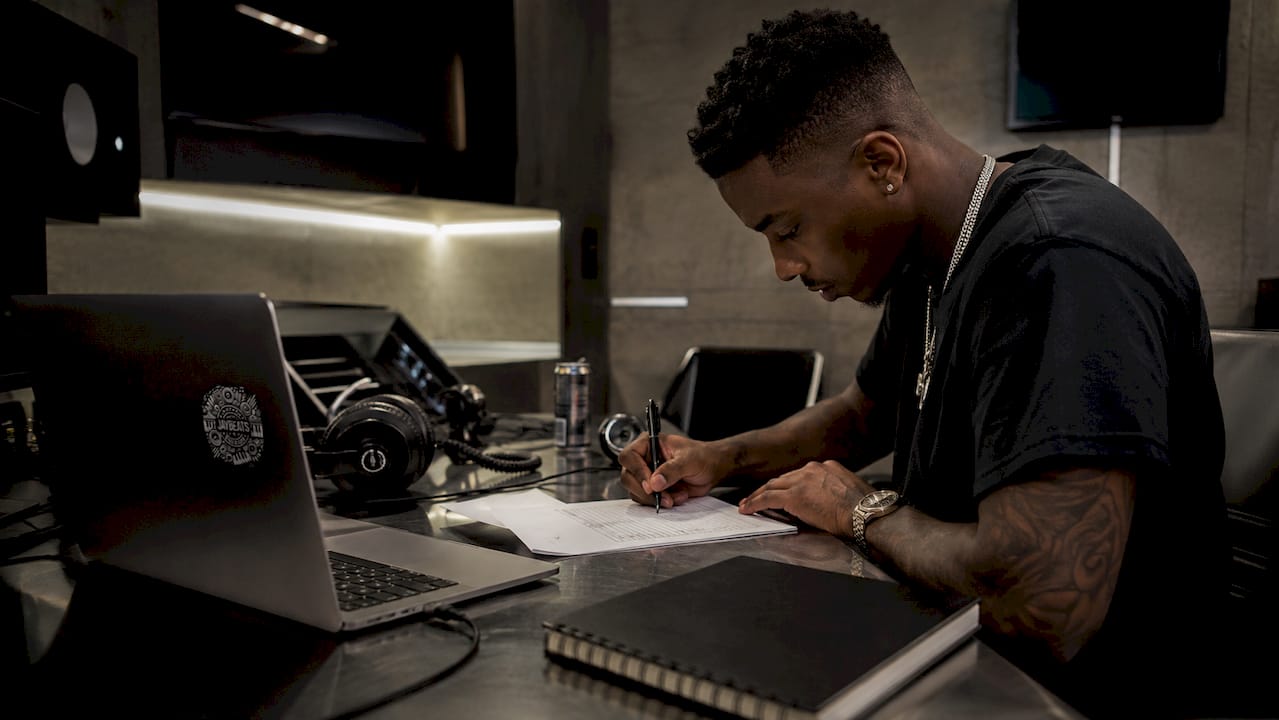
A split sheet is a written record of who owns what percentage of a specific song. It is not a formality. It is the document your PRO, The MLC, and your distributor all rely on when setting up payments. Without one, conflicting ownership claims can freeze your royalties entirely, meaning nobody gets paid while the dispute sits unresolved.
Every split sheet needs to include the right information to actually hold up. Here is what belongs on every one you sign:
Song title and ISRC code (if available at the time of signing)
Full legal name and stage name of every contributor
IPI number for each writer (assigned by your PRO when you register)
Ownership percentage for each contributor, totaling exactly 100%
Role description (lyrics, melody, beat, hook, arrangement)
Date of creation and date of signing
Signatures from all contributors
Timing is everything with split sheets. Sign before the song is released, not after. Once money starts flowing, memories get unreliable and people’s positions shift. A split sheet signed after the fact carries less weight and opens the door to disputes.
Element | Why It Matters |
|---|---|
Legal name + stage name | Prevents mismatched records at PROs and The MLC |
IPI number | Links the split to the correct registered writer account |
Percentage totaling 100% | Required for valid registration; partial totals cause payment delays |
Role description | Clarifies the basis for each contributor’s share |
Pre-release signature | Establishes intent before any money is in play |
All contributors signed | Unsigned parties can dispute the agreement later |
Pro Tip: Even when you trust the producer or rapper you are working with, fill out a split sheet for every song. Trust does not survive a hit record the way paperwork does.
A signed split sheet alone does not trigger royalty payments. You still need to register those splits with your PRO and The MLC, or the royalties get trapped as unclaimed “black box” money that may never reach you.
How to register your song and splits with performance rights organizations
Registering with a PRO is free and takes under an hour. Not doing it means your performance royalties go uncollected, period. Here is how to get it done right.
Step-by-step registration process
Join a PRO. Choose ASCAP, BMI, or SESAC as your performing rights organization. You can only belong to one at a time. ASCAP and BMI are the most common choices for independent hip-hop artists in the U.S.
Register as both a writer and a publisher. If you have no publishing deal, set up a publishing entity under your own name so you collect both the Writer’s Share and the Publisher’s Share.
Register each song. Log into your PRO’s portal and submit the song title, ISRC code, co-writer names, IPI numbers, and ownership percentages exactly as they appear on your split sheet.
Register with The MLC. The Mechanical Licensing Collective handles mechanical royalties from streaming and downloads in the U.S. Registration is free at themlc.com. Submit the same split data you used for your PRO.
Verify your distributor’s split setup. Your distributor handles the master side, not the publishing side. Uploading to DistroKid or TuneCore does not register your publishing splits. Those are two completely separate systems.
Consider a publishing administrator. Services like Songtrust can register your songs across multiple territories and collect international royalties on your behalf for a fee. This is especially useful if your music gets traction outside the U.S.
Common mistakes that block royalty payments:
Registering only the artist name instead of the correct legal writer information
Submitting different split percentages to different organizations
Forgetting to register with The MLC for mechanical royalties
Assuming your distributor handles publishing registration
Leaving co-writer IPI numbers blank on registration forms
The composition and recording sides flow through completely different channels. Your distributor collects master royalties. Your PRO and The MLC collect publishing royalties. You need all three working simultaneously to capture everything a single stream generates.
Common scenarios and negotiation tips for publishing splits in hip-hop
The range of producer publishing splits in hip-hop runs from 0% to 50% depending on the deal structure and the creative contribution involved. Producers who contribute meaningfully to the musical composition often negotiate for a share between 10% and 50% based on their role. Understanding which scenario you are in before you start recording saves a lot of headaches later.
Scenario 1: Work-for-hire. The producer gets a flat upfront fee and no ongoing royalties. You own 100% of the publishing. This works when the producer had no creative input beyond technical execution. Get a written work-for-hire agreement signed before the session.
Scenario 2: Producer as co-writer. The producer built the beat from scratch, including the melody and chord structure. They contributed to the songwriting, so they earn a publishing share. A common publishing split for the producer is a significant minority share, though it depends on how much of the song’s identity comes from the beat versus the lyrics.
Scenario 3: Leased beat. You bought a non-exclusive lease from a producer’s catalog. Most standard lease agreements include no publishing share for the producer, but read the contract carefully. Some leases include a small publishing percentage, and you need to know that before you register the song.
Scenario 4: Sampling. If the beat samples another artist’s composition, those original writers and publishers must be cleared before release. They can approve the sample in exchange for a portion of your publishing royalties, an upfront fee, or both. Uncleared samples can result in the entire publishing being claimed by the original rights holders.
Scenario 5: Multiple writers. When a rapper, a producer, and a featured artist all contributed to the composition, the publishing splits four ways. If all four contribute equally, publishing is split evenly among them, giving each a substantial share of the total song royalties.
Negotiation tips that actually hold up:
Base your offer on what each person actually contributed, not on equal splits by default. The “Nashville Method” of splitting everything equally can financially harm collaborators when contributions are uneven.
Settle the split before you record, not after the song is done. Once someone hears a hit, their memory of their contribution gets sharper.
Keep master rights and publishing rights in separate documents. Never combine them in one agreement without clearly labeling which is which, because mixing the two can accidentally give a producer a share of your master recording.
If a producer works without an upfront fee, a higher publishing share is a fair trade. If they take a solid upfront payment, a smaller publishing percentage makes sense.
Pro Tip: When a producer says they want “50% publishing,” clarify whether they mean 50% of the publishing pool or 50% of total song royalties. Those are very different numbers. 50% of the publishing pool equals 25% of total royalties.
For independent artists licensing trap beats legally, understanding what the license covers versus what publishing rights you retain is the foundation of every clean deal.
Insights from an experienced hip-hop producer on publishing splits and agreements
Having been in the production game since 2004, the pattern is always the same: artists lose publishing money not because someone stole it, but because nobody set it up correctly in the first place. The beat is not just a background track. In hip-hop, the beat is the commercial engine of the record, and producers in hip-hop frequently receive higher publishing shares than producers in other genres because of exactly that.
The biggest misunderstanding independent artists carry into sessions is thinking a verbal agreement is enough. It is not. Memory is unreliable, and the moment a song starts generating real income, everyone’s recollection of what was agreed shifts in their favor. A split sheet signed before the session wraps is the only version of the truth that holds up.
The most common mistake I see independent artists make is treating the split sheet as an afterthought. They record the song, drop it on streaming, and then try to figure out the paperwork. By that point, the PRO registration is delayed, the MLC has no record of the splits, and the royalties are sitting in a black box account that nobody can access. Get the paperwork done first. Every time.
Here are the insider tips that protect your publishing long-term:
Separate your publishing entity from your artist name. Register a publishing company (even a simple DBA) so you collect both the Writer’s Share and the Publisher’s Share independently.
Never assume a beat purchase includes publishing rights. A beat sale gives you the master recording rights. The publishing is a separate conversation entirely.
Register every song, even the ones that feel small. Sync placements and licensing deals can come years after release. If the song is not registered, you cannot collect.
Use a publishing administrator like Songtrust if you are releasing music internationally. They register your catalog across territories and collect royalties you would otherwise miss.
Keep your IPI number consistent across every registration. A single typo in your writer information can route royalties to the wrong account or into the black box.
Review any co-publishing or administration deal before signing. Some deals require you to share the Publisher’s Share with a company, which reduces your long-term income even if the Writer’s Share stays intact.
For producers specifically, understanding the difference between a mixtape beat lease and a full exclusive license determines whether you retain any publishing rights at all. That distinction is worth knowing before you hand over the files.
Getting your mix reviewed by a professional before release is also part of protecting your investment. A well-mixed record gets placed. A poorly mixed one gets passed over, regardless of how clean the split sheet is.
Key Takeaways
Fair publishing splits require clear written agreements, accurate PRO and MLC registrations, and a split sheet signed before release to prevent royalty freezes and ensure every contributor gets paid correctly.
Point | Details |
|---|---|
Writer’s and Publisher’s Share | Publishing splits into two equal 50% halves; both default to writers without a publishing deal. |
Producer publishing range | Producers in hip-hop frequently receive up to 50% of the publishing share if their creative contributions warrant it; most splits fall between 10% and 50% depending on their role. |
Split sheets before release | Sign split sheets pre-release to avoid royalty freezing from conflicting ownership claims. |
Register with PROs and The MLC | ASCAP or BMI handles performance royalties; The MLC handles mechanicals. Distributors do not cover publishing. |
Indepthjaybeats approach | Indepthjaybeats has been navigating production deals and publishing agreements since 2004, with placements in WWE 2K25 and Love And Hip Hop Atlanta. |
From the producer’s booth: what most artists get wrong about splits
Here is the honest truth: most independent artists treat publishing splits like a formality they will deal with later. Later never comes, or it comes when there is already a dispute on the table. The music industry does not reward good intentions. It rewards paperwork.
Producers put their entire creative identity into a beat. The melody, the 808 pattern, the sample flip, the arrangement, all of it is songwriting. When a rapper comes to the session with a concept and leaves with a finished record, both people made that song. The split should reflect that reality, not default to whoever had the loudest voice in the room.
The conversation about splits feels awkward because nobody wants to talk about money before the vibe is locked in. Push through that discomfort. A five-minute conversation before the session saves months of legal headaches after the record blows up. Build a habit of having that conversation every single time, with every collaborator, no exceptions.
Trust is real in creative relationships. But trust and documentation are not opposites. The artists who build long careers are the ones who protect their income with the same energy they put into their craft. Sign the split sheet. Register the song. Collect what you earned.
Quality beats with clear licensing from Indepthjaybeats
If you are building your catalog the right way, starting with clean, properly licensed beats is step one. Indepthjaybeats has been producing trap and boom bap instrumentals since 2007, with placements in major productions including WWE 2K25 and Love And Hip Hop Atlanta. Every beat comes with clear licensing terms so you know exactly what rights you are getting before you record a single bar.

Independent artists who want hard-hitting 808 trap beats or classic boom bap instrumentals can browse the full catalog and find something that fits the record they are building. Licensing options are straightforward, and the terms are spelled out clearly so there is no confusion about publishing rights or usage. Indepthjaybeats also offers online mixing and mastering for artists who want a professional finish before they drop. Grab the free beat pack and hear the quality for yourself before you commit to anything.