
Free for profit beats are defined as instrumentals a producer releases publicly, granting artists commercial use rights at no upfront cost under specific license conditions. The term is widely used in the rap and hip-hop community, but the proper industry term is a non-exclusive license granted at zero cost. Understanding free for profit beats explained what rappers need to know comes down to one thing: you get permission to monetize, not ownership of the beat. Rappers who treat these licenses casually end up with takedowns, revenue holds, and legal headaches they never saw coming. Indepthjaybeats has worked with artists since 2004, and the same mistakes keep showing up.
What does “free for profit” mean in beat licensing?
A beat lease does not transfer ownership. It grants you permission under defined limits, and those limits matter more than most rappers realize. When a producer drops a free for profit beat on YouTube or a beat store, they are offering a non-exclusive license. You can use it commercially, but so can dozens of other artists at the same time.
Most non-exclusive leases come with hard caps. Here is what those restrictions typically look like:
Stream limits: Many leases cap usage at 100,000–500,000 streams before you must upgrade or renew.
Sales limits: Physical or digital sales are often capped at 2,000–5,000 units.
Platform restrictions: Some licenses exclude sync use, meaning you cannot place the track in film, TV, or ads without a separate agreement.
Territory: Certain licenses limit distribution to specific countries or regions.
Credit requirements: Most producers require a production credit in the song’s metadata and description.
The moment you cross any of those caps without upgrading, you are technically in breach. That breach can trigger a Content ID claim on YouTube, a revenue hold on Spotify, or worse. Licensing free beats is not just about grabbing a free download. It is about reading the terms before your track blows up.
What are the risks of using free for profit beats?

The biggest risk most rappers ignore is the exclusive rights clause. Even beats marked free for profit can be sold with exclusive rights to another artist later. When that happens, the producer can pull non-exclusive licenses, and your song may face a takedown even if you followed every rule.
Here are the most common pitfalls to watch:
Exclusive sale overlap: A producer sells exclusive rights after you already leased the beat. Your non-exclusive license becomes void or disputed.
Stream limit traps: You hit your cap mid-campaign and do not notice until the platform flags your track.
Uncleared samples: Court rulings like Bridgeport Music v. Dimension Films established zero tolerance for uncleared samples. If the producer used a sample they did not clear, you carry that risk.
Indemnity clauses: Some contracts shift all legal risk to the artist. If the beat has an undisclosed sample and a label comes after someone, that someone is you.
Vague publishing splits: Conflicts in publishing splits can cause ASCAP or BMI disputes that freeze your royalty payments.
Pro Tip: Never rely on a receipt as your license. A receipt proves payment, not rights. Your actual license document must spell out stream limits, publishing splits, and indemnity terms in plain language.
A written license with explicit commercial use terms is the only document that protects you. A receipt alone is insufficient and will not hold up if a dispute goes to arbitration or court.
How do you verify licensing terms before using a beat?
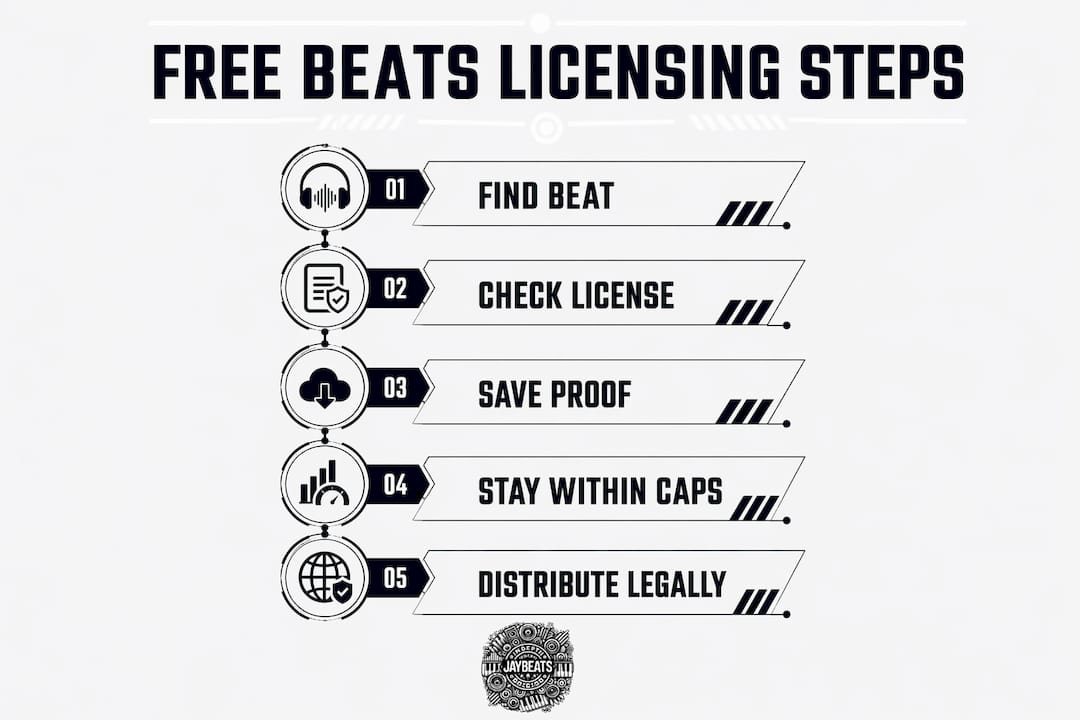
Verification is not complicated, but it requires discipline. Pull up the actual license document before you record a single bar on that beat. Here is a step-by-step process to protect yourself:
Read the full license document. Check for term length, stream caps, sales limits, platform restrictions, and credit requirements. A good beat license states all of these clearly. If it does not, ask the producer to clarify in writing.
Ask about prior licenses and Content ID. Before leasing, ask the producer directly whether the beat has active Content ID claims, prior disputes, or existing exclusive negotiations. Artists should ask producers for this information upfront to avoid future conflicts on YouTube or streaming platforms.
Check for sample clearance. Ask whether every element in the beat is original or cleared. If the producer cannot confirm this in writing, walk away. Uncleared samples in a beat you lease become your legal problem.
Confirm credit requirements. Many contracts require producer credits in song metadata. Missing a credit requirement can trigger a contract breach, which damages your relationship with the producer and your ability to upgrade to an exclusive later.
Store your license securely. Save a digital copy in cloud storage and a local backup. If a platform disputes your rights, your license document is your first line of defense.
Pro Tip: Screenshot or save the beat listing page at the time of purchase. Producers sometimes update their terms after a beat gains popularity. Your saved copy proves what terms were active when you licensed it.
Putting a boom bap or trap beat on Spotify legally requires more than just uploading a file. Understanding streaming platform rules for leased beats keeps your catalog safe and your revenue flowing.
What strategies help rappers maximize free for profit beats?
Using profit beats for free is a smart move when you are building your catalog on a budget. The key is treating it as a starting point, not a permanent solution. Here is how to work it right.
Balance free beats with exclusive investments. Free for profit beats work best for mixtapes, singles to test the market, and building your streaming numbers. Once a track starts gaining traction, upgrade to an exclusive license or buy the beat outright. Exclusives remove the risk of another artist using the same instrumental and protect your brand identity.
Handle your publishing splits correctly. Beat lease agreements often split revenue on both master and publishing sides. Register your songs with a performing rights organization like ASCAP or BMI before you release. Vague ownership language in a lease can freeze your royalty payments if a dispute arises.
Distribute with eyes open. Most digital distributors like DistroKid or TuneCore will ask you to confirm you hold the rights to distribute. A valid non-exclusive license covers you, but only if you stay within its limits. Monitor your stream counts and set a calendar reminder to review your caps every quarter.
Here is a quick comparison of how to approach different release types:
Release type | Best beat option | Key action |
|---|---|---|
Mixtape or freestyle | Free for profit lease | Verify stream caps and credit terms |
Single to test the market | Free for profit lease | Monitor streams, plan upgrade path |
Album or major project | Exclusive license or purchase | Secure full rights before release |
Sync placement (TV, film) | Exclusive license required | Confirm sync rights in writing |
Indepthjaybeats offers beats built specifically for TV and film placement, with clear licensing terms from the jump. Artists who have placed music in productions like WWE 2K25 and Love And Hip Hop Atlanta know the difference between a clean license and a messy one. You can browse free beats for artists to understand how a proper licensing setup supports your growth from day one.
Key Takeaways
A valid written license with clear stream caps, publishing splits, and indemnity terms is the single most important document protecting a rapper’s right to monetize a free for profit beat.
Point | Details |
|---|---|
License grants permission, not ownership | A non-exclusive lease lets you monetize but does not give you the beat outright. |
Stream and sales caps are binding | Exceeding your license limits puts your track at risk of takedown or revenue hold. |
Uncleared samples are your liability | If a producer used an uncleared sample, you carry the legal risk as the artist. |
Written licenses outrank receipts | Only a detailed license document protects you in a dispute. |
Upgrade before you blow up | Plan your path from free lease to exclusive before your track gains serious traction. |
What I’ve learned after 20 years of watching rappers sleep on licensing
I have been producing since 2007. I have seen artists build real momentum on free beats, and I have seen that same momentum get wiped out overnight because they never read the terms. The music was fire. The license was a mess.
Here is the truth most producers will not say out loud: a lot of free for profit beats floating around online have no clear documentation attached. The producer posts a YouTube video, drops a download link, and calls it free for profit. That is not a license. That is a handshake in a room with no witnesses. When your track hits 200,000 streams and a Content ID claim rolls in, that handshake means nothing.
The artists who build lasting careers treat every beat transaction like a business deal, even when the price is zero. They ask questions. They save documents. They plan the upgrade before they need it. That discipline is what separates a rapper with a catalog from a rapper with a hard drive full of unreleased music.
My advice is simple: use free for profit beats to build, test, and grow. But the moment a track starts moving, lock it down with an exclusive or a proper purchase. Protect your work like it is already worth something, because it is.
— Indepthjaybeats
Quality beats with clear licensing, right here
Indepthjaybeats has been building beats for rappers, TV, and film since 2004. Every beat in the catalog comes with clear licensing terms so you know exactly what you are getting before you record a bar.

Whether you need hard trap 808s or classic boom bap energy, the catalog covers both. Artists have placed tracks from this catalog in WWE 2K25 and Love And Hip Hop Atlanta, which tells you the production quality is built for real placements. You can browse the full beat catalog to find your sound, or go straight to exclusive rap instrumentals if you are ready to lock down full rights. A free beat pack is also available so you can hear the quality before you commit.
FAQ
What does “free for profit” mean on a beat?
“Free for profit” means the producer grants you a non-exclusive license to use the beat commercially at no upfront cost. You can monetize the track, but you must follow the license terms, including stream caps and credit requirements.
Can I put a free for profit beat on Spotify?
Yes, a valid non-exclusive license covers streaming distribution. You must stay within the stream limits stated in your license and confirm your distributor accepts leased beat agreements before uploading.
What happens if a producer sells exclusive rights to a beat I already leased?
Your non-exclusive license may become void or disputed. Producers can sell exclusive rights that override prior non-exclusive licenses, which can result in a takedown of your track.
Do I need a written license for a free beat?
Yes. A receipt or download confirmation is not a license. A written license document outlining commercial use rights, stream limits, publishing splits, and indemnity terms is the only document that protects you legally.
When should I upgrade from a lease to an exclusive beat?
Upgrade before your track crosses the stream or sales caps in your license. Plan the upgrade path when you release the song, not after it starts gaining traction.
Recommended

Get 20+ Free Beats delivered to your inbox
Drop your name and email and I'll send a pack to your inbox right away.
We respect your inbox, no spam. Promise!