Most rappers drop songs and get no plays because their releases lack the coordinated promotion and early engagement signals that streaming platforms require to push a track forward. The problem is rarely the music itself. The real issue is the absence of campaign infrastructure: no pre-saves, weak metadata, unreadable cover art, and zero fanbase momentum before the song even goes live. Platforms like Spotify make decisions about your song within the first 24–72 hours based on listener behavior. If those signals are weak, the algorithm buries your track and moves on. Understanding why this happens is the first step to fixing it.
Why most rap songs stall after release
The music industry has a name for this pattern. Only a fraction of releases have any campaign infrastructure behind them. Most songs stall because they are uploaded and abandoned, with no pre-release build, no pitching to playlists, and no coordinated push across platforms. Rappers call it “drop and pray.” The industry calls it the 88% problem.
Here is what a typical failed release looks like:
No pre-save link shared before release day
No social media teasers or clip rollout in the week before the drop
Metadata errors that cause miscategorization on Apple Music and Spotify
Cover art that looks fine on a laptop but is unreadable as a 50-pixel thumbnail
No follow-up content after the song goes live to sustain momentum
The result is scattered, low-impact streams in the first 24–72 hours. Scattered early streams give the algorithm nothing to work with. Spotify sees weak engagement and stops recommending the track. The song flatlines before most people even know it exists.
Pro Tip: Set your release date at least two weeks out. That window gives you time to build a pre-save funnel, pitch to playlist curators, and warm up your audience before the song drops.
How do streaming algorithms decide which songs win?
Spotify does not reward streams. It rewards behavior. The platform tracks specific listener actions to decide whether your song deserves wider distribution. Understanding these signals is the difference between a song that grows and one that dies on arrival.
Signal | What it measures | Impact on reach |
|---|---|---|
Save rate | Listeners who save the track to their library | High positive weight |
Skip rate (under 30 sec) | Listeners who bail before the song starts | Strong negative signal |
Completion rate | Listeners who hear the full track | Positive weight |
Raw stream count | Total plays | Lower weight than behavior |
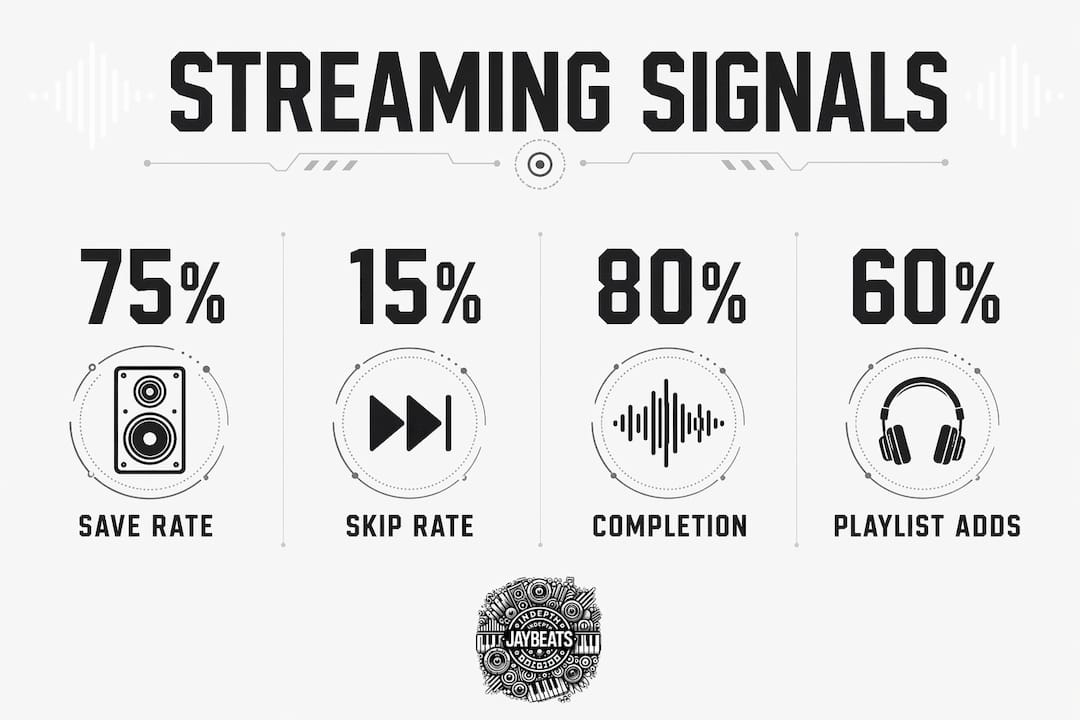
Saves are weighted more heavily than raw stream counts or likes. That single fact changes how you should think about promotion. Getting 500 saves from 600 listeners beats getting 5,000 streams from people who skip after 20 seconds.
High early engagement pushes your song into Spotify’s Discover Weekly and Release Radar playlists. Those placements are free exposure to thousands of potential new listeners. But a high skip rate triggers algorithmic suppression. The platform reads it as a quality signal and pulls back your reach. You do not get a second chance at that first-week window.
Pro Tip: A small, engaged audience with a high save rate outperforms a large, passive audience every time. Build 250 loyal monthly listeners who actually save your tracks before you worry about chasing millions of streams.
Why metadata, cover art, and pre-saves matter for rap releases
Most rappers treat metadata as an afterthought. That is a costly mistake. Accurate metadata is essential to building and growing an audience on platforms like Apple Music and Spotify. Miscategorized genres, missing songwriter credits, and incorrect ISRC codes disrupt discovery and playlisting before a single listener ever hears the song.
Cover art is the first thing a listener sees. On Spotify and Apple Music, your artwork appears at roughly 50–200 pixels wide in most contexts. Cover art must remain readable at those thumbnail sizes. The recommended format is 3,000 x 3,000 pixels with sRGB color mode. Busy designs, small text, and low-contrast colors all reduce click-through rates before the algorithm even gets involved.
Pre-saves solve a specific problem: they concentrate listener intent. When fans pre-save your track, they signal to Spotify that demand exists before release day. That concentrated action on day one creates the engagement density the algorithm needs to start recommending your song.
Common mistakes that kill releases before they start:
Genre tags that do not match the actual sound of the track
Missing featured artist credits that break search discoverability
Artwork with text smaller than 10% of the image width
No pre-save link shared on social media before release day
Releasing on a Friday without any pre-release social activity
Metadata and artwork belong in the pre-release phase, not in a post-release fix. By the time you notice the error, the algorithm has already made its decision.
How to structure a rap release campaign for more plays
The fix for low streaming numbers is a timed, coordinated campaign. This is not complicated. It is a schedule you commit to and execute. Here is how to build one:
Two weeks before release: Launch your pre-save link. Share it across Instagram, TikTok, and YouTube. Submit your track to Spotify playlist curators through Spotify for Artists. Pitch to independent playlist blogs and music blogs in your genre.
One week before release: Post short clips of the song, 15–30 seconds, on TikTok and Instagram Reels. Show the recording process, the beat selection, or a lyric visual. Build anticipation without giving away the full track.
Release day: Drop a full music video or lyric video on YouTube at the same time the song goes live on streaming platforms. Push the pre-save link one final time and convert it to a streaming link. Ask your audience directly to save the track, not just stream it.
One to two weeks after release: Post reaction content, behind-the-scenes footage, and listener testimonials. Keep the song active in your feed. Sustained post-release content builds engagement density and signals continued relevance to the algorithm.
Ongoing: Track your save rate and skip rate inside Spotify for Artists. Adjust your next release based on what the data tells you.
Mastering also plays a role in listener retention. Loudness normalized to around -14 LUFS on Spotify helps preserve the punch and dynamics of your track. Tracks mastered too loud get turned down by Spotify and may lose impact, which increases skip risk.
Pro Tip: Learn how to market your music before you drop your next song. Promotion only amplifies tracks that already show positive listener behavior. Build the audience first, then release.
Key Takeaways
Most rappers get no plays because they release without a campaign, not because their music is bad. Fix the infrastructure and the algorithm responds.
The real reason rappers stay stuck, and what actually breaks the cycle
I have been producing since 2007. I have watched thousands of artists drop quality music and get nothing back. The pattern is always the same. The rapper blames the algorithm, blames oversaturation, or blames bad luck. The real problem is almost always the same thing: no campaign.
The music industry does not reward talent on a schedule. It rewards preparation. The bottleneck to streams is attention and campaign infrastructure, not music quality or algorithm intelligence. That is uncomfortable to hear, but it is the truth that sets you free.
Most artists I work with think promotion means posting on Instagram the day the song drops. That is not promotion. That is noise. Real promotion is a two-week build that creates anticipation, concentrates listener intent, and gives the algorithm something to work with on day one. The artists who figure this out stop blaming the platform and start treating every release like a product launch.
The other misconception I see constantly is the idea that you need a massive fanbase to get traction. You do not. A small engaged audience with a high save rate outperforms a large passive one every time. Build 250 listeners who care deeply before you chase 250,000 who do not. Learn from your data. Adjust your next release based on what your skip rate and save rate tell you. That is how you break the cycle.
— Indepthjaybeats
How Indepthjaybeats helps independent rappers build real momentum
Getting the campaign right matters. So does the foundation underneath it: the beat, the mix, and the master.

Indepthjaybeats has been producing trap and boom bap beats for independent rappers since 2007. Clients have placed music in productions including WWE 2K25 and Love And Hip Hop Atlanta. Every beat in the catalog is built for streaming, with the dynamics and energy that hold listener attention past the 30-second mark. Indepthjaybeats also offers professional mixing and mastering services built specifically for rap, targeting the loudness and clarity standards that reduce skip rates on Spotify and Apple Music. If your production foundation is solid, your campaign has something real to push.
FAQ
Why do most rappers get no plays after releasing a song?
Most rappers get no plays because they release without a coordinated campaign. No pre-saves, no playlist pitching, and no early engagement signals leave the algorithm with nothing to act on.
What does Spotify’s algorithm actually look for?
Spotify tracks save rate, skip rate, and completion rate. Save rate carries the most weight. A high skip rate, especially before 30 seconds, triggers algorithmic suppression.
How important is cover art for getting streams?
Cover art directly affects click-through rates. Artwork must be readable at 50–200 pixels wide. Busy designs and small text reduce clicks before the algorithm is even involved.
What is a pre-save and why does it matter?
A pre-save is a link fans click before your release date to automatically add your song to their library on drop day. Pre-saves concentrate engagement on day one, which is the window the algorithm uses to decide your song’s reach.
How do I build a fanbase if I have no listeners yet?
Start with a 30-day marketing plan built around consistent content and direct audience engagement. Focus on building 250 highly engaged listeners before scaling your release strategy.
Recommended

Get 20+ Free Beats delivered to your inbox
Drop your name and email and I'll send a pack to your inbox right away.
We respect your inbox, no spam. Promise!