
Free beats are instrumentals released at no cost that give emerging artists immediate access to professional-quality production without spending money upfront. That single fact explains why free beats help emerging artists more than almost any other resource available in 2026. The independent music scene is moving fast. Over 100,000 tracks are uploaded to streaming platforms every single day, most of them from independent artists using online beat platforms. If you are not releasing consistently, you are falling behind. Free beats remove the financial barrier that stops most artists from building that release cadence from day one.
Why free beats help emerging artists build momentum fast
Free beats function as a creative sandbox. You pick a beat, record your ideas, and test what works without risking a dollar. That freedom changes how you grow as an artist. Instead of waiting until you can afford a paid beat, you are already recording, releasing, and learning what your audience responds to.
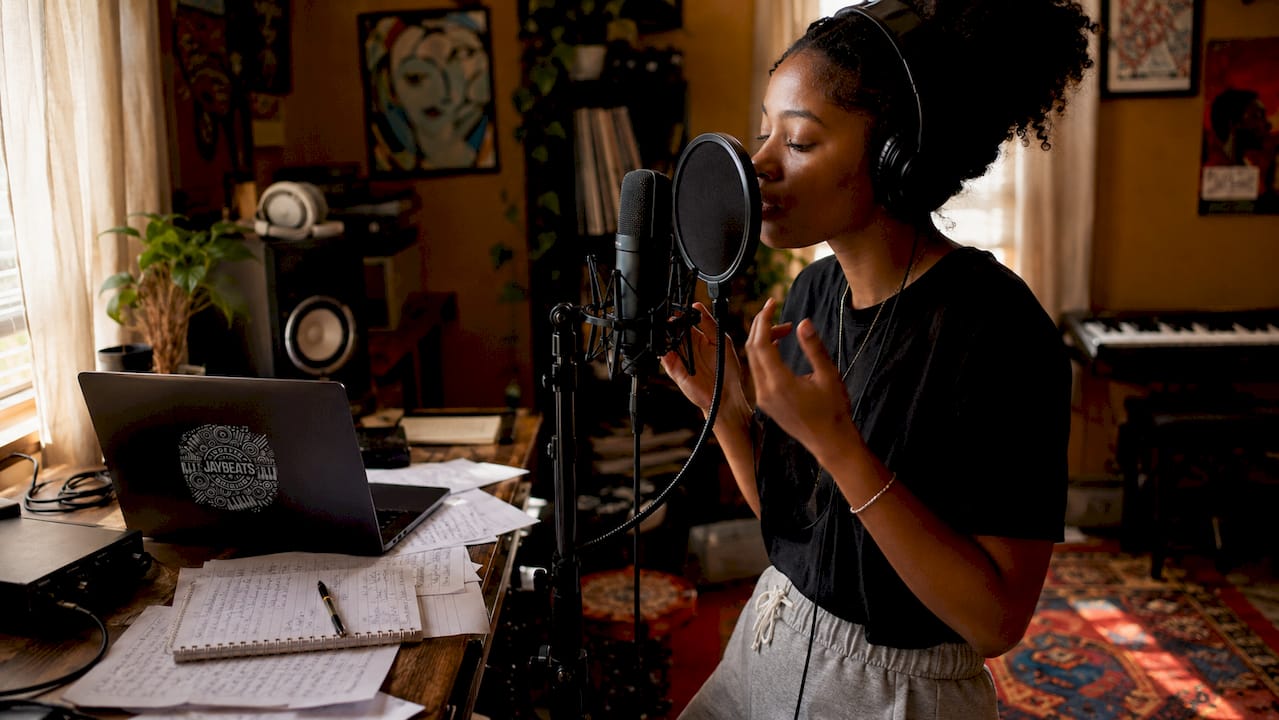
The speed advantage is real. Artists can move from finding a beat to uploading a finished track in roughly 12 hours. That kind of turnaround is impossible when you are waiting on custom production or negotiating exclusive deals. You get to stay in motion.
Here is what that sandbox process looks like in practice:
Test vocal styles. Try a melodic hook on a trap beat, then switch to a boom bap instrumental and rap with more aggression. Free beats let you explore both without commitment.
Experiment with genres. You might discover your voice fits R&B-influenced production better than straight hip-hop. You would never know without testing.
Build a catalog quickly. Releasing music every two weeks builds an audience faster than releasing one polished project every six months.
Refine your recording process. Each session teaches you something about mic placement, delivery, and mixing that paid studio time would cost you hundreds to learn.
Identify your sound. Consistent experimentation reveals patterns in what you do well, and that clarity becomes your brand.
The volume-driven approach to releasing music is not about lowering your standards. It is about building the reps that turn a raw talent into a polished artist. Think of it the way athletes think about practice. You do not wait for the championship game to figure out your technique.
Pro Tip: Set a release goal of one track every two weeks using free beats. Track which songs get the most plays and comments. Those data points tell you exactly where to invest when you are ready to buy a paid license.
What are the licensing rules for free beats?
This is where most emerging artists get burned. “Free” does not always mean free to use commercially. The word free describes the price, not the permission. Understanding that difference protects your revenue and your reputation.
Here is how free beat licensing typically works:
Free to listen vs. free to use. A beat posted on YouTube for listening is not automatically cleared for your commercial release. You need a written license that grants you specific rights.
Stream caps are standard. Free licenses commonly cap streams at 2,500 to 10,000 plays. Once you cross that threshold, you are technically in violation of the license terms.
Revenue claims happen automatically. Distributors like DistroKid and TuneCore use Content ID systems. If a producer has registered their beat, your track gets flagged and your streaming revenue goes to them, not you.
Missing documentation costs you everything. Artists lose 100% of streaming revenue when they cannot prove they hold a valid license. No receipt, no protection.
Non-profit vs. commercial licenses are different products. A non-profit license covers a YouTube video with no monetization. A commercial license covers Spotify, Apple Music, and any release where money changes hands.
The Content ID risk is the one most artists underestimate. Without a written license, a Content ID takedown can happen even when you downloaded the beat for free from the producer’s own page. The producer may have registered the beat with a third-party service without telling you. That is not a scam. It is just how the system works, and you need to be ready for it.
Pro Tip: Always download the license file when you grab a free beat. Save it in a folder labeled by song title. If a distributor ever flags your track, that document is your proof of rights. No document means no defense.
Free beats vs. paid beats vs. exclusive beats: which one fits your stage?
Not every beat option serves the same purpose. Here is a direct comparison to help you decide where to put your resources.
Feature | Free beats | Paid license | Exclusive beats |
|---|---|---|---|
Cost | $0 | $20–$100 typically | $200–$1,000+ |
Stream cap | 2,500–10,000 streams | Usually removed | No cap |
Exclusivity | Shared with many artists | Non-exclusive | Yours alone |
Stems/mix flexibility | Rarely included | Sometimes included | Usually included |
Commercial use | Limited or restricted | Permitted | Full rights |
Branding risk | High (shared beat) | Moderate | None |
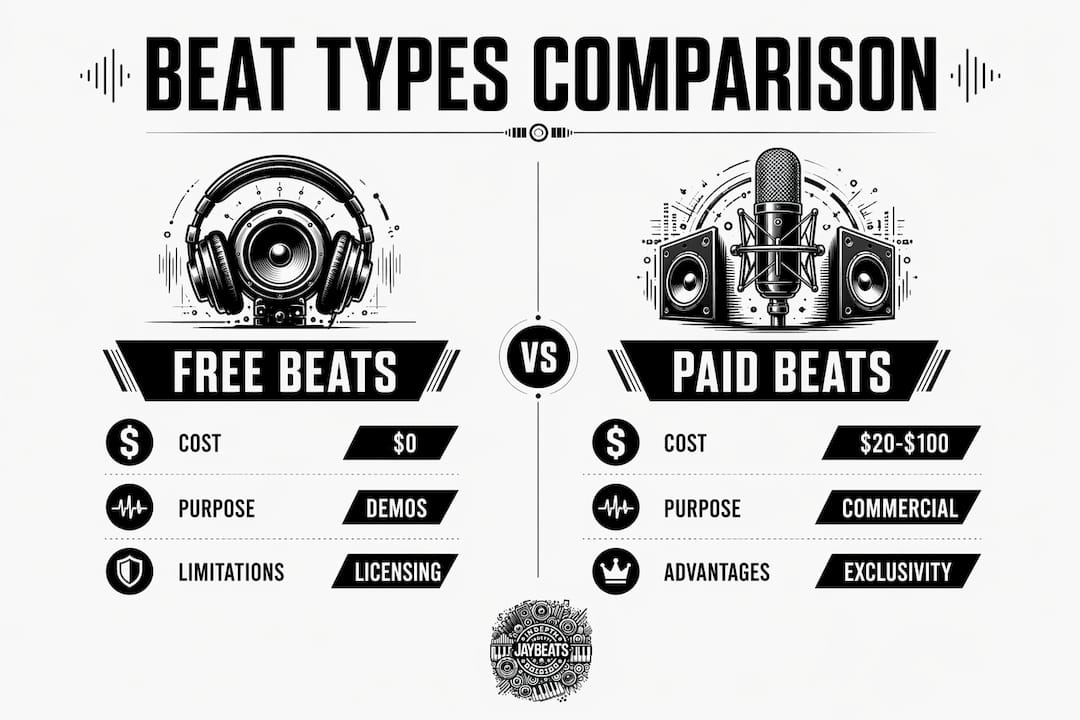
The table tells a clear story. Free beats are the right tool for demos, practice, and early releases. Paid licenses work for non-exclusive commercial releases where you want to monetize without breaking the bank. Exclusive beats are for your flagship projects, the ones you are pitching to labels, sync agencies, or major platforms.
Producers use free beats as lead magnets. They give away beats to build email lists and warm up potential buyers for premium sales. That is a smart business move for them, and it is a smart move for you too. You get production value for free while the producer builds a relationship with you as a future paying client.
The branding problem with free beats is real and worth taking seriously. Sharing the same beat with dozens of other artists dilutes your identity. Shazam gets confused. Listeners searching for your song might land on someone else’s version. That kind of confusion costs you fans and credibility at the exact moment you are trying to build both.
Producers also rarely provide stems with free beats. Stems are the individual tracks that make up the beat, and you need them for professional mixing. Without stems, your engineer is working with a stereo file, which limits what they can do to make your vocals sit right in the mix.
The table tells a clear story. Free beats are the right tool for demos, practice, and early releases. Paid licenses work for non-exclusive commercial releases where you want to monetize without breaking the bank. Exclusive beats are for your flagship projects, the ones you are pitching to labels, sync agencies, or major platforms.
Producers use free beats as lead magnets. They give away beats to build email lists and warm up potential buyers for premium sales. That is a smart business move for them, and it is a smart move for you too. You get production value for free while the producer builds a relationship with you as a future paying client.
The branding problem with free beats is real and worth taking seriously. Sharing the same beat with dozens of other artists dilutes your identity. Shazam gets confused. Listeners searching for your song might land on someone else’s version. That kind of confusion costs you fans and credibility at the exact moment you are trying to build both.
Producers also rarely provide stems with free beats. Stems are the individual tracks that make up the beat, and you need them for professional mixing. Without stems, your engineer is working with a stereo file, which limits what they can do to make your vocals sit right in the mix.
How do you use free beats to build a real music career?
Free beats are a tool, not a strategy. The artists who win with them treat free beats as a launching pad, not a destination. Here is how to build smart with what you have access to right now.
Use free beats for demos and non-commercial releases. Post them on SoundCloud, share them on social media, and use them to build your story. Do not push these to Spotify until you have a proper license in place.
Release on a schedule. Consistent releases every two weeks build audiences faster than waiting for the perfect moment. Fans create streams, and streams create opportunities.
Track your numbers. Watch which songs get saves, shares, and comments. That data tells you which direction to push when you invest in paid production.
Build your email list. Every free release is a chance to capture contact information. Offer a free download in exchange for an email address, and you start building an audience you actually own.
Pivot to paid licenses for key projects. When you land a feature, pitch to a playlist, or plan a project release, upgrade your license. That is when the stakes are high enough to justify the cost.
Study the music marketing basics that turn listeners into fans. Free beats get you in the game. Marketing keeps you there.
Platforms like BeatPass and Indepthjaybeats offer both free and paid options, which makes it easy to start free and upgrade within the same ecosystem. That continuity matters. When you already know a producer’s sound, moving to a paid license with them feels natural rather than risky.
The benefits of free beats for musicians are real, but they come with a ceiling. The artists who break through are the ones who use free beats to build skills and audience, then invest in original production when it counts. That is the move.
Key takeaways
Free beats give emerging artists the fastest, lowest-risk path to building a catalog, developing a sound, and growing an audience before investing in paid production.
Point | Details |
|---|---|
Free beats accelerate growth | Artists can go from beat selection to uploaded track in about 12 hours, enabling consistent releases. |
Licensing rules protect your revenue | Free licenses cap streams at 2,500–10,000 plays; always download and save your license file. |
Branding risk is real | Sharing a beat with many artists dilutes your identity and can confuse platforms like Shazam. |
Free beats are a starting point | Use them for demos and practice, then upgrade to paid or exclusive licenses for commercial projects. |
Producers use free beats strategically | Free beats are lead magnets designed to convert you into a paying client for premium production. |
What I have learned after two decades of watching artists use free beats
I have been producing beats since 2007. I have watched thousands of artists come through this industry, and the pattern is always the same. The ones who treat free beats as a forever solution stay stuck. The ones who treat them as a training ground move forward.
Free beats are the best entry point this industry has ever offered. You can build real skills, real catalog, and real audience without spending a dollar. That access did not exist twenty years ago. Use it.
But here is the part nobody wants to say out loud. Over-reliance on free beats kills brands. When your sound is built on beats that fifty other artists are also using, you stop being an artist and start being a voice on someone else’s track. That is not a career. That is a hobby with a SoundCloud page.
The artists I have seen break through use free beats to stay active between major projects. They release consistently, test ideas, and keep their name in circulation. Then, when it matters, they invest in original beats that nobody else can touch. That combination of volume and uniqueness is what separates working artists from ones who almost made it.
The music industry in 2026 rewards consistency and identity. Free beats help you build the first one. Paid, exclusive production protects the second. Know which tool you need at each stage of your career, and you will always be moving in the right direction.
— Indepthjaybeats
Start building your sound with Indepthjaybeats
Indepthjaybeats has been producing professional-quality trap and boom bap beats since 2007, with placements in productions like WWE 2K25 and Love and Hip Hop Atlanta. Whether you are just starting out or ready to invest in your next major project, the catalog covers the full range.
Browse the full beat catalog to find boom bap and trap instrumentals built for artists who take their craft seriously. Flexible licensing options let you start free and upgrade as your career grows. When your track is ready for distribution, professional mixing and mastering services are available to make sure your vocals hit the way they should. The tools are here. The next move is yours.
FAQ
What are the main benefits of free beats for new artists?
Free beats give emerging artists immediate access to professional production at no cost, enabling fast content creation and consistent releases. They also serve as low-risk tools for experimenting with different styles and developing a signature sound.
Can you monetize music made with free beats?
Most free beat licenses restrict commercial monetization and cap streams at 2,500–10,000 plays. You need to upgrade to a paid license before distributing to platforms like Spotify or Apple Music to avoid revenue claims.
Why do producers give away free beats?
Producers use free beats as lead magnets to build email lists and attract potential buyers for premium or exclusive licenses. The free beat creates a relationship that often converts into a paid sale.
How often should emerging artists release music using free beats?
Releasing one track every two weeks using free beats builds an audience faster than infrequent releases. Consistent volume keeps your name in circulation and generates data on what your listeners respond to.
When should an artist stop using free beats?
Switch to paid or exclusive beats when you are releasing commercially, pitching to playlists or labels, or building a flagship project. Free beats work for demos and practice, but exclusive production protects your brand identity at the moments that matter most.
Recommended

Get 20+ Free Beats delivered to your inbox
Drop your name and email and I'll send a pack to your inbox right away.
We respect your inbox, no spam. Promise!