The fastest path to real income from rap runs through four streams you can build simultaneously: streaming (for discovery and catalog), direct-to-fan sales on Bandcamp, merch, and sync pitching or beat sales. Independent artists earned over $6 billion from streaming in 2025, and the artists who actually eat are the ones stacking five or more revenue streams, not waiting on Spotify checks alone.
Here is your immediate action checklist:
Today: Sign up for DistroKid or CD Baby and upload your first release. Register as a songwriter with ASCAP or BMI (free, takes 15 minutes).
This week: Create a free Bandcamp page, set your own prices, and list at least one project for download. Set up a basic Shopify or Printful store with one tee design.
This month: Research five music supervisors on LinkedIn or IMDbPro who work in your genre. Send your first sync pitch email with a clean instrumental, stems, and metadata attached.
That is the 30-day foundation. Everything below builds on it.
Key Takeaways
Building real income from rap requires stacking multiple revenue streams from day one, with streaming as your discovery engine and direct sales, sync, and merch as your primary earners.
Point | Details |
|---|---|
Register before you release | Sign up with ASCAP or BMI and SoundExchange before your first release to collect every royalty dollar from day one. |
Stack five or more income streams | Artists with five or more active revenue streams consistently outperform those relying on streaming alone. |
Direct sales beat streaming margins | A $10 Bandcamp sale pays close to $10; 250,000 Spotify streams at the average rate pays roughly the same. |
Sync can equal months of streaming income | A single indie film placement can pay $500–$2,500 upfront; national TV placements can reach $10,000–$50,000. |
Indepthjaybeats offers sync-ready beats | The catalog includes exclusive and non-exclusive licenses with stems and metadata, built for TV, film, and game placements. |
Table of Contents
What is sync licensing and why one placement can change everything
Pro beats and sync-ready packages built for independent rappers
How to make money from your rap music through streaming
Streaming is not your main income source right now. Treat it as your discovery engine and your catalog’s long-term compounding asset. The money you make directly from streams is real but modest, especially early on.
How streaming payouts actually work
Spotify and most major DSPs use a pro-rata model: the platform pools all subscription and ad revenue for a given period, then distributes it proportionally based on each track’s share of total streams. Your per-stream rate is not fixed. It shifts based on the listener’s subscription tier (premium pays more than free), their geography (streams from the US, UK, and Germany pay more than streams from lower-income markets), and how the distributor splits the payout.
Spotify pays between $0.003 and $0.005 per stream, with an industry-wide average around $0.004.
Run the math on that: to hit a thousand dollars from Spotify alone, you need hundreds of thousands of streams at the average rate, and reaching ten thousand dollars requires streaming numbers in the millions. That is a real number, but it takes time to build. Most independent rappers with a growing catalog and consistent releases can hit those numbers across multiple tracks over 12–18 months.
Two royalty buckets flow from every stream. The master royalty goes to whoever owns the recording (you, if you kept your masters). The publishing royalty goes to the songwriter and publisher. If you are not registered with a PRO like ASCAP or BMI and a digital aggregator that collects mechanical royalties, you are leaving the publishing half on the table every single time your song plays.
Tactical moves to increase streaming revenue
Playlist placement is still the highest-leverage organic move. Pitch to Spotify’s editorial team through Spotify for Artists at least seven days before release. Target independent playlist curators in your genre using SubmitHub or direct outreach on Instagram.
Release consistently. Algorithms reward catalogs. An artist with 30 tracks has more entry points than one with three, and each new release can resurface older catalog tracks.
Pro Tip: Spotify’s Discovery Mode lets you trade a reduced royalty rate on specific tracks in exchange for algorithmic boost. Use it strategically on catalog tracks you want new listeners to find, not on your freshest release where you want full rate. The trade-off is worth it when the goal is fan acquisition, not immediate payout.
Apple Music pays slightly higher per stream than Spotify on average. Prioritize getting your metadata clean on both platforms: correct songwriter credits, ISRC codes, and split information before release day.
Direct sales and digital downloads still hit different
Streaming pays fractions of a cent. A $10 Bandcamp download pays you close to $10. That math alone explains why Bandcamp and direct sales let artists keep a far higher share of revenue compared to any DSP.
Direct sales make the most sense when you have a fanbase that is already engaged, even a small one. You do not need 100,000 followers to sell 50 downloads at $10 each. You need 50 people who genuinely connect with your music.
Platform recommendations for direct sales
Bandcamp: Takes 15% on digital sales (dropping to 10% after you hit $5,000 in sales) and 10% on physical. You set your own prices, offer “name your price” options, and sell directly to fans who get your email address with every purchase. That email list is worth more than the sale itself.
Apple Music / iTunes: Digital sales through iTunes are handled via your distributor. You do not set prices independently, but having your music available for purchase on Apple’s ecosystem still captures fans who prefer to own music.
Your own site: A Shopify store or a simple Gumroad page gives you 100% control and zero platform fees beyond payment processing. Combine it with Printful for merch fulfillment.
Pricing guidance and physical formats
For digital downloads, $5–$10 for a single project is a fair entry point. Limited-edition vinyl runs typically cost $3–$6 per unit to press at quantities of 100–300, and you can retail them at $25–$35. CDs are cheaper to produce but harder to sell unless you are moving them at shows.
Bundle strategy is where you increase average order value without adding complexity. Offer a digital download plus a tee plus a signed physical for $45–$60. Fans who are already buying will often upgrade when the bundle feels like a deal.
How to collect every royalty dollar you are owed
Most independent rappers are leaving money on the table right now because they never registered properly. Efficient licensing, clean data, and proper registration with collective management organizations are crucial for regular income. Here is the full picture.
Master vs. publishing royalties
Every song generates two separate royalty streams. Master royalties come from the sound recording: streaming payouts, sync fees for the recording, and SoundExchange digital performance royalties from non-interactive streams (think Pandora, SiriusXM, internet radio). Publishing royalties come from the composition: performance royalties when the song is played publicly, mechanical royalties from streams and downloads, and sync fees for the underlying composition.
If you wrote the song and own the recording, you are entitled to both. Most independent rappers only collect the master side because they never registered the publishing side.
Step-by-step registration checklist
Register with a PRO. Choose ASCAP, BMI, or SESAC. ASCAP and BMI are free to join as a songwriter. Register every song you release, including the composition title, co-writers, and ownership splits.
Register with SoundExchange. SoundExchange collects digital performance royalties for the master recording from non-interactive digital radio. Free to register at soundexchange.com.
Register with the MLC. The Mechanical Licensing Collective (MLC) collects mechanical royalties from US streaming services. Registration is free. Any unclaimed mechanical royalties sitting in the MLC’s pool are yours to claim.
Set your ISRC codes. Your distributor (DistroKid, CD Baby) assigns ISRCs automatically. Confirm they are attached to every track before release.
File your split sheets. Before you release any collaborative track, document who wrote what percentage. A simple Google Doc signed by all parties works. Disputes over splits are one of the most common reasons royalties go uncollected.
For a deeper breakdown of how publishing splits work between rappers and producers, the guide at Indepthjaybeats on publishing royalty splits covers the mechanics clearly.
Pro Tip: The most common registration mistake is releasing music before registering with your PRO. Royalties generated before your registration date are often unrecoverable. Register first, release second.
What is sync licensing and why one placement can change everything
Sync licensing is when your music gets placed in a TV show, film, commercial, video game, or online content. The licensor pays you a sync fee upfront, and you collect performance royalties every time the content airs. A single placement in a cable TV show can generate more income than six months of streaming.
Fee ranges vary widely. An indie film placement might pay $500–$2,500 for a non-exclusive sync. Sync licenses for national TV commercials can pay significantly more, sometimes tens of thousands of dollars or higher for the same song. Video game placements, like the kind Indepthjaybeats has secured in WWE 2K25, sit in a range that depends on the game’s budget and the track’s role in the game.
Who buys rap tracks for sync
Music supervisors working on TV dramas, reality shows, and documentaries. Reality TV (think Love & Hip Hop Atlanta) uses rap and R&B heavily.
Ad agencies sourcing music for brand campaigns, especially brands targeting younger demographics.
Game studios licensing music for sports games, open-world titles, and fighting games.
Independent filmmakers and YouTube creators with budget for licensed music.
Packaging your tracks for sync buyers
Clean instrumental version (no samples, no interpolations)
Full vocal mix
Stems (separated drum, bass, melody, and vocal tracks)
Metadata embedded: songwriter, publisher, ISRC, BPM, key, mood tags
Cue sheet ready: title, duration, composer, publisher, PRO affiliation
A step-by-step sync pitching playbook
Getting a sync placement is a sales process. You are pitching a product to a buyer who has specific needs and a tight deadline. Treat it that way.
Pre-package your tracks. Every track you pitch needs the full sync-ready package described above. No supervisor will chase you for stems. Have them ready before you reach out.
Build your target list. Use IMDbPro to find music supervisors credited on shows in your genre. Follow them on LinkedIn and X. Read interviews where they describe what they are looking for.
Write a tight pitch email. Subject line: “Rap/Trap instrumental — sync-ready stems available — [mood] [BPM].” Body: two sentences about the track, a streaming link (not an attachment), and a note that stems and metadata are available on request. Keep it under 150 words.
Follow up once. Wait 10–14 days. One follow-up email is professional. Two is annoying.
Negotiate the deal. When a supervisor responds with interest, confirm the fee, the term (how long they can use it), the territory (US only vs. worldwide), and whether it is exclusive or non-exclusive. Get it in writing before you deliver the final files.
For a full walkthrough of the licensing process for film and TV, the music licensing for film and TV guide at Indepthjaybeats covers every step in detail.
Pro Tip: Create a one-page sync pitch kit as a PDF: three to five tracks with mood descriptions, BPM, key, and a short note on each track’s visual fit. Supervisors who are browsing for a specific vibe will remember you if you make their job easier.
Indepthjaybeats has placed tracks in video games like WWE 2K25 and reality TV shows similar to Love & Hip Hop Atlanta using exactly this kind of pre-packaged, metadata-clean approach. The placement process starts with preparation, not luck.
How to monetize beats and production services
If you produce your own music, you already have a product to sell: the beats. Beat licensing is one of the fastest ways to generate income because the product already exists and can be sold repeatedly.
Exclusive vs. non-exclusive licensing
A non-exclusive license lets you sell the same beat to multiple artists. The buyer gets limited rights (typically tied to a stream or sales cap). You keep the master and can keep selling. Prices typically range from $20–$100 for a basic non-exclusive lease.
An exclusive license transfers full rights to one buyer. You can no longer sell that beat to anyone else. Exclusive prices typically start at $200–$500 for independent artists and can run $1,000–$5,000 or higher for established acts. Once a beat is sold exclusively, that revenue stream closes.
The smart play early on is non-exclusive leases at volume, then move to exclusives as your reputation grows and buyers start requesting them.
Platforms for selling beats
BeatStars: The largest beat marketplace in the world. High traffic, built-in licensing templates, and a direct storefront. Takes a percentage of sales on free plans; paid plans reduce the cut.
Airbit: Similar to BeatStars with a clean interface and strong analytics. Good for producers who want detailed data on which beats are getting the most plays.
Your own store: A direct Shopify store or a page on your own site gives you full margin and your customer’s email. Use BeatStars and Airbit for discovery, then push buyers to your direct store for repeat purchases.
For a full breakdown of licensing types and contract terms, the beat licensing guide at Indepthjaybeats covers every clause you need to understand before you sell.
Contract clauses to include in every beat license
Permitted uses (recording only, no sync without upgrade)
Stream and sales caps for non-exclusive licenses
Credit requirements (“Produced by [Your Name]”)
Sync rights: explicitly excluded from basic leases unless the buyer pays for a sync upgrade
Buyout terms: what triggers an exclusive and what happens to existing non-exclusive buyers
How to price and book live performances
Live shows are where multiple revenue streams collide in one night: your guarantee, door split, merch sales, and fan relationship-building all happen simultaneously. Even a $300 local show can net $600 when you factor in merch.
What to expect at different stages
At the local club level, expect $100–$500 as a guarantee or door deal for a 20–30 minute set. Private events (birthday parties, corporate events, college shows) pay $500–$2,500 depending on the client’s budget and your draw. Festival support slots are often unpaid or low-paid early on, but the exposure and networking justify taking them strategically.
Venue Type | Typical Pay Range | Notes |
|---|---|---|
Local bar/club | $100–$500 | Door deal or flat guarantee |
Private event | $500–$2,500 | Negotiate upfront, get deposit |
College show | $500–$2,500 | Book through NACA or direct outreach |
Festival support | $0–$500 | Prioritize for networking and exposure |
Headlining local show | $500–$2,500 | Depends on ticket sales and venue capacity |
Revenue sources at every show
Beyond your fee, you can sell merch at the table (budget $200–$500 in inventory, aim to sell 2–3x that), offer VIP meet-and-greet packages at $25–$50 per person, and collect email addresses at the merch table for your list.
Pro Tip: When you email a promoter to book a show, lead with your draw, not your bio. “I can bring 50–75 people to your venue on a Tuesday” is more persuasive than a paragraph about your sound. Promoters book artists who fill rooms. Once you prove that, they will call you back.
Merch strategy and margin math
Rod Wave reported $14 million in merch revenue after taking control of his merchandising operations. That is an extreme example, but the principle applies at every level: the more of the supply chain you own, the more margin you keep.
What to test first
Start with tees and hoodies. They have the widest appeal, the easiest sizing logistics, and the highest perceived value relative to production cost. Posters and stickers are low-cost add-ons that increase average order value. Vinyl is a premium product for your most committed fans.
POD vs. in-house margin comparison
Print-on-demand (POD) through Printful or Printify means zero upfront cost. A tee that retails for $35 might cost you $14–$18 to fulfill through POD, leaving a margin of $17–$21. In-house runs (ordering 50–100 units from a local printer) can cut your per-unit cost to $8–$12, pushing your margin to $23–$27 per shirt. The trade-off is upfront cash and inventory risk.
LaRussell’s approach of letting fans set their own prices shows that creative pricing models can deepen fan relationships and generate surprising revenue. You do not have to follow the standard retail playbook.
Drop tactics that move inventory
Scarcity: Limited runs of 50–100 units create urgency. “Only 50 made” is a real selling point.
Timing: Drop merch the same week as a new release. The emotional high of new music converts to purchases.
Bundles: Pair a new project with a tee at a slight discount. Fans who were going to buy the music anyway will often add the shirt.
Shopify + Printful: Set up a Shopify store and connect Printful for automated fulfillment. You handle marketing; Printful handles printing and shipping.
YouTube monetization and Content ID
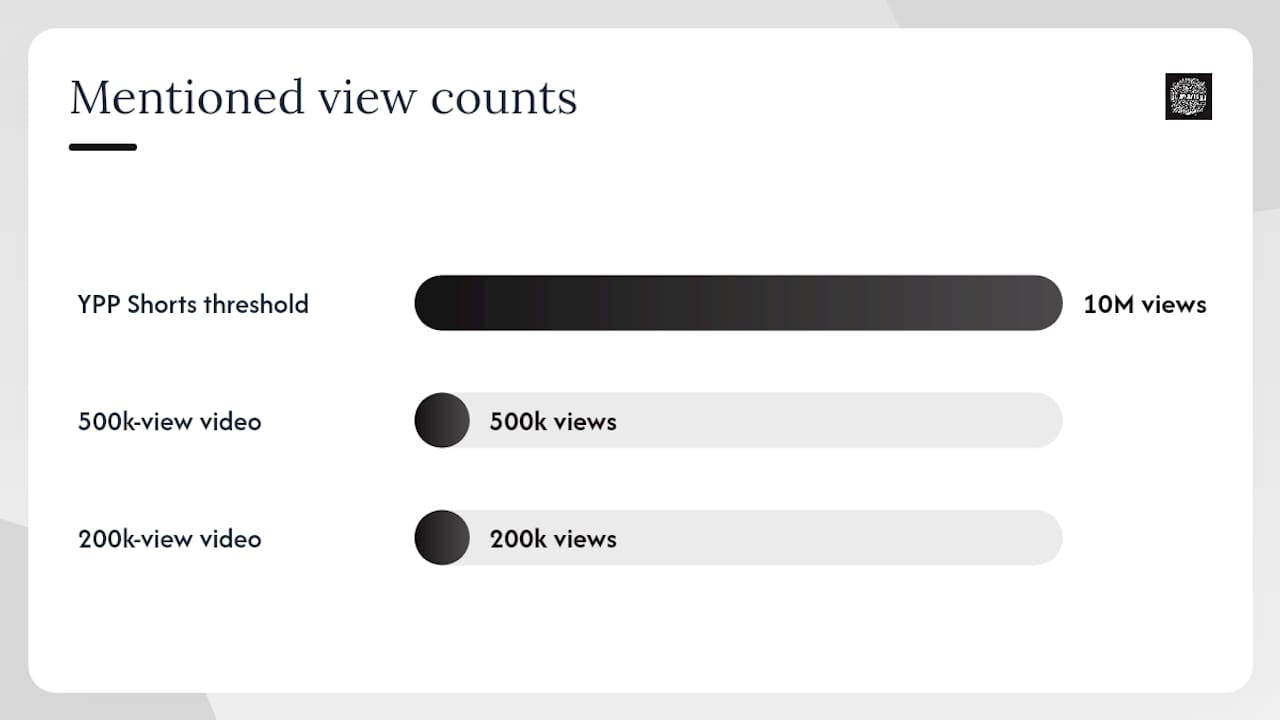
YouTube is both a discovery platform and a direct revenue source. The YouTube Partner Program (YPP) requires 1,000 subscribers and 4,000 watch hours in the past 12 months (or 1,000 subscribers and 10 million Shorts views in 90 days) before you can monetize. Once you qualify, you earn a share of ad revenue on your videos.
Apply for YPP through YouTube Studio once you hit the thresholds.
Register your music with Content ID through your distributor (DistroKid and CD Baby both offer Content ID registration). When someone else uses your music in their video, Content ID claims the ad revenue from that video and routes it to you.
Track your revenue per 1,000 views. YouTube RPM (revenue per mille) for music content typically falls within a range that depends on audience demographics and ad rates, often estimated between $1 and $5 per 1,000 views. A video with 500,000 views might generate $500–$2,500 in ad revenue.
Create content that compounds. Music videos drive streams. Behind-the-scenes content builds connection. Beat-making videos attract producers and potential beat buyers. Tutorial content (“how I wrote this hook”) builds authority and gets shared.
The key is that YouTube revenue stacks on top of streaming, not instead of it. A music video that gets 200,000 views generates ad revenue, drives Spotify streams, and builds your email list if you include a link in the description.
How to pitch brands and land sponsorships
Brands want access to your audience. Your job is to make that access easy to understand and easy to buy. You do not need a million followers to land a brand deal. You need a highly engaged audience in a demographic a brand wants to reach.
What brands typically want
Authentic content that does not look like an ad
Access to a specific demographic (18–34, urban, music-focused)
Measurable reach: views, clicks, or promo code redemptions
Common deal structures
Flat fee: Brand pays you a set amount for a post, video, or shoutout. Rates vary widely based on audience size and engagement.
Product-for-post: Brand sends free product in exchange for content. Only worth it if the product has real value to you.
Affiliate: You get a unique link or code. You earn a percentage of every sale you drive. Low risk for the brand, performance-based for you.
Building a simple rate card
A basic rate card for an artist with 10,000–50,000 engaged followers might look like: $150–$500 for an Instagram story, $300–$1,000 for a dedicated post, $500–$2,000 for a YouTube integration. Calculate your rate based on your engagement rate (likes + comments divided by followers), not just follower count. Brands with experience know that 10,000 engaged fans outperform 100,000 ghost followers.
Pro Tip: When pitching for a long-term ambassadorship, lead with a 90-day content plan, not just a rate. Show the brand three months of content ideas, posting frequency, and how you will track results. That level of preparation separates you from every other artist sliding into their DMs.
Crowdfunding, Patreon, and fan memberships
Recurring income from fans is the most stable revenue you can build. One hundred fans paying $5 a month on Patreon is $500 every month, before you release a single new track.
Kickstarter vs. Patreon: which one fits your goal
Kickstarter is for one-time projects with a defined goal: pressing vinyl, funding a music video, recording an album. You set a funding target, offer rewards at different pledge levels, and collect money only if you hit the goal. It works best when you have a specific, tangible deliverable and an existing audience to launch to.
Patreon is for ongoing support. Fans subscribe monthly in exchange for exclusive content, early access, behind-the-scenes material, or direct interaction. It rewards consistency over time.
Tier 1 ($3–$5/month): Early access to new tracks, exclusive updates.
Tier 2 ($10–$15/month): Exclusive instrumentals, monthly Q&A, discount on merch.
Tier 3 ($25–$50/month): Monthly personalized shoutout, access to stems or acapellas, direct messaging.
The key to converting casual listeners into patrons is giving them something they genuinely cannot get anywhere else. Early access to music before it drops on streaming is a strong hook. Direct access to you as an artist is even stronger.
Teaching, ghostwriting, and freelance services
This is the fastest path to cash for an independent rapper who is not yet generating significant streaming or merch income. A rapper on Fiverr made nearly $500,000 selling custom rap services. That is not a fluke. It is what happens when you treat your skill as a product.
Service packages to offer
Custom verse: $50–$300 depending on length and turnaround. Ghostwriting for other artists, content creators, or brands.
One-on-one coaching: $75–$150 per hour for flow, songwriting, or studio technique. Sell as a single session or a monthly package.
Ghostwriting retainer: $500–$2,000/month for clients who need consistent content (other artists, podcasters, brands).
Beat critique / A&R feedback: $25–$75 per session for producers or artists who want professional feedback.
Where to find clients fast
Fiverr: Create a gig with a clear title (“I will write a custom rap verse in 24 hours”), a strong sample, and competitive pricing to start. Reviews build quickly if you deliver on time.
Instagram DMs: Post a clip of your work with a clear offer. “DM me for custom verses” in the caption converts better than you think.
Local studios: Introduce yourself to studio owners and engineers. They know artists who need help with lyrics and will refer you.
Scope creep is the main risk in freelance work. Define exactly what is included in every package: number of revisions, delivery format, turnaround time. Put it in writing before you start.
ISRCs, splits, and why owning your masters matters
This is the business infrastructure that determines how much money you keep over the long run. Russ built consistent ownership and direct fan engagement into a catalog that compounds income over time. The artists who own their masters control their destiny. The ones who signed them away are still paying for it.
What ISRC, ISWC, and split sheets are
An ISRC (International Standard Recording Code) is a unique identifier for a specific sound recording. Every track you release should have one. Your distributor assigns it automatically.
An ISWC (International Standard Musical Work Code) identifies the composition (the song itself, not the recording). Your PRO assigns this when you register a work.
A split sheet is a simple document that records who wrote what percentage of a song. It is the foundation of every royalty payment. Without one, disputes are settled by whoever has the better lawyer.
Release-day admin checklist
Confirm ISRC is assigned and embedded in your distributor’s system.
Register the composition with your PRO (ASCAP, BMI, or SESAC) before the release date.
Submit the recording to SoundExchange for digital performance royalty collection.
Verify your metadata: songwriter credits, publisher, ISRC, and genre tags are correct on every DSP.
File your split sheet with all collaborators before the track goes live.
Pro Tip: Use a simple one-page split agreement template for every collaboration, even with close friends. The conversation is awkward once. The lawsuit is worse. Sign it before you record, not after.
Distributors, beat marketplaces, and the tools you need
Your tech stack determines how efficiently you collect money and reach fans. Keep it lean and functional.
Distributor comparison
DistroKid: Flat annual fee (around $22.99/year for unlimited releases). Fast distribution, keeps 100% of your royalties. Best for artists releasing frequently who want to keep costs low.
CD Baby: One-time fee per release ($9.95 for singles, $29 for albums). Keeps a small percentage of royalties but includes sync licensing registration and SoundExchange collection. Better for artists releasing less frequently who want more services bundled in.
TuneCore: Annual fee per release. Keeps 100% of royalties. Slightly higher cost than DistroKid for high-volume artists but offers strong publishing administration.
Beat marketplace tradeoffs
BeatStars offers the largest built-in audience but takes a cut on lower-tier plans. Airbit provides strong analytics and a clean storefront. Running both simultaneously maximizes exposure. Your own direct store (Shopify or a page on your site) is where you push repeat buyers to maximize margin.
Analytics and email tools
Spotify for Artists: Free. Shows you where your listeners are, which playlists are driving streams, and demographic data.
Chartmetric: Tracks your growth across platforms and helps you identify which playlists and territories are moving the needle.
Mailchimp or ConvertKit: Email capture is non-negotiable. Every fan who gives you their email is worth more than 100 passive followers on any platform.
A promotion roadmap that turns listeners into paying fans
Releasing music without a promotion plan is like opening a store with no sign. The music is the product. The plan is how people find it and buy it.
30/90-day release timeline
30 days before release: Submit to Spotify editorial via Spotify for Artists. Pitch to independent playlist curators. Create a pre-save link using DistroKid or a service like Hypeddit.
Two weeks before: Start short-form video content on TikTok and Instagram Reels. Use 15–30 second clips of the most hook-heavy moment in the track. Post daily.
Release week: Drop the track, post the music video or lyric video on YouTube, send an email to your list, and push the Bandcamp link directly to your most engaged fans.
30 days after: Analyze which platforms drove the most traffic. Double down on what worked. Start building the next release.
90 days out: Plan your first merch drop to coincide with your next release. Start building your Patreon or email membership offer.
For a detailed 30-day marketing plan built specifically for independent rappers, the 30-day music marketing plan at Indepthjaybeats breaks down the daily tactics.
Pro Tip: Treat every release as a pipeline, not a single event. A new track should feed a merch drop, a live show announcement, a Patreon post, and a sync pitch simultaneously. One piece of music, five revenue touchpoints.
Realistic earnings and timelines from beginner to full-time
The honest answer to “how much can I make?” depends entirely on how many streams you are running and how consistently you work them. Stacking income streams like streaming, merch, sync, and teaching can yield $30,000–$80,000 annually for mid-level independent artists with real execution.
Career Stage | Monthly Listeners / Audience | Estimated Monthly Income | Primary Sources |
|---|---|---|---|
Starting out | Under 5,000 | $50–$300 | Streaming, freelance services |
Growing | $500–2,500 | $300–$2,500 | Streaming, merch, beat sales, gigs |
Mid-level | $25,000–$50,000 | $500–$5,000 | All streams active |
Established indie | 100,000+ | $10,000–$50,000 | Sync, touring, merch, subscriptions |
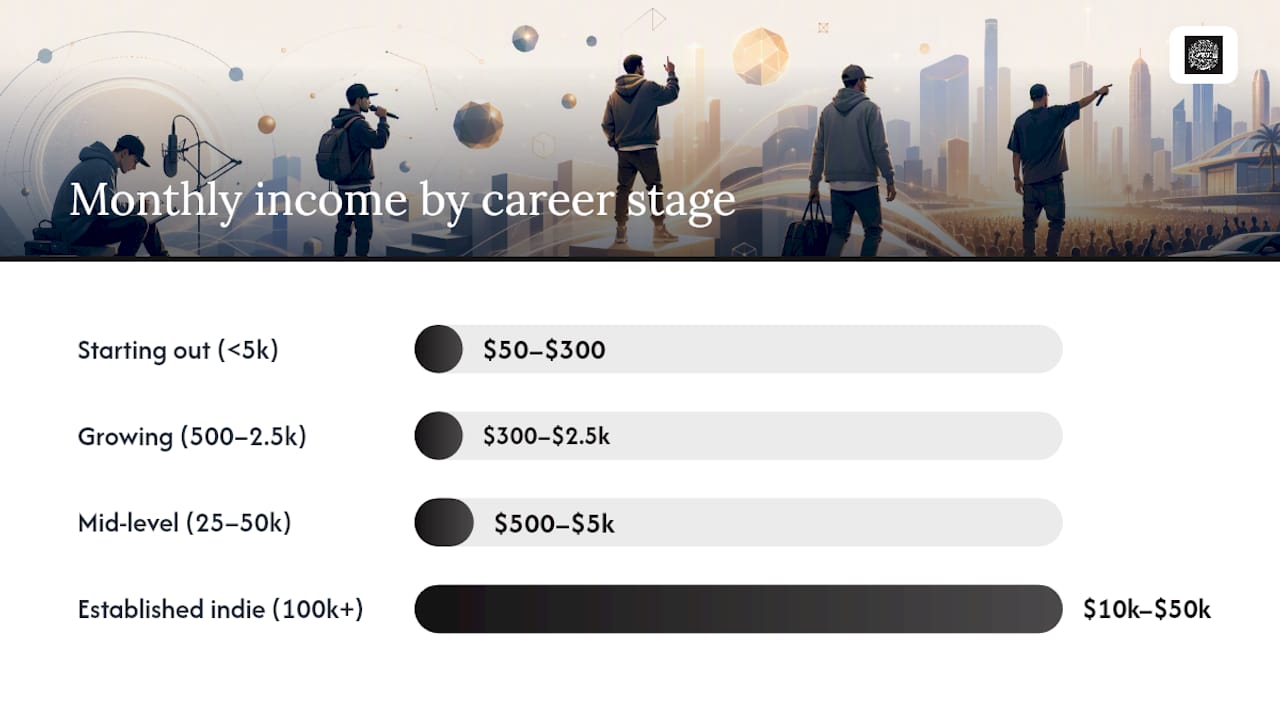
The jump from “starting out” to “growing” usually takes 12–18 months of consistent releases and active promotion. The jump from “growing” to “mid-level” is where stacking streams makes the biggest difference. An artist earning $500/month from streaming alone can double or triple that by adding a Patreon tier, a merch drop, and two local shows per month.
Pro Tip: Subscription income (Patreon, memberships) is the most fragile revenue stream if you go quiet. Track your monthly churn rate: if more than 10–15% of subscribers cancel in a given month, you are not delivering enough value. The fix is usually more frequent, more exclusive content, not more subscribers.
Use early micro-wins to finance bigger projects. Your first $500 from beat sales can fund a vinyl pressing. Your first $1,000 from merch can fund a music video. Reinvest early income into assets that generate more income.
What I wish every beginner rapper knew before they started
The “starving artist” phase is not inevitable. It is usually a business infrastructure problem disguised as a talent problem. Artists who register their publishing early, own their masters, and build direct fan relationships consistently outperform artists with more talent who never set up the business side.
Here is what I have seen over years of working in production: the rappers who make it long-term are not always the most gifted. They are the ones who release consistently, own what they create, and treat their fans like real people instead of streaming numbers. Russ did not blow up overnight. He released music every week for years, kept his masters, and built a direct relationship with his audience. That catalog compounds. Every new fan discovers the back catalog. Every back catalog stream pays the same rate as a new release.
The sync placement in WWE 2K25 did not happen by accident. It happened because the music was packaged correctly, the metadata was clean, and the pitch was professional. Preparation is what creates “luck” in this industry.
Own your masters. Register your publishing before you release. Build your email list from day one. Those three moves will matter more to your long-term income than any single viral moment.
Pro beats and sync-ready packages built for independent rappers
You need music that is ready to work the moment it leaves your hard drive. Indepthjaybeats has been producing beats since 2007, with placements in WWE 2K25 and Love & Hip Hop Atlanta. The catalog covers trap, boom bap, Detroit-style, and R&B instrumentals, all built with sync licensing in mind: clean metadata, available stems, and production quality that holds up in professional placements.
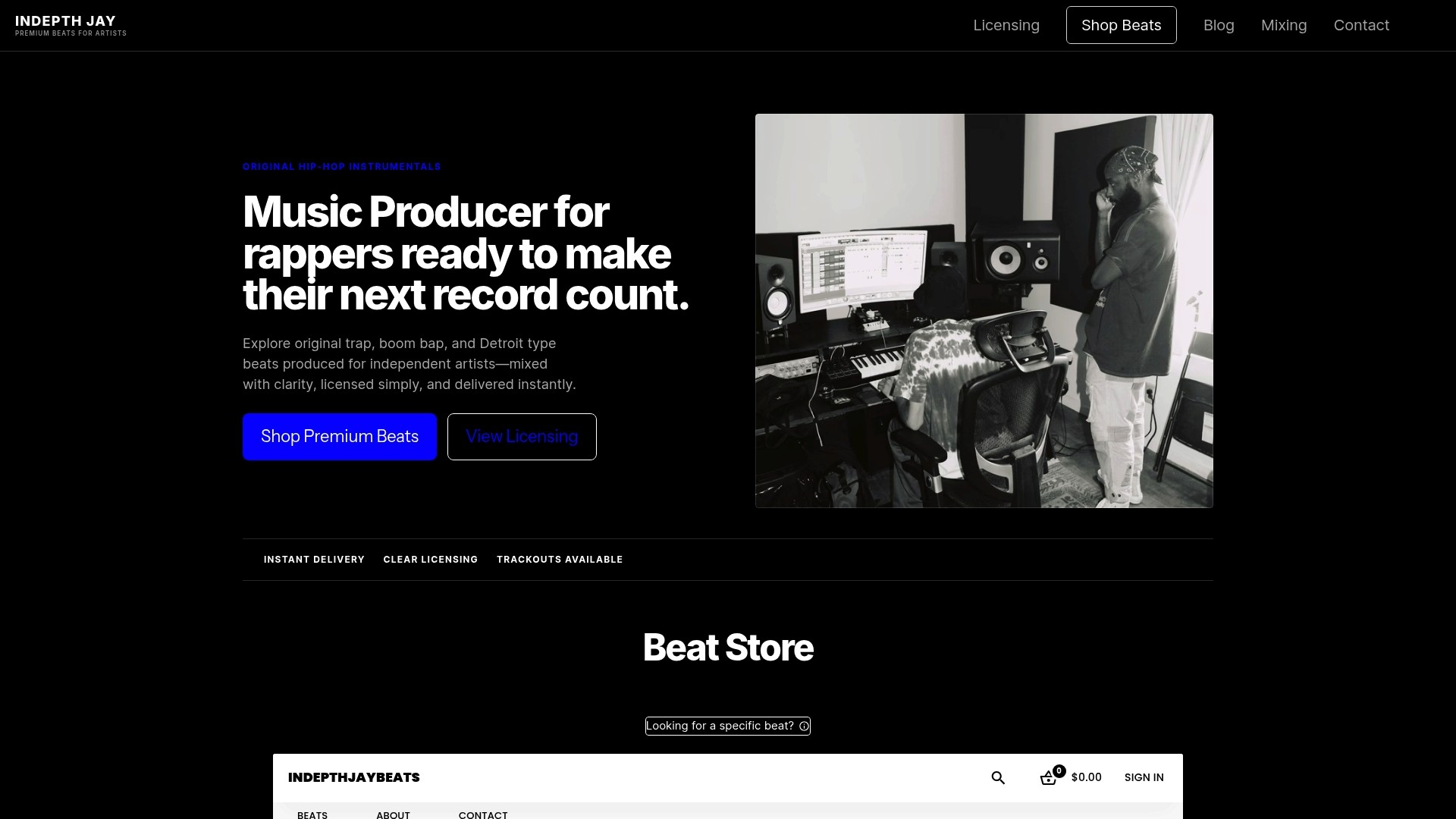
Whether you need a hard 808 trap beat for your next single or a boom bap instrumental for a sync pitch, the catalog at Indepthjaybeats is built for artists who are serious about monetizing their music. Non-exclusive leases let you release immediately at a low cost. Exclusive licenses give you full ownership of the recording. Mixing and mastering services are also available for artists who need a release-ready master.
Browse the beat catalog at Indepthjaybeats and grab a free beat pack to hear the sound before you commit.
Sources
How Much Does Spotify Actually Pay Rap Artists Per Stream in 2026?
Independent rapper LaRussell made millions by allowing fans to set prices
Russ talks ownership, fan engagement and ‘making music every day’ at SXSW - Music Business Worldwide
Recommended
Music Licensing for Film & TV: Complete Guide | InDepthJayBeats
Music Licensing for Film & TV: Complete Guide | InDepthJayBeats

Get 20+ Free Beats delivered to your inbox
Drop your name and email and I'll send a pack to your inbox right away.
We respect your inbox, no spam. Promise!