Choosing between a USB mic and an XLR mic for rap vocals is the first real gear decision every independent rapper faces. The right choice depends on three things: your budget, your room, and where you want your music to go. USB mics plug straight into your laptop and get you recording in minutes. XLR mics connect through an audio interface and give you more control over your sound as you grow. Neither is automatically better. The best mic for rap vocals is the one that fits your actual setup, not just the one with the most hype online. This guide breaks it all down so you can commit to the right system and start recording.
What are USB and XLR microphones, and how do they differ?
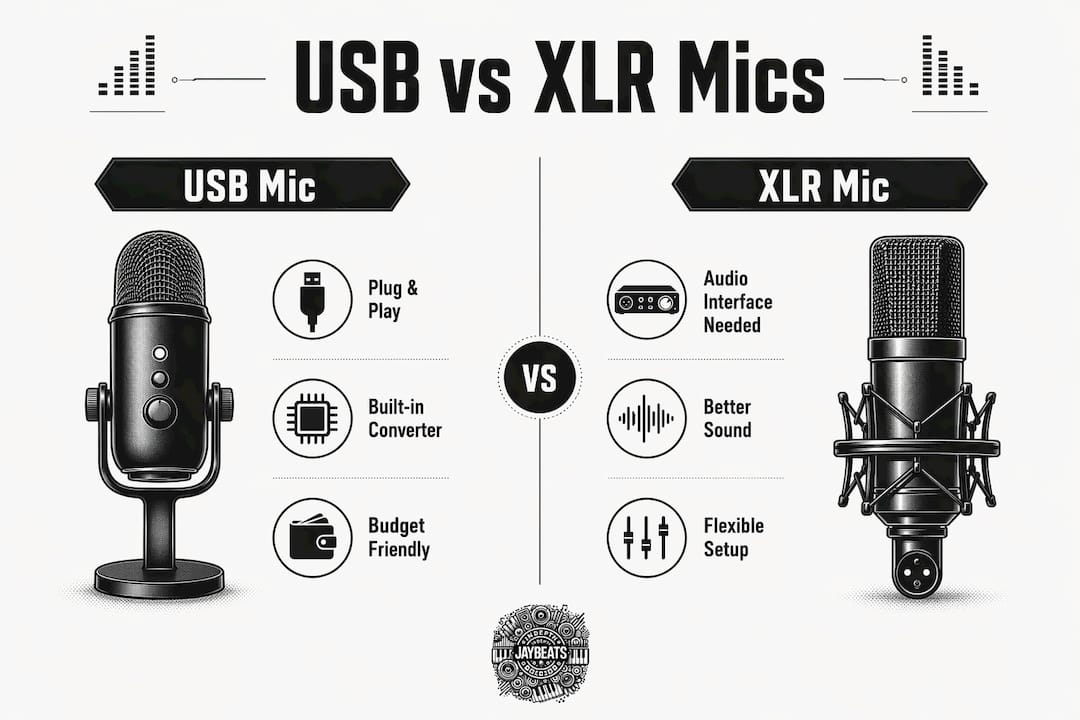
A USB microphone is a self-contained recording unit. It houses a built-in analog-to-digital converter and a preamp inside the mic body itself. You plug it into your computer’s USB port, and your recording software sees it immediately. No extra hardware required. That simplicity makes USB mics a complete ready-to-record solution for most rappers starting out, typically priced between $100 and $200 with everything built in. That price point covers the converter and preamp that XLR users have to buy separately.
An XLR microphone outputs a raw analog signal. That signal travels through an XLR cable to an audio interface or mixer, which converts it to digital before it hits your computer. The interface is the extra piece of hardware you need, and quality ones start around $100 on top of the mic cost. The signal chain is longer, but that length is where the flexibility lives.
Here is a quick breakdown of how the two systems compare:
Feature | USB mic | XLR mic |
|---|---|---|
Connection | Direct to computer via USB | Requires audio interface or mixer |
Built-in converter | Yes | No |
Upgrade path | Limited | Full (preamp, converter, cables) |
Multi-mic recording | Difficult | Native support |
Starting cost | Lower | Higher total investment |
Latency | Under 5ms difference | Under 5ms difference |
One thing that surprises most rappers: the latency difference between USB and XLR setups is generally under 5 milliseconds. That gap is mostly inaudible during solo recording sessions. Latency is not the reason to choose one over the other.
Pro Tip: If you are recording solo rap vocals at home, latency will not be your problem. Focus your decision on budget and upgrade potential instead.
How does your room and mic capsule type affect your choice?
The connection type (USB or XLR) matters less than most rappers think. The mic capsule and your room acoustics drive your actual vocal sound. Both USB and XLR mics can house either a dynamic or a condenser capsule. That capsule choice is often the more critical decision.
Dynamic cardioid microphones are the right call for untreated bedrooms and noisy apartments. They reject off-axis sound, meaning they pick up less room echo, AC hum, and street noise. Condenser microphones capture more detail and air, but they also capture every flaw in your room. Put a large-diaphragm condenser in an untreated space and you will hear the walls on your vocal.
For rap vocals specifically, dynamic mics often deliver cleaner recordings in untreated home environments than condensers do. Clear consonant articulation and low-end definition matter in rap. A dynamic mic in a bedroom can beat a condenser in the same room every time.
Here is how capsule type maps to common home studio situations:
Untreated bedroom with hard walls: Dynamic mic, cardioid pattern, positioned close to your mouth
Closet lined with clothes: Either capsule works, condenser will shine here
Basement with carpet and soft furniture: Condenser becomes viable, room is naturally dampened
Open living room or kitchen: Dynamic only, too much reflection for a condenser
The role of room acoustics in hip hop recording is real. Hanging moving blankets behind your mic position costs almost nothing and makes a measurable difference in your vocal clarity.
Pro Tip: Before you spend money on a new mic, hang two moving blankets behind your recording position. You might find your current mic sounds better than you thought.
What practical factors should independent rappers weigh?
Budget is the starting point. A USB mic gets you recording today without buying anything else. An XLR setup costs more upfront because you need the interface, cables, and the mic itself. That said, XLR setups permit independent upgrades of preamps, cables, and converters over time. You can swap one piece of the chain without replacing everything. USB locks you into the manufacturer’s internal components.
Here is a practical decision framework for independent rappers:
You are brand new and just want to record demos: Get a USB mic. Plug it in, open GarageBand or Audacity, and start. Check out mixing rap vocals in GarageBand to get your first session moving fast.
You are recording consistently and want better sound: Invest in an XLR mic plus an entry-level audio interface. The upgrade path opens up from there.
You want to record multiple mics at once (live sessions, features, podcasts): XLR is the only real answer. Multiple USB mics cannot be easily synchronized for multi-track recording without complex software workarounds. XLR interfaces handle multi-mic setups natively.
You want to grow without replacing all your gear: Consider a hybrid mic with both USB and XLR outputs. Hybrid mics ease the transition between casual recording and professional setups without forcing you to buy a new mic.
You are chasing sync placements or label-ready vocals: XLR with a quality interface and preamp gives you the signal chain control that USB cannot match.
The signal chain limitations of USB mics impact final vocal sound quality when you start comparing your recordings to professional releases. That gap becomes obvious when you are trying to make your rap song sound more professional and the vocal just does not sit right in the mix.
Pro Tip: Buy the best audio interface you can afford before you upgrade the mic. The interface preamp affects your sound more than most rappers realize.
How do you set up each system and start recording?
Getting started is straightforward with either system. The key is avoiding the common mistakes that kill your vocal quality before you even press record.
USB mic setup
Plug the mic into a USB port on your computer
Open your recording software (GarageBand, Audacity, Adobe Audition, or a DAW of your choice)
Set the USB mic as your input device in the software’s audio settings
Set your sample rate to 44.1kHz or 48kHz
Position the mic 6–8 inches from your mouth, slightly off-axis to reduce plosives
Attach a pop filter between your mouth and the capsule
Record a test take and check for room noise before your real session
XLR mic setup
Connect the XLR cable from the mic to your audio interface input
Connect the interface to your computer via USB or Thunderbolt
Set the interface as your input and output device in your recording software
Engage phantom power (48V) on the interface if you are using a condenser mic. Dynamic mics do not need it
Set your gain so the signal peaks around -12dB to -6dB, not in the red
Use the direct monitoring feature on your interface to hear yourself with zero latency
Position the mic, attach a pop filter, and run a test take
Essential accessories for both setups
Pop filter: Stops plosive sounds (“p” and “b” sounds) from distorting the signal
Shock mount: Isolates the mic from desk vibrations and handling noise
Mic stand: Keeps your position consistent take after take
Acoustic treatment: Even basic foam panels or moving blankets behind the mic help
The most common setup mistake is recording with too much gain. Clipping your signal at the input stage destroys the take. You cannot fix a clipped recording in post. Set your gain conservatively and push the volume in your DAW instead. Learning how to mix raw vocals over a loud trap beat starts with a clean, unclipped source recording.
Sound quality depends primarily on the entire recording chain, including mic capsule, room acoustics, preamps, and positioning. The USB vs XLR debate is just one part of that chain.
Key Takeaways
The right mic system for rap vocals is the one that matches your room, your budget, and your recording goals, not the most expensive option available.
Point | Details |
|---|---|
USB mic is plug-and-play | USB mics include built-in converters and work immediately with no extra hardware. |
XLR offers upgrade flexibility | XLR lets you swap preamps, converters, and cables independently as your budget grows. |
Capsule type matters more | Dynamic mics outperform condensers in untreated rooms regardless of USB or XLR connection. |
Multi-mic recording needs XLR | USB mics cannot sync easily for multi-track sessions; XLR interfaces handle it natively. |
Hybrid mics bridge both worlds | A mic with USB and XLR outputs lets you start fast and upgrade without replacing gear. |
What I actually tell rappers when they ask me this question
After producing since 2004, I have watched artists spend money in the wrong order more times than I can count. They buy a $300 condenser mic, plug it into a USB port, set it up in a bedroom with bare walls, and wonder why their vocals sound like they recorded in a bathroom. The mic is not the problem. The room and the chain are the problem.
My honest take: if you are just starting out, a solid USB dynamic mic in a treated corner of your room will beat an expensive condenser in a bad room every single time. The USB vs XLR decision is really a question of where you are in your career. USB is for getting your ideas down fast. XLR is for when you are ready to build something real.
The artists I have worked with who got placements on shows like “Love And Hip Hop Atlanta” were not always using the most expensive gear. They were consistent. They treated their rooms, they learned their signal chain, and they kept recording. Gear matters, but discipline matters more. If you are serious about growing, invest in an XLR setup and an interface when you can. But do not let gear decisions stop you from recording today. A USB mic and a closet full of clothes will get you further than waiting for the perfect setup.
— Indepthjaybeats
Your vocals deserve beats that match the quality
You put real work into getting your mic setup right. The next step is making sure the beat underneath your vocals is built at the same level.

At Indepthjaybeats, every instrumental is produced with sync placement in mind, from hard-hitting trap beats for rappers to classic boom bap instrumentals with real texture and depth. The catalog goes back to 2004, and the production quality shows it. Once your vocal chain is locked in, pair it with a beat that can carry it. You can also take your recordings further with professional mixing and mastering built specifically for rap vocals. Clean source audio plus a pro mix is what separates a demo from a placement-ready record.
FAQ
Is a USB mic good enough for professional rap recordings?
A USB mic can produce professional-quality rap vocals when paired with a treated room and proper mic technique. The built-in converter limits your upgrade path, but the output is solid for demos and independent releases.
Do I need an audio interface for an XLR mic?
Yes. An XLR mic outputs an analog signal that requires an audio interface or mixer to convert to digital before it reaches your computer. There is no way to connect an XLR mic directly to a standard computer without one.
Which mic type is better for a bedroom with no acoustic treatment?
A dynamic cardioid microphone is the better choice for untreated rooms. Dynamic mics reject off-axis noise and room reflections far better than condenser mics, delivering cleaner rap vocals in imperfect spaces.
What is a hybrid USB/XLR mic and should I get one?
A hybrid mic includes both USB and XLR outputs on the same unit. It lets you record immediately via USB and connect to a professional interface via XLR when you are ready, making it a practical long-term investment for growing rappers.
Does XLR sound better than USB for rap vocals?
XLR does not automatically sound better. The full recording chain, including room acoustics, capsule type, preamp quality, and mic positioning, determines vocal quality. A well-set-up USB mic in a treated room can outperform a poorly set-up XLR system.
Recommended

Get 20+ Free Beats delivered to your inbox
Drop your name and email and I'll send a pack to your inbox right away.
We respect your inbox, no spam. Promise!